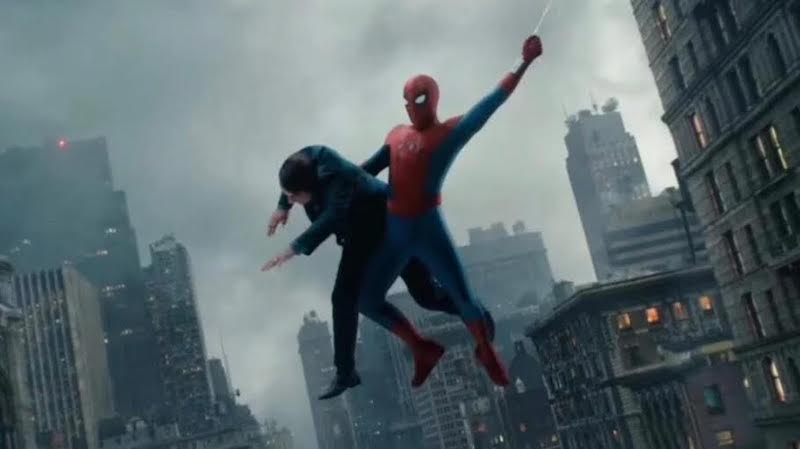
It’s hard to watch a hero like Spider-Man wallow in such sadness, especially knowing how much he has sacrificed, not only for the city he loves but also for the people he loves. Destin Daniel Cretton’s “Spider-Man: Brand New Day” examines the life of Peter Parker, that kid from Queens who now has to navigate a world where no one remembers him and the people he once loved have moved on without him.
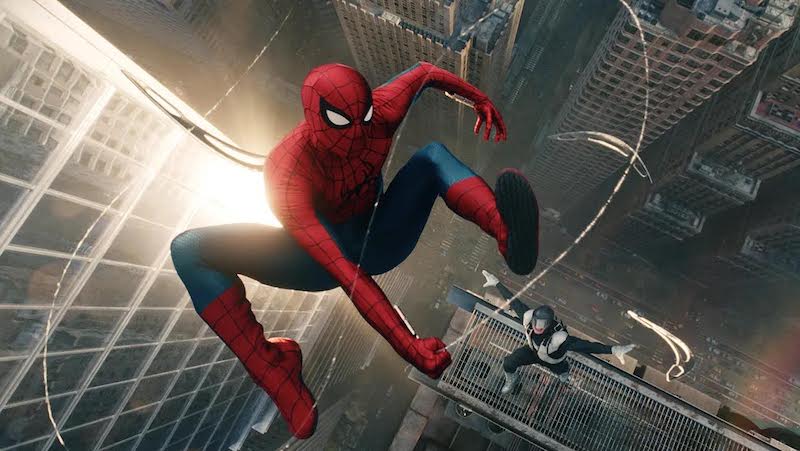
Despite being part of a much larger shared superhero universe, “Spider-Man: Brand New Day” is relatively easy to follow, at least on an emotional level. Peter now lives a life of structured isolation. He stops the bad guys like Scorpion (Michael Mando) and the Hand, improves his superhero tech, buys flowers for Aunt May’s grave, and watches from a social media distance as his best friends, MJ (Zendaya) and Ned Leeds (Jacob Batalon), build new lives at MIT.
There is a sadness to Tom Holland’s performance that feels different from anything he has done with the character before. Peter is still capable of cracking a joke while fighting criminals, or exchanging banter with Detective DeWolff (Liza Colón-Zayas), but the humor disappears as soon as he is alone. Holland makes that contrast especially painful, showing a young man who can save strangers without hesitation but has no idea how to rebuild a life for himself.
Early on, Spider-Man is described as being married to heroism. That kind of dedication may sound admirable, but DeWolff warns him that it does not end well. She tells him that he needs real human connection, not relationships maintained through phone calls or social media. There is an irony to that warning, since even their own friendship exists almost entirely over the phone, with the two rarely meeting face to face, and Peter’s connection to MJ and Ned exists almost entirely through social media.
That routine is disrupted when an attack on a Department of Damage Control facility forces Peter to confront an antagonist unlike anyone he has faced before. The threat quickly turns even ordinary encounters into dangerous situations, as it can possess a person’s mind simply by hopping into them. And just as easily as they can hop into a mind, they can hop out of one, which leaves Peter unsure of who he can trust or how far the danger has spread.
That ability gives the film a strong sense of paranoia. Since the entity (Sadie Sink) can use a crowd as toy soldiers, turning an entire city into a battlefield. This makes it a lot harder for Peter to operate as a superhero since anyone Peter encounters could suddenly be turned against him. Police officers, Damage Control agents, ordinary civilians, and even other heroes can become weapons without warning. This forces Spider-Man to approach every fight differently because the people attacking him may also be victims who need to be saved.
The mind-hopping entity is not the only threat Peter has to worry about. His own body is beginning to change as the arachnid DNA responsible for his powers starts mutating. He develops organic web spinnerets, heightened senses, and abilities that his technology can no longer comfortably regulate. Rather than presenting these changes as an exciting upgrade, the film makes them frightening and unpredictable. Peter’s senses become overloaded, his powers are harder to control, and he begins to fear that he is turning into something monstrous.
What was once smooth web-swinging has become something uncomfortable and, at times, disgusting. Peter gags inside his mask at the sight of the organic webs, which remind him of Peter 2, and his lack of control sends him crashing into water towers and disrupting wedding ceremonies. Even worse, the sensory overload can leave him completely paralyzed. The smallest noises, from dripping water to an empty bag of Takis skittering across the pavement in the wind, birds cawing, and an entire cityscape pulsing, become painfully loud and impossible to ignore.
The mutation also gives Peter’s isolation a physical consequence. His artificial intelligence suggests that prolonged loneliness and emotional trauma may be contributing to the sudden changes, but Peter immediately dismisses the possibility and insists that he is fine.
A serendipitous encounter with Ned eventually leads Peter to a party, where he briefly reconnects with his former friends as Peter rather than Spider-Man. He learns that Ned has been tracking the Webslinger because he wants to thank him for his heroism. Despite having no memory of Peter, neither Ned nor MJ feels completely unfamiliar. Ned is still the charming, somewhat awkward nerd who admires Spider-Man, while MJ remains someone who refuses to tolerate anyone’s BS, including the Punisher’s (Jon Bernthal).
These moments offer Peter a brief glimpse of the human connection he has denied himself. But his attempts to bury his grief and live exclusively as Spider-Man are already taking a toll on his body and mind, making it increasingly difficult for him to control what he is becoming. Working from a script by Chris McKenna and Erik Sommers, Cretton makes it clear that Peter is emotionally crumbling under the weight of erasing himself while also losing control of the very powers that define him as Spider-Man.
While Peter’s emotional journey remains clear, the larger plot surrounding him becomes increasingly difficult to follow. Damage Control and the shadowy entity are constantly at odds, leaving Spider-Man caught between them without knowing who he can trust. Between that conflict, Peter’s mutation, and a visit to Dr. Banner, whose students are far more interested in hearing stories about his days as an Avenger than sitting through a physics lecture, the film sometimes struggles to give each revelation enough time to settle before introducing another.
The constant stream of new information does not make Peter’s emotional journey any less affecting, but it does make the mystery surrounding the entity harder to fully invest in. Damage Control’s intentions remain intentionally vague for much of the film, while the entity’s desperate search for the location of V-Max makes it difficult to understand their motivation. The answers eventually arrive, with some of them being a genuine shock, if you haven’t already scoured the internet and social media for spoilers, while others are a deserved eyeroll.
Even when the larger plot becomes crowded, the supporting characters help sharpen the film’s ideas about grief, isolation, and the choices people make in response to them. Bernthal’s return as Frank Castle is especially effective because the Punisher is not simply included as fan service or another familiar face from the MCU. He serves as a harsh reflection of what Peter could become if he continues shutting everyone out.
To Frank, isolation is not a noble sacrifice or a lifestyle. It is a sentence forced upon him by the loss of everyone he loved. By calling Peter’s self-imposed loneliness what it really is, Frank exposes the cowardice beneath Peter’s tragic-loner fantasy.
Bruce Banner (Mark Ruffalo), who wears a wrist inhibitor, serves as a different kind of mirror for Peter. While Frank represents what Peter could become if he never allows himself to move beyond his grief, Bruce understands the fear of becoming something dangerous and losing control of his own body. Peter initially seeks him out under the guise of asking a physics question. Still, it quickly becomes clear that he wants to know whether he can suppress the worst parts of his mutation without giving up the abilities that make him Spider-Man.
That question becomes more complicated when Peter begins developing an inhibitor capable of adapting to different kinds of mutations. What starts as a desperate attempt to control his own body could easily become a tool for controlling anyone with powers. Banner immediately recognizes the danger in that idea and questions whether Peter might be trying to suppress something that needs to be expressed rather than understood. His warning gives the inhibitor greater moral weight because Peter is no longer creating something that affects only him.
Hulk’s presence also raises the physical stakes without distracting from the film’s emotional focus. Peter has to contain him without harming Bruce, stop the entity, and decide how far he is willing to go with a device capable of suppressing anyone’s powers. What could have become another large-scale superhero fight instead reinforces the film’s larger question of whether the frightening parts of someone should be understood, managed, or forcibly erased.
Colón-Zayas’ DeWolff works because she is one of the few people in law enforcement who genuinely believes in Spider-Man. She knows when to trust him, but she is also willing to rein him in when his powers become dangerous. This is especially true when the mysterious entity has gotten a hold of the Scorpion, who is also looking for V-Max. As the threat grows beyond his usual friendly-neighborhood problems, DeWolff becomes the person who vouches for him and helps connect him to the larger Damage Control response.
MJ and Ned may no longer remember Peter, but their scenes together suggest that some connections can survive even when the memories are gone. That idea comes to life when Ned lights up when he sees how his Spider-Man tracker app has honed in on his location; he is genuinely surprised to see that the hero he has idolized for so long is in his apartment. Ned and Peter quickly fall back into building LEGO together while MJ sketches them from across the room, a small but meaningful callback to the way she used to draw people in crisis in “Spider-Man: Homecoming.” None of them understands why the moment feels so familiar, but Peter does, which makes it both comforting and painful to watch.
Zendaya is given some of the film’s strongest dramatic material because MJ refuses to accept Peter’s familiar justification that he was only trying to protect her. Rather than focusing on whether Spider-Man should keep secrets, the film asks a more uncomfortable question on who gets to decide what someone else’s life should look like? Peter believes he made the right choice by carrying the burden alone, while MJ sees that choice as someone else deciding her future without her consent.
The mysterious telepath also proves to be more than a traditional MCU antagonist. Rather than existing simply to threaten New York, she embodies many of the same ideas the film has already been exploring. Having spent years being manipulated and used by institutions that viewed her as little more than a weapon, she now strips other people of their agency. In many ways, she functions as Peter’s thematic opposite. Peter repeatedly convinces himself that withholding the truth and making difficult decisions for the people he loves is an act of protection. She reaches the same destination through different means, removing people’s ability to choose altogether.
Cretton keeps the film’s many tonal shifts grounded in Peter’s emotional journey. The quieter scenes focus on the consequences of his choices, while the action, which looks like it took a ton of inspiration from the recent Spider-Man games on the PlayStation, the painful effects of the hormonal imbalance, and paranoia turn his fears about isolation and losing control into something physical. Even the humor feels tied to the characters rather than inserted to lighten the mood. Ned is still very much a lovable nerd who tries to charm the ladies, while MJ doesn’t put up with any BS but is still willing to drop those unsuspecting truth bombs.
While the emotional throughline remains easy to follow, the technical jargon, political red tape, and light Marvel homework occasionally get in the way. The film expects viewers to know about Hulk, the inhibitor he built for himself, the Avengers, Avengers: Endgame, and the Punisher. But this is a shared superhero universe, so some homework is to be expected.
When the film gets into the action, however, it is explosive, relentless, and pure fun. When the entity infiltrates the DODC, she uses a mind-controlled Bruce as Hulk to keep Spider-Man and the Punisher at bay. However, when the Hulk breaks free of that control, it takes the action sequence in a whole new direction as Spider-Man has to face off against a rageful Hulk who has essentially buried Bruce, using nothing but the Shocker gauntlets and building debris to bring him down. Then there’s an even bigger action sequence where Spider-Man has to break into a prison on Roosevelt Island and fight off the highly coordinated Hand, a group of ninjas that doesn’t waste a single movement and moves as if they were a single unit. Honestly, Cretton delivers some incredible set pieces.
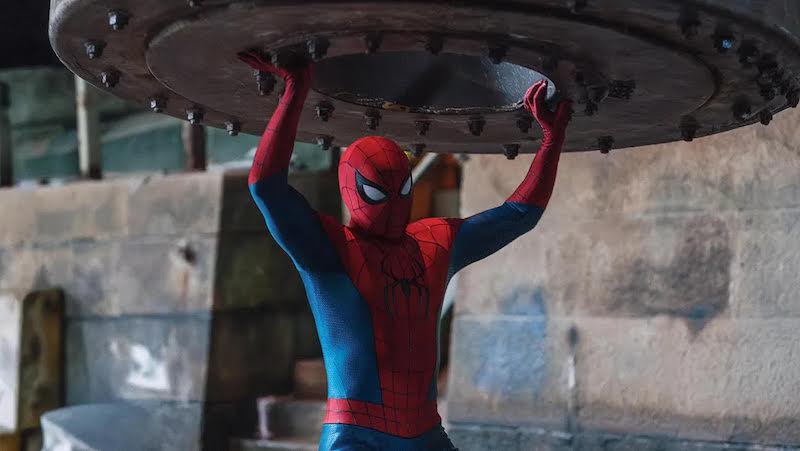
“Spider-Man: Brand New Day” is at its best when it focuses on the loneliness Peter created for himself and the people who refuse to let him continue living that way. The larger mystery can become needlessly complicated, and the film occasionally asks viewers to keep up with more Marvel history than necessary, but the emotional core remains strong. Holland delivers his most vulnerable performance as Peter Parker, while Cretton balances that sadness with paranoia, humor, superhero ethics, and some genuinely thrilling action. It may be difficult to watch Peter carry so much pain, but the film understands that a brand new day does not come from erasing the past. It comes from finally choosing to live with it.