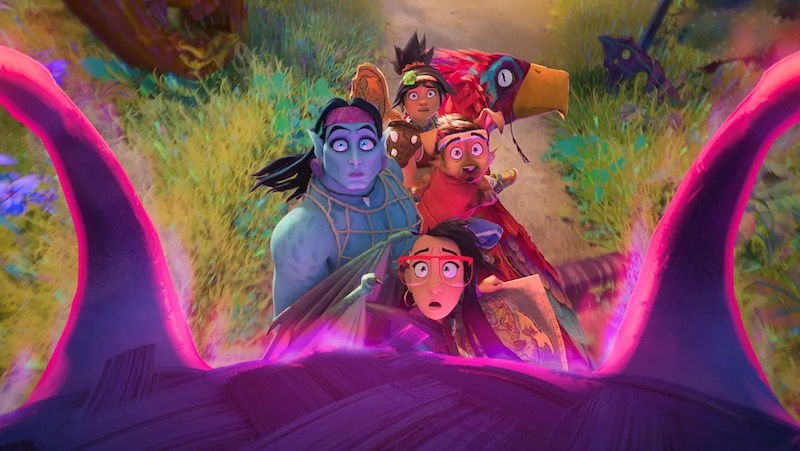
DreamWorks Animation’s “Forgotten Island” is one of those films that isn’t afraid to wear its Filipino pride on its sleeve. From the jeepneys, karaoke, and lechon to the folklore, family dynamics, and music, Filipino culture is not just part of the backdrop. It is baked into nearly every corner of the story. From directors Joel Crawford and Januel Mercado, the duo behind *Puss in Boots: The Last Wish*, comes a colorful adventure that balances wild comedy with the familiar experience of the Filipino diaspora and a surprisingly heartfelt story about friendship, memory, and growing apart.
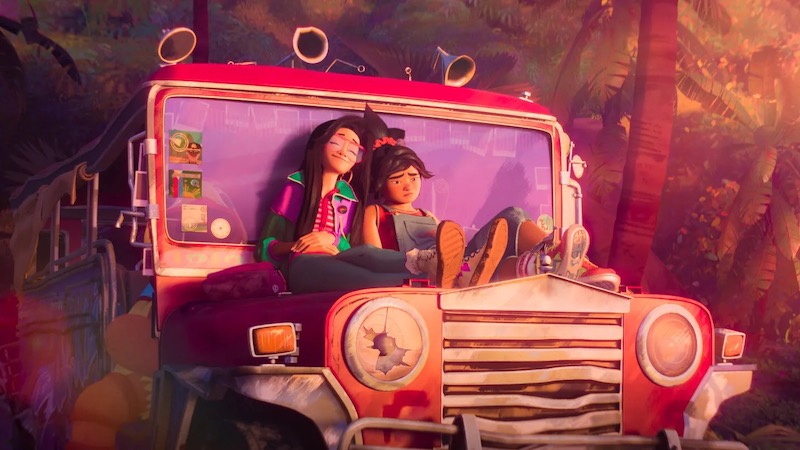
At the center of it all are Jo (H.E.R.) and Raissa (Liza Soberano), best friends since grade school who are about to find out just how much growing up can complicate even the strongest friendship. Raissa has been accepted into Caltech and will soon leave the Philippines for America, while Jo is staying home. Suddenly, years of music, stories, inside jokes, and questionable decisions feel like they are coming to an end.
Naturally, their solution is to make one final night together unforgettable.
That turns out to be easier said than done when a mysterious portal sends them to Nakali, an island Jo grew up hearing about through the stories of her Lola Fatima (Dolly de Leon). The next morning, neither girl can remember how they got there or what exactly they did after arriving. Raissa has somehow lost most of her hair and gained a pair of wings. Jo is sporting a questionable new tattoo. Post-it notes and Polaroids become their best clues to figuring out what happened.
This is where “Forgotten Island” has the most fun with its *Hangover*-style setup. Every stop reveals another ridiculous decision from the night before and introduces someone who remembers Jo and Raissa much better than they remember themselves.
Their new traveling companions only add to the chaos. Rawww (Dave Franco) is a were-aspin with major himbo energy and an extremely canine method of making sure nobody forgets where he has been. Bungi Tiyanak (Manny Jacinto) is an eight-foot-tall demon baby with three eyes and 200 years of experience being stuck in his terrible twos. Then there is Prince Mermahn (Kevin McCann), who brings a different kind of thirst to the adventure.
For all the magical creatures, though, some of “Forgotten Island’s” best moments are the ordinary ones back home. Raissa’s family guarding the lechon from Jo, her father taking over the karaoke machine, Lola Fatima serving sinigang, and the everyday sight of jeepneys make Manila feel like an actual home rather than a location chosen simply to give the movie some cultural flavor.
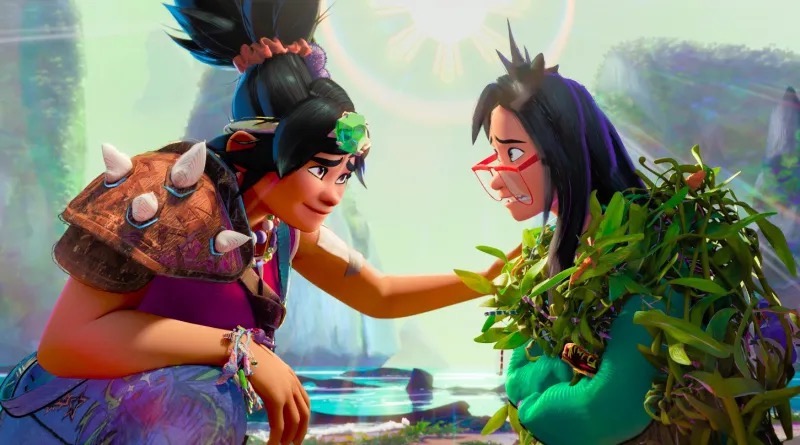
Lola Fatima also fills the girls’ childhoods with stories about Aswang, Manananggal, and the mysterious Nakalimutan. Jo and Raissa embrace those stories so enthusiastically that a school presentation about the Manananggal comes complete with fake blood and a splash zone for anyone unfortunate enough to be sitting near the front.
That same Filipino identity carries into the animation. Manila is warm and familiar, with a slightly nostalgic quality that makes Jo and Raissa’s world feel lived in. Nakali gives the filmmakers permission to go much bigger. Its environments pull inspiration from Palawan and El Nido while mixing anime influences, graphic linework, black-light imagery, and bursts of cyan and magenta. Even the portal itself resembles the sun on the Philippine flag.
The music is just as culturally specific. Composer Nathan Matthew David incorporates Indigenous Filipino instruments, voices, and rhythms into the score, allowing Nakali to sound as different from Manila as it looks. One of the sweetest musical choices, however, is also one of the simplest. Jo and Raissa do not get separate central themes. Their friendship does.
That friendship is also where the film’s obsession with memory becomes more than a clever fantasy gimmick.
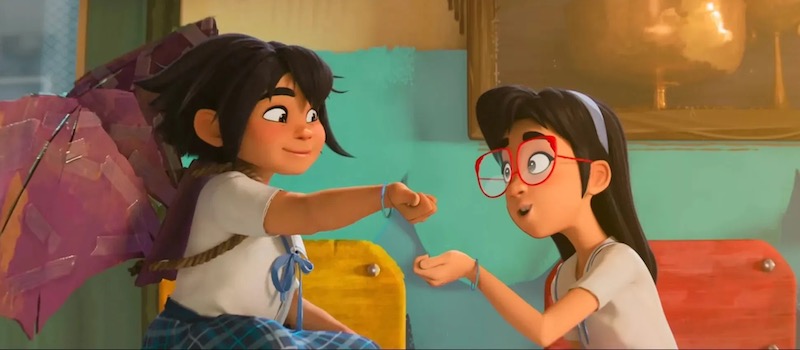
Jo and Raissa have a friendship bracelet covered with small charms representing different moments from their lives together. There are tiny records for their love of music, pieces inspired by the Manananggal stories they grew up hearing, and even a little firecracker representing their final day together. None of those objects would mean much to anyone else, but to Jo and Raissa they represent years of shared experiences.
That becomes a problem once Batiba (Jenny Slate), a creature who feeds on memories, enters their lives. In Nakali, memories carry actual power and can even become something to trade. Suddenly, losing a memory is not the same as forgetting where you left your keys. For Jo and Raissa, it could mean losing a piece of the friendship that made them who they are.
The idea carries even more weight because Raissa is preparing to leave the Philippines.
For many Filipino families, seeing someone leave home for work, school, or greater opportunities overseas is a familiar experience. Overseas Filipino workers have long created families stretched across countries and time zones, and “Forgotten Island” taps into many of the emotions that come with that separation. There is excitement for the person leaving, but also uncertainty, guilt, and the fear that distance might change the people who stay behind.
Jo feels that fear almost immediately. She worries Raissa is moving toward a bigger life while she remains stuck at home. Raissa, meanwhile, is trying to pursue her future without losing the friendship that helped her get there.
That is why the SEAsterhood between Raissa and Jo ultimately matters more than any portal or monster. Soberano and H.E.R. give the two an easy chemistry that makes their history believable. They tease each other, embarrass each other, fight with each other, and know exactly how to get under each other’s skin. They feel less like two characters the screenplay tells us are lifelong friends and more like two people who have actually spent years growing up together.
For a movie called “Forgotten Island,” there is surprisingly little here that feels destined to be forgotten. Some of the Filipino slang, folklore, food, and cultural references may land differently depending on how familiar audiences are with them, but the emotions behind them are easy to recognize. Friends grow up. Families spread across the world. New opportunities take people away from home.
“Forgotten Island” understands that moving forward does not mean forgetting where you came from or the people who helped you get there. Sometimes those memories are exactly what you take with you. And if there’s some delicious lechon, sweet halo halo, and really good music it ends up being a story worth retelling over and over again.
9/10