Spider-Man fans recognize their web-slinger as the quippy, friendly neighborhood hero who is a man of the people, but also someone capable of saving the day from otherworldly threats. Amazon Prime’s Spider-Noir is refreshingly different because it embraces its classic noir influences, trading the bright optimism of a traditional Spider-Man story for shadowy streets, moral ambiguity, and a hard-boiled mystery that feels like a bold new corner of the franchise.
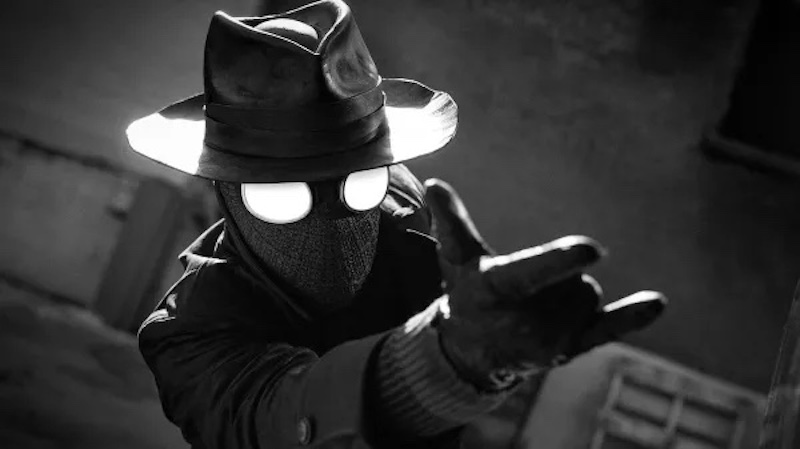
Spider-Noir does not simply dress Spider-Man in a trench coat and call it a reinvention. What makes the series work is how deeply it understands the emotional language of noir. Here, Ben Reilly (Nicolas Cage) is a down-on-his-luck, jaded private eye still reeling from the tragic loss of his wife. With no real purpose left, he drifts from one cheating-spouse case to the next, drowning himself in low-stakes work as a way to avoid being the hero he used to be. But with Ben stepping away from the mantle, crime lords like Silvermane (Brendan Gleeson) have emerged to tighten their grip on a Great Depression-era New York.
So when nightclub singer Cat Hardy (Li Jun Li) walks through his door with an exceptional case, Ben is pulled back into a world he has spent years trying to avoid. With the help of his no-nonsense assistant Janet (Karen Rodriguez) and Robbie Robertson (Lamorne Morris), a freelance journalist who recognizes what Ben once represented to the people, he is forced to confront whether the city needs the Spider again and whether he still has it in him to answer that call.

That is where Spider-Noir finds its strongest emotional hook. The series takes Spider-Man’s familiar idea of responsibility and strips it of its usual optimism. For Ben, being the Spider once meant living by his former fiancée Ruby’s belief that “with great power comes great responsibility.” But after failing to save her during a tragic car accident, a moment that returns to him through recurring nightmares, that creed no longer feels like inspiration. It feels like an accusation. Grief has twisted his sense of purpose into something more cynical, leaving him to believe that if he puts the Spider away, then “with no power, there’s no responsibility.”
Cage makes that contradiction compelling because he understands both sides of Ben Reilly. There are obvious shades of Humphrey Bogart and Bugs Bunny in the performance, especially in the dry wit, weary posture, quippy one-liners, and battered romanticism of a man who has seen too much but still cannot fully turn away. Ben moves through the city with a drink in hand, a smart remark ready, a contingency plan to get out of a sticky situation, and just enough decency to make them dangerous to the people in power. Ben can joke, flirt, drink, and deflect, but Cage never lets us forget that every wisecrack is covering a wound. That makes his pull back toward heroism feel less like a standard superhero comeback and more like a broken man being forced to decide whether he still believes he can do any good.
Li Jun Li’s Cat Hardy is just as essential to that noir texture. On paper, she fits the classic femme fatale mold: mysterious, alluring, dangerous, and always withholding more than she reveals. But the series is smart enough not to reduce her to an accessory in Ben’s story. Cat has her own survival instincts and emotional armor, which makes her scenes with Ben feel charged without becoming predictable. She knows how to “adjust as the situation requires,” making her adaptable to every danger she encounters and careful about how much of herself she reveals. In a city where information can be weaponized, Cat keeps her secrets close because revealing too much could cost her everything. She is not simply there to tempt Ben or drag him into danger. She is part of the mystery’s emotional architecture, someone who reflects the same question Ben wrestles with across the eight-episode series.
Her connection to Flint Marko, aka Sandman (Jack Huston), gives the series another emotional anchor. Their relationship carries its own mystery, but Flint also represents a different kind of broken man. There’s the working-class soldier who returned from war forever changed and now works as Silvermane’s muscle because survival has narrowed his choices. That same idea runs through Silvermane’s growing roster of recruits, including the entertaining, Shakespeare-quoting Dirk Leydon, aka Megawatt (Andrew Lewis Caldwell), and Lonnie Lincoln, aka Tombstone (Abraham Popoola). Like Flint, Tombstone reflects a city that discards people once they are no longer useful, particularly those pushed aside by a privileged white upper class that benefits from the very corruption men like Silvermane exploit.
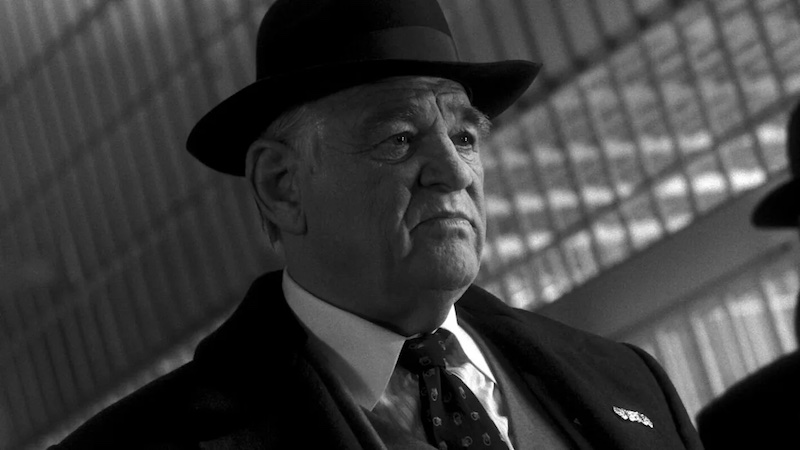
While its intertwining plots pay homage to the classic noir mysteries of the 1930s, the season-long story arc is not always as fully engaging as those found in other recent hard-boiled crime dramas like The Penguin. The mystery has plenty of atmosphere, but its momentum occasionally lags under the weight of so many moving pieces. That is especially true in a mid-season origin episode that fills in the history behind Ben and some of Silvermane’s muscle. The episode is not without purpose, as it deepens the show’s larger mythology and adds context to the forces shaping the city, but it also undercuts some of the intrigue by answering questions the series did not need to explain so directly. For a show that works best when it lets secrets linger in the shadows, that kind of exposition makes the episode drag.
Still, Spider-Noir works because its technical craft is so confident. The music, camera angles, Spider-Man references, and individual performances all help give the series its identity, turning it into something more than just a superhero story dressed in noir shadows.
Spider-Noir ultimately succeeds as a bold swing for the franchise. It may not always sustain the momentum of its central mystery, but it understands that Spider-Man does not need to be bright, youthful, or traditionally heroic to still feel like Spider-Man. By filtering the character’s familiar ideals through grief, class struggle, corruption, and old Hollywood noir, the series finds a new way to make responsibility feel heavy again. It is stylish, wounded, and unexpectedly human, proving there are still shadows worth exploring in the Spider-Man mythos.
All eight episodes of “Spider-Noir” drop exclusively on Amazon Prime Video on May 27, 2026.