Netflix came to the Annecy Animation Festival with more than just anime on its mind. While the streamer had plenty to share on that front, its larger animation slate showed just how wide the medium can stretch. There are fairy tales being rewritten, deeply personal love stories finding new life through animation, retro sci-fi mysteries, and even a fresh group of ghostbusters ready to clock in for the night shift.
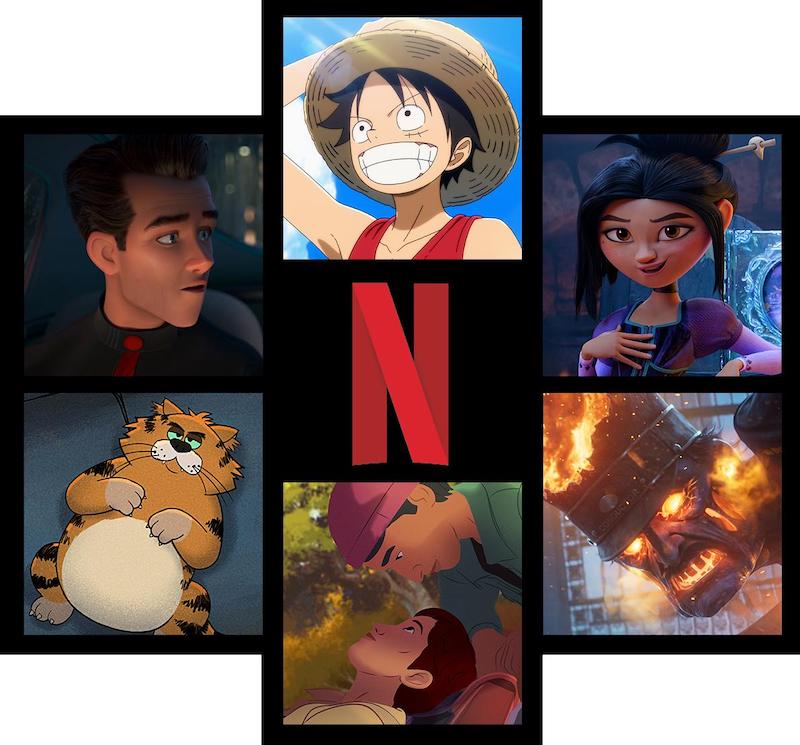
What makes this slate exciting is how different each project feels from the next. “Steps” looks playful and rebellious. “In Waves” seems intimate and emotionally reflective. “Ray Gunn” is going full retro-futuristic noir. And “Ghostbusters: Night Shift” appears to be bringing the supernatural comedy franchise back to New York with a younger, scrappier team.
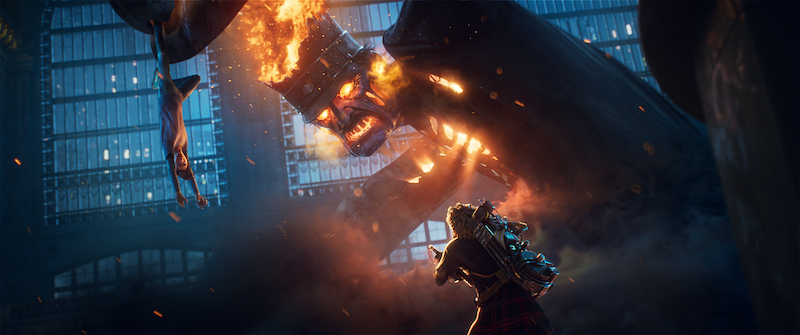
Ghostbusters: Night Shift – Sony Pictures Animation ©2026
Together, they show Netflix continuing to treat animation as a place where all kinds of stories can live. Not just family films. Not just franchise extensions. Not just adult comedies. But stories about grief, identity, style, fear, memory, and the messy need to belong.
On the film side, Netflix confirmed release dates for “Steps,” “In Waves,” and Brad Bird’s “Ray Gunn.” Each one arrives with a very different flavor, which is part of what makes the lineup feel so interesting.
“Steps” will release globally on Netflix on November 20, 2026. Directed by Alyce Tzue and John Ripa, the film takes the familiar Cinderella story and gives it a much-needed shake-up by centering the stepsisters, who have spent generations being dismissed as the villains of someone else’s happily ever after.
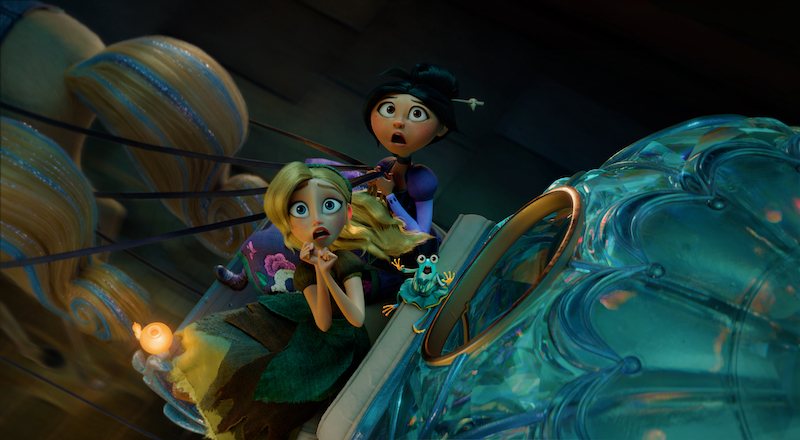
STEPS – (Top to Bottom) Lilith (Ali Wong), Cinderella (Amanda Seyfried) and Margot (Stephanie Hsu). Netflix Animation © 2026
This version follows Lilith, voiced by Ali Wong, who is fed up with being stuck in Cinderella’s shadow. Cinderella, voiced by Amanda Seyfried, may be the perfect fairy tale heroine, but Lilith clearly has no interest in quietly playing her assigned role. On the night of the Royal Ball, she steals the Fairy Godmother’s wand and accidentally turns her sister, Margot, voiced by Stephanie Hsu, into a frog. That is one way to ruin a formal evening.
From there, everything starts falling apart in the most magical and chaotic way possible. The kingdom is thrown off course, the fairy tale breaks, and Lilith has to work with Cinderella to try to fix the very story she helped derail. But “Steps” does not seem to be interested in simply asking, “What if the stepsisters were misunderstood?” Instead, it appears to ask what happens when people who have been pushed to the margins finally get the chance to define themselves.
That gives the film a more emotional center underneath all the fantasy chaos. Yes, there are magic wands, royal balls, biker trolls, high-speed chases, and one very attractive troll. But the heart of “Steps” seems to be about fractured families, sisterhood, and what it feels like to spend your life looking for a place where you actually belong.
The footage leaned into Lilith’s rebellious personality, especially when the character called out the original Cinderella story as a form of “character assassination.” Set to Olivia Rodrigo’s “brutal,” the scene gave the film a fun, slightly punk energy. It made Lilith feel less like a classic fairytale villain and more like someone who has read the story, hated how she was written, and decided to burn the whole thing down with style.
Netflix also showed a look at how the film is being built across its animation teams in Los Angeles, Vancouver, and Sydney. The progression reel moved from early storyboards to previs, animation, surfacing, and lighting, giving audiences a peek at how the rough bones of a sequence slowly become the finished CG world. It is always fun to see how much invisible labor goes into making something look effortless, especially in a movie that seems to play with both fairy-tale beauty and comedic chaos.
The voice cast also includes Bette Midler as the Fairy Godmother and Nikki Glaser as Priscilla, a schemer who takes advantage of the kingdom’s chaos and snatches the throne. Amy Poehler, Jane Hartwell, and Kim Lessing produce, with Poehler and Lessing producing for Paper Kite Productions. Netflix shared new and previously released images, as well as concept art, from the film.
While “Steps” seems to be embracing fairy tale mischief, “In Waves” is heading somewhere more personal and tender. The animated feature, directed by Phuong Mai Nguyen and based on AJ Dungo’s graphic novel, will release globally on Netflix, excluding France, on December 11, 2026.
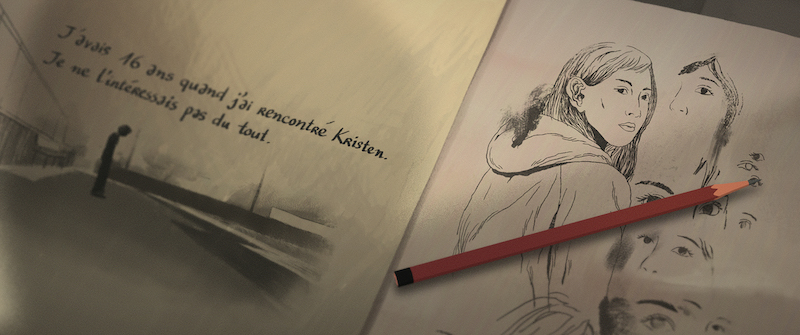
IN WAVES – Courtesy of Netflix © Silex Films – France 3 Cinéma – Gao Shan Pictures – Charades productions – Panique! – 2026
“In Waves” follows AJ, a shy teenager in Los Angeles who loves skateboarding and drawing. His world changes when he meets Kristen, a surfer whose connection to the ocean opens up something new in him. Their relationship begins as a story of first love, the kind that feels like it could stretch endlessly into the future. But that future is interrupted when Kristen faces a sudden illness, forcing them both to confront grief, fear, and the impossible weight of loving someone through something devastating.
Nguyen and Dungo appeared in a video message to talk about what it meant to bring such a personal story to animation. Dungo spoke about watching Nguyen translate some of the most painful and defining moments of his life into a new medium. That kind of adaptation carries a different emotional weight because “In Waves” is not just inspired by loss. It comes from someone’s lived experience with it.
What drew Nguyen to the story was not only its connection to the California coast and surfing culture, but also the universality of its emotions. At its core, “In Waves” is about first love, friendship, heartbreak, and the ways art can help someone process what cannot be easily said out loud.
Animation feels especially suited to that kind of story because memory rarely moves in a straight line. Grief does not either. It comes in flashes, fragments, and waves. By using animation, “In Waves” can drift between reality, memory, dreams, and history without forcing those emotional spaces to stay separate. That fluidity gives the film room to feel both personal and expansive.
The film also looks beyond AJ and Kristen’s relationship by exploring the origins of surfing and its cultural legacy. That connection to the ocean gives the story a larger rhythm. Surfing becomes more than an activity or shared passion. It becomes a way of understanding movement, loss, memory, and the things people carry with them even after someone is gone.
What makes “In Waves” stand out is that it does not sound like a story trying to tidy grief. It seems to understand that loss does not disappear just because time passes. It changes shape. It recedes. It returns. And sometimes, the things that help us stay afloat are love, friendship, art, and the memories we keep returning to.
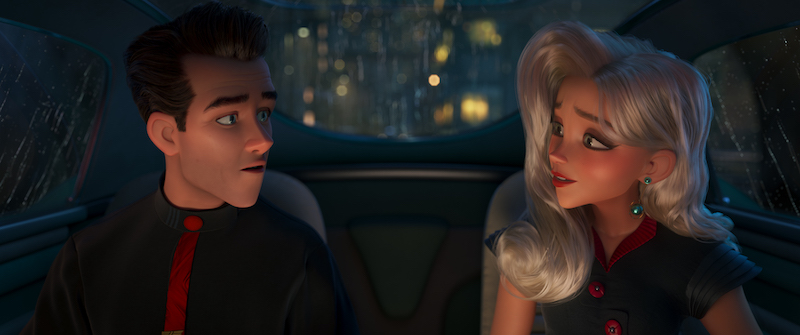
RAY GUNN – Raymond Gunn (Sam Rockwell) and Venus Nova (Scarlett Johansson). Skydance Animation ©2026
Then there is “Ray Gunn,” which may be the strangest and most stylish title in this group. Directed by Brad Bird, the animated feature will release globally on Netflix on December 18, 2026. The film is set in Metropia, a massive city in an alternate future imagined from the perspective of 1939. Sam Rockwell voices private eye Raymond Gunn, who gets pulled into a case involving aliens, murder, and a multimedia star named Venus Nova, voiced by Scarlett Johansson.
The origin of “Ray Gunn” is wonderfully odd. Bird explained that the idea began when he misheard The B-52s’ “Planet Claire” and thought it was some kind of new version of Henry Mancini’s “Peter Gunn” theme. When the song veered into something more sci-fi, his brain made the leap from “Peter Gunn” to “Ray Gunn.” Suddenly, Ray Gunn became a detective. Then came the question of what a detective story would look like inside a future imagined from the late 1930s.
That is how Bird arrived at a blend he described as something like “The Maltese Falcon” meets “Buck Rogers.” It is a wonderfully nerdy starting point, and it immediately explains why animation feels like the right home for this story. A noir detective movie already depends on mood, shadow, attitude, and style. Add aliens and retro-futuristic worldbuilding, and animation gives the whole thing room to become bigger, stranger, and more expressive.
Bird also used the conversation around “Ray Gunn” to discuss animation as a medium rather than a genre. It is a distinction animation fans have been making for years, and Bird clearly still feels strongly about it. For him, animation should not exist only to do what live action cannot. That idea, he argued, limits the medium. The real power of animation is its ability to exaggerate, clarify, stylize, and capture the essence of a character or world.
That is where his idea of caricature comes in. Not caricature as an insult, but caricature as a tool. Animation can take a gesture, design, mood, or personality and heighten it until it becomes more truthful, not less. In a world like Metropia, where detective fiction and science fiction are colliding, that kind of visual exaggeration could make every street corner, every shadow, and every strange character feel like they belong to a fully imagined universe.
Bird also talked about wanting animation to have more room for adult audiences. While he acknowledged that more projects are being made outside the usual family-film lane, he still sees it as rarer than it should be. He has long believed that there is an audience of grown-up animation fans who want to see the medium used across different tones and genres. “Ray Gunn” feels like a response to that idea.
With Skydance Animation behind the film and a voice cast that also includes Tom Waits, “Ray Gunn” sounds like the kind of animated project that could appeal to viewers who love animation not just for nostalgia or comfort, but for style, ambition, and weird creative swings.
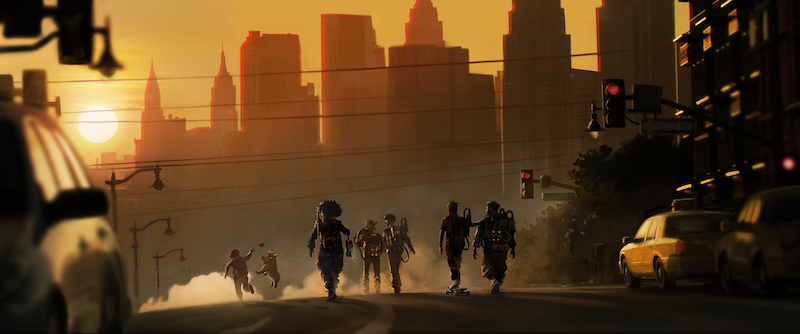
Ghostbusters: Night Shift – Visual Development Art. Sony Pictures Animation ©2026
On the series side, “Ghostbusters: Night Shift” is bringing the franchise back to New York in animated form. The new series will release globally on Netflix in 2027 and is set in 1994, five years after the events of “Ghostbusters II,” when the Ghostbusters took the Statue of Liberty for a walk through Manhattan.
This time, the original team is no longer holding things together. When supernatural chaos starts threatening the city again, a new group of young New Yorkers is forced into action. They are not trained. They are not respected. They may have even helped cause the problem. But when ghosts start taking over the city, somebody has to pick up the proton packs.
That setup gives “Ghostbusters: Night Shift” a fun underdog energy. It is not just about handing the franchise to a new team. It is about watching a group of strangers slowly figure out how to become a team while dealing with ghosts, limited resources, and the kind of New York attitude that probably leaves little room for patience.
Executive producers Jason Reitman and Gil Kenan spoke about wanting the series to have the spirit of classic Saturday morning cartoons while still feeling a little scarier and more cinematic. That makes sense for “Ghostbusters,” which has always worked best when it balances comedy, horror, and a very specific sense of place. The ghosts can be ridiculous, but the world around them still needs to feel lived-in.
To capture 1994 New York, the creative team looked to the city’s grimier, more DIY street culture. That meant drawing on punk textures, layered visuals, and a tactile design language that could make the world feel handmade and worn in. For a franchise so tied to old buildings, weird equipment, subway grime, and supernatural messes, that approach feels right.
Even though “Ghostbusters: Night Shift” is animated, the team wanted it to feel connected to the live-action films. Since the series fits between existing chapters in the franchise, the visual language had to feel cohesive. That meant keeping the world’s rules consistent while still taking advantage of what animation can do.
The result appears to be a show that pushes certain design elements without making them feel disconnected from the “Ghostbusters” universe. The lighting, color palettes, and camera language are meant to feel more naturalistic and cinematic, while the animation gives the show enough flexibility to stylize the world in a way that makes sense.
That balance could be what makes “Ghostbusters: Night Shift” work. It does not need to reinvent “Ghostbusters” from scratch. It just needs to find a fresh way into a world people already love. By setting the story in 1994 and focusing on a younger team figuring things out as they go, the series has a chance to bring new energy to the franchise while keeping the messy, spooky, funny New York soul intact.
Executive producers on “Ghostbusters: Night Shift” include Reitman, Kenan, Ben Hibon, Elliott Kalan, Amie Karp, and Dan Aykroyd. Netflix revealed a first look, concept art, and the official logline for the series.
With “Steps,” “In Waves,” “Ray Gunn,” and “Ghostbusters: Night Shift,” Netflix’s Annecy slate feels like a reminder that animation does not have to fit into one tidy box. It can be playful, romantic, devastating, stylish, spooky, weird, and emotionally specific. It can retell a fairy tale from the stepsister’s point of view, turn a memoir into something fluid and dreamlike, imagine a detective story from a 1939 version of the future, or send a new group of ghostbusters into a haunted New York night.
That range is what makes the slate feel exciting. Netflix is not just offering more animation. It is offering different reasons to care about animation.