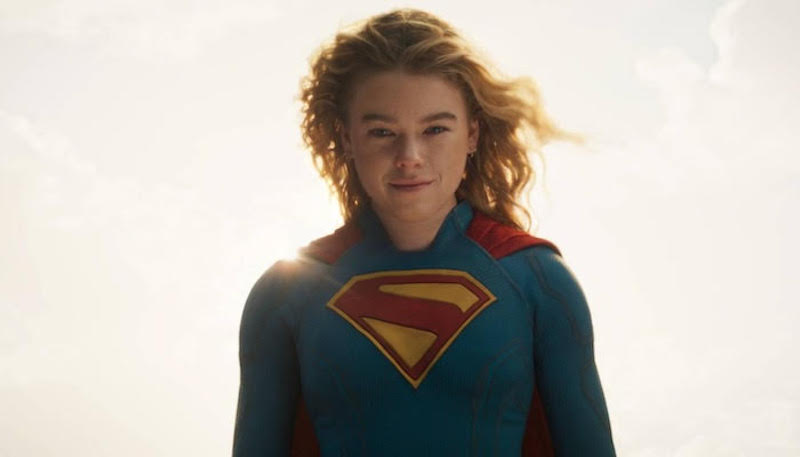
If Superman is the symbol of hope and truth, then Supergirl represents a departure from the traditional, infallible superhero. Here, Kara Zor-El (Milly Alcock) is a deeply scarred, cynical survivor defined by resilience. But while this cinematic adaptation understands that it is okay to be messy and vulnerable, its uneven execution keeps those ideas from soaring as high as they should.
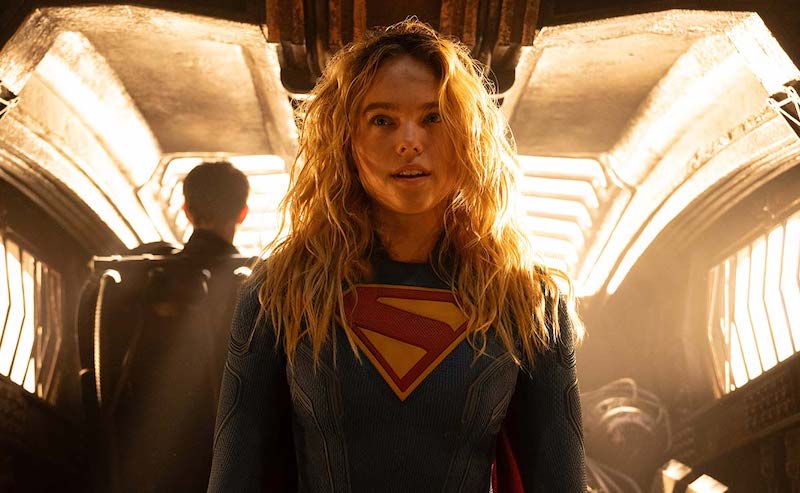
By allowing Kara to be messy instead of the clean cut superhero, the approach gives Supergirl its strongest emotional hook. Kara is not a hero who has everything figured out. She is someone running from grief, loneliness, and the weight of being one of the last Kryptonians. Her cynicism does not erase her compassion, and that tension gives the film its most compelling character work.
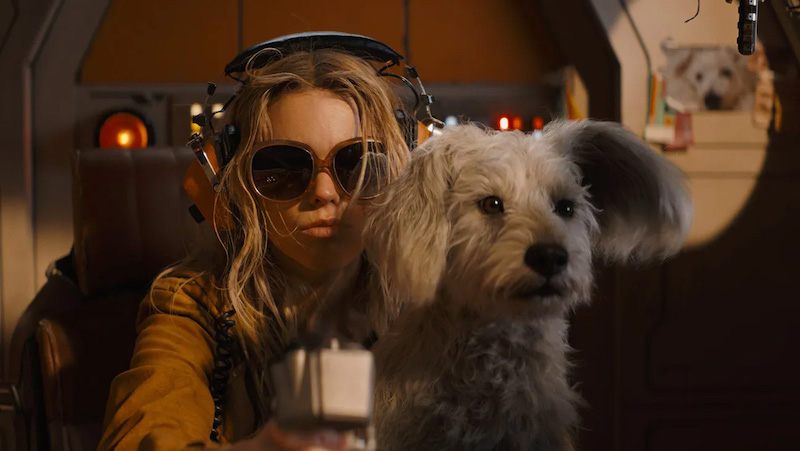
In Supergirl, set after the events of Superman, Kara spends her time traveling the galaxy in search of planets with red suns so she can experience the effects of alcohol and lose herself in a lifestyle of partying and self-indulgence. It’s clear that she doesn’t want any part of the superhero life that her cousin Kal-El had adopted on Earth, as noted by her dog relieving itself on newspaper issues celebrating Superman’s heroism. Kara also hides herself in her grief and is the sole survivor carrying the raw, unprocessed trauma of her destroyed homeplanet of Argo.
As such, there’s a quiet resentment toward Clark that comes from watching someone grow up with a home, a community, and a “light” heart while she grew up alone with the ruins of Argo. So she lives to party. Unfortunately, she’s forced to step up when the ruthless space pirate Krem (Matthias Schoenaerts) shoots Krypto with a poison dart. In chasing him down, Kara crosses paths with Ruthye Marye Knoll (Eve Ridley), a girl whose entire family has been murdered by the same man.
At first, Kara wants nothing to do with Ruthye. The girl is too young, too inexperienced, and far too eager to kill the man who took everything from her. Kara keeps trying to push her away, insisting this is not a life a child should step into. But as their journey drags them through one brutal corner of the galaxy after another, Kara starts to recognize something frightening as they go on this quest. Ruthye’s obsession with revenge looks a lot like the path Kara herself could have taken. Through Ruthye, she sees how righteous anger curdles into something that will hollow you out, not heal you.
That is where Supergirl should hit hardest. Kara and Ruthye are not just traveling companions. They are two wounded survivors responding to loss in opposite directions. Kara tries to numb herself to the pain, while Ruthye wants to weaponize it. Their dynamic gives the film a sharp emotional foundation, especially as Kara begins to understand that saving Ruthye may mean keeping her from becoming another version of herself.
The problem is that the script sputters across too many subplots to give their relationship the attention it deserves. Between watching Ruthye learn what Kara is capable of during the bus sequence, the bar showdown, and the detour involving the Brigands, the film keeps introducing ideas that could have strengthened their bond. But instead of letting those moments accumulate into a deeper emotional connection, the story moves on too quickly, leaving Kara and Ruthye’s dynamic feeling less developed than it should.
A lot of this feels more like narrative convenience than organic storytelling. The film seems built around placing specific action beats at certain points, then trying to balance them with emotional depth and heartache. But because those moments do not always grow naturally from the characters, the emotional weight does not land as strongly as it should. This is particularly true for the survivor’s guilt Kara suffers from as she is the only survivor of the Argo disaster.
At its best, the Kara and Ruthye dynamic gives Supergirl its emotional spine. Kara is what Ruthye could become if she survives long enough. Older, bitter, self-medicating, and still orbiting the same wound. Ruthye, in turn, is what Kara may have once been. Raw, furious, and convinced that killing the person who hurt her will somehow close the hole left behind.
That is why their relationship works best as both a mirror and a warning. Kara looks at Ruthye and sees a younger version of her own rage, which is why she keeps trying to steer her away from killing Krem. Ruthye looks at Kara and sees a possible future defined by avoidance, alcohol, and the fear of ever finding a place that might feel like home. When the film leans into that tension, their scenes have real bite.
The issue is not that the surrounding set pieces are meaningless. The bus sequence, bar confrontation, and prison detours all have the potential to deepen how these two characters see each other. They place Ruthye inside Kara’s violent, chaotic world while forcing Kara to see revenge through Ruthye’s eyes. But the film often treats these moments as isolated crises rather than emotional turning points. Their bond deepens in implication more than through clear, trackable shifts.
As a result, the Kara and Ruthye dynamic feels underdeveloped rather than empty. The shape of a rich mentor and anti-mentor relationship is there, but the script keeps pulling focus before it can fully evolve. Their pairing makes emotional sense, yet the way they are shuffled through set pieces can feel driven by narrative convenience. That leaves the relationship feeling like an intermittent theme rather than the film’s emotional center.
That problem extends beyond Kara and Ruthye’s relationship. The stakes are clear on paper, but emotionally undercooked in execution because the characters often behave like they do not feel the full weight of them. The film tells us what is at stake, but too often, everyone on screen seems weirdly indifferent to the devastation they’ve experienced. As such, it makes it that much harder for us to care. Ruthye’s parents, Kara’s dog, Kara’s mom dying from Kryptonite poisoning as a result from Argo’s self-sustaining floating terrarium, the movie doesn’t build enough felt urgency around it. Scenes drift by with characters cracking jokes or slipping back into banter, and that emotional indifference at the character level makes it hard for these losses to register as more than narrative prompts.
That is especially frustrating when Kara’s grief should be overwhelming. Argo’s destruction is not just backstory. It is the catastrophe that took her home, her people, and her mother, the person she was closest to. But the film does not build enough felt urgency around that loss, so her survivor’s guilt registers more as an idea than a wound we are allowed to sit with.
Krem has a similar problem. On paper, he is the source of Ruthye’s pain and the reason Kara is forced into the story, but he never becomes interesting enough to hold that weight. He functions more as a plot trigger than a fully realized antagonist, which weakens both the revenge arc and the urgency of the journey.
That is frustrating because the pieces are there to make him more unsettling. He does not need a grand plan to control the galaxy. His greed and cruelty are enough, especially when the film connects him to the trafficking of brides and the Brigands’ exploitation of women. That subplot reframes the villains as systemic predators rather than random space pirates, tying the story to ideas of gendered violence, exploitation, and bodies being treated as resources. But because the film does not spend enough time personalizing those victims or deepening Krem’s presence, the threat remains more conceptually disturbing than emotionally gripping.
Jason Momoa’s Lobo adds another layer to that unevenness. Momoa clearly understands the assignment, bringing the right mix of swagger, menace, and absurd comic-book energy to the role. His presence gives the film a jolt whenever he appears, but Lobo often feels more like a crowd-pleasing intrusion than an organic part of Kara and Ruthye’s story.
That does not mean he is ineffective. Momoa is entertaining, and the character’s chaotic energy fits the strange corners of the galaxy the film wants to explore. But in a story already struggling to give Kara’s grief, Ruthye’s revenge, and Krem’s threat enough emotional weight, Lobo can feel like one more detour pulling focus from the film’s strongest material. Still, he works because Momoa treats Lobo like a burst of pure comic-book chaos. He does not need to carry the emotional weight of the story to be memorable. He just needs to barge in, disrupt the rhythm, and give the film a dose of reckless, vulgar energy that contrasts with Kara and Ruthye’s heavier journey.
Ridley gives Ruthye more dimension than the script sometimes allows. Her anger is controlled rather than explosive, which makes her feel genuinely dangerous despite her size. There is also something unsettling and poignant about the gap between Ruthye’s formal, adult-sounding language and the fact that she is still a grieving child. Ridley leans into that dissonance, pivoting between righteousness, fear, manipulation, and forgiveness in ways that suggest the stronger, more focused movie that could have been built around her.
Still, the performances do a lot to keep Supergirl engaging even when the script stumbles. Alcock gives Kara the bruised defensiveness of someone who has mistaken survival for healing, while Ridley brings enough anger and vulnerability to make Ruthye’s pain feel immediate. Together, they keep the film’s emotional center intact, even when the story around them keeps drifting away from it. Even some of the music choices work to the film’s benefit. Songs like Sleigh Bell’s “This Summer” and Wet Dreams’ “Catch These Fists” speak to Kara’s escapism and urge to pick fights, while a cover of Jimmy Eat World’s “The Middle” is a sonic reminder that the girls are not their trauma and for all the cosmic misery Kara, Ruthye, and even the brides have experienced, the kids are working through pain in their own ways.
Supergirl also benefits from strong costume and production design. Kara’s suit, the look and texture of Argo, and Krem of the Yellow Hills’ terrifying makeup all help give the film a tactile, lived-in quality, even when the character work does not always match the strength of the design. That visual imagination carries through to the third-act spectacle on a planet lit by yellow and green suns, especially when paired with the Jimmy Eat World cover. The set pieces may not always land emotionally, but they are a reminder of how practical effects and thoughtful design can strengthen visual storytelling.
Supergirl is a messy film that lets audiences know it is okay to be mess. It ultimately works best when it focuses on those messy people trying to figure out what comes after grief and loss. The film may not always trust those quieter ideas enough, often burying them with comic book action spectacle and an underdeveloped antagonist, but Alcock and Ridley’s performance ensures Kara’s and Ruthye’s journey remains worth following. It may not soar as high as its ambitions, but it succeeds in giving Supergirl a distinct identity within the DC Universe.
7.5/10
Supergirl is in theaters June 26, 2026