For Steven Spielberg, aliens have rarely been creatures to fear. They are sources of wonder, mystery, and possibility, arriving from the stars not merely to threaten humanity, but to reveal something about it. As “Disclosure Day,” Spielberg’s latest film, illustrates, there is more to aliens than meets the eye, and humanity’s misunderstanding of what is out there often reflects its own fear of the unknown.
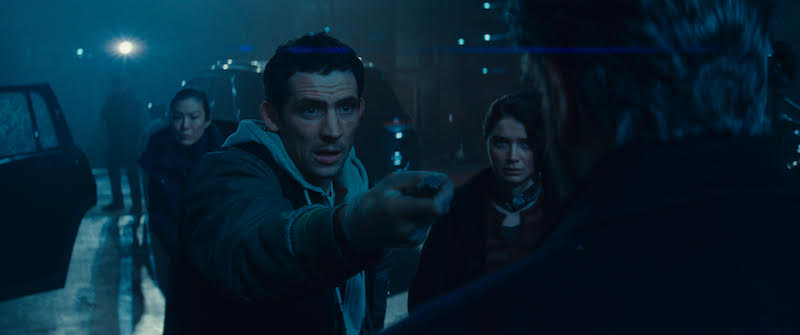
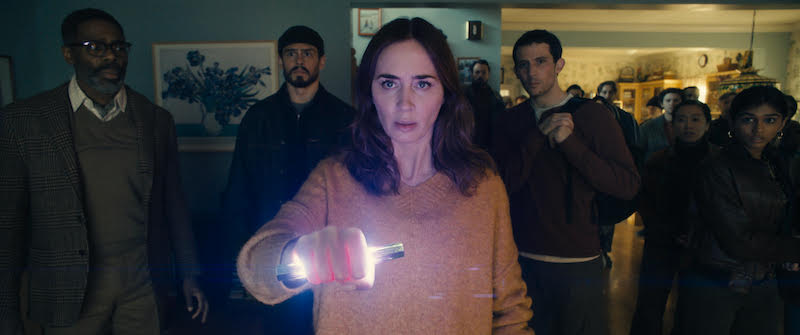
“Disclosure Day” follows Daniel Kellner (Josh O’Connor), a gifted cybersecurity expert and former hacker who turns against the secretive agency he works for after uncovering the truth about humanity’s contact with extraterrestrial life. Meanwhile, Kansas City meteorologist Margaret Fairchild (Emily Blunt) longs for opportunities beyond her local television job. She gets far more than she bargained for when she discovers that she has a mysterious connection to the same secrets Daniel is trying to expose, making her a target for those determined to keep the truth hidden.
Their separate journeys eventually converge in a conspiracy thriller that combines government cover-ups, corporate secrecy, and alien technology with Spielberg’s familiar sense of awe. While the film occasionally bends its own rules to keep the story moving, its emotional sincerity and thrilling set pieces show that Spielberg can still find something new within ideas he has explored throughout his career.
Spielberg has spent much of his career using science fiction to explore ordinary human fears. The extraterrestrial visitors may draw audiences into the theater, but the uncertainty surrounding them allows him to examine isolation, fractured families, government distrust, and the need to believe in something beyond ourselves. “Disclosure Day” revisits many of those ideas without simply repeating what came before. Here, the discovery of alien life is not only a scientific revelation. It becomes a test of how far powerful institutions will go to control the truth and how quickly fear can replace curiosity.
That sense of curiosity has shaped Spielberg’s work since “Close Encounters of the Third Kind,” but “Disclosure Day” approaches the unknown from a different point in his life. Spielberg has described the film as a thematic bookend to his 1977 science-fiction classic. Where he once wondered how extraordinary it would be if alien contact were real, he now seems more interested in what it would mean for humanity to finally know the truth.
That shift gives “Disclosure Day” a more urgent edge. Wonder is still central to the film, but it now exists alongside the frustration of knowing that answers may already exist and are being deliberately withheld. Alien life is not presented simply as a threat or a miracle. It becomes evidence of how institutions use secrecy to preserve power, even when doing so comes at the cost of public trust and humanity’s understanding of itself.
Daniel and Margaret enter this conspiracy from opposite directions. Daniel has spent years working inside the institution responsible for protecting these secrets, giving him direct knowledge of how carefully the truth has been controlled. Margaret, however, is pulled into the mystery without understanding why she has become part of it. One actively seeks disclosure while the other must first understand what is happening to her, allowing the film to examine the truth as both something pursued and something imposed upon a person.
Spielberg grounds those larger ideas in the characters’ growing sense of isolation. Daniel’s decision to expose Wardex forces him to abandon the security of the life he once knew, while Margaret’s mysterious abilities leave her increasingly disconnected from her own body and the people closest to her. Their experiences give the conspiracy an emotional cost. Knowing the truth may offer liberation, but reaching it requires both characters to surrender the comfort of believing their lives were ever ordinary.
Spielberg conveys that disorientation through filmmaking that constantly shifts between intimacy and spectacle. The film can move from Margaret quietly testing her unexplained abilities during an ordinary morning at the television station to an enormous train collision without losing sight of the people caught inside the chaos. Even at its largest, the action remains readable, with Spielberg building tension through movement, framing, and the audience’s understanding of what each character stands to lose.
Emily Blunt gives the film its emotional center. Margaret’s transformation is not treated simply as the discovery of extraordinary abilities. It is invasive, disorienting, and physically exhausting. Blunt communicates that loss of control through subtle changes in Margaret’s posture, movement, and expression, making it feel as though her body understands what is happening before her mind can catch up.
That physicality becomes especially important during Margaret’s moments of emotional collapse. Blunt captures the fear of someone who has suddenly become essential to a mystery she never asked to join, while still allowing Margaret to grow more determined as the truth becomes clearer. Her vulnerability never makes the character passive. Instead, it gives weight to every decision Margaret makes as the pressure placed upon her continues to grow.
Josh O’Connor brings a nervous intensity to Daniel, whose knowledge of Wardex makes him the film’s initial narrative engine. Yet once Daniel’s path intersects with Margaret’s, he gradually takes a back seat to her story. O’Connor remains engaging, but Daniel’s personal mysteries and emotional development do not receive the same attention as Margaret’s transformation. He helps uncover the truth, while she carries most of its emotional consequences.
Colman Domingo brings warmth and authority to Hugo Wakefield, whose role requires him to explain much of the hidden history behind Wardex and its alien technology. His calm delivery keeps those exposition-heavy scenes from becoming overwhelming. Colin Firth offers a colder counterpoint as Noah Scanlon, embodying the institutional arrogance at the center of the film. Scanlon does not merely want to hide the unknown. He believes he has the right to control it.
John Williams’ score reinforces the contrast between fear and wonder without overpowering the film’s quieter emotions. His music gives the large-scale action a sense of urgency, but it is most effective when accompanying Margaret’s attempts to connect with others. The score reminds us that beneath the conspiracies and alien technology, “Disclosure Day” remains a story about people searching for understanding.
However, the screenplay’s handling of the alien technology is not always as precise as Spielberg’s direction. Its abilities seem to expand depending on what a scene requires, allowing the devices to manipulate perception, enter a person’s mind, or move the characters out of danger. The individual sequences are often effective, but the lack of clearly established limitations makes the technology feel increasingly convenient.
That problem becomes more noticeable in the third act, when several characters participate in Margaret and Daniel’s plan without enough motivation. Having them acknowledge that they do not understand their own actions does not resolve the gap in logic. Instead, it draws attention to how much the climax depends on people behaving according to the screenplay’s needs rather than their own established choices.