“K-Pop Demon Hunters” has shaped up to be nothing short of a phenomenon. With the film captivating global audiences and its soundtrack dominating the charts, the animated feature is poised to become a cultural touchstone—one that fuses the infectious energy of K-pop with high-stakes, mythic storytelling.
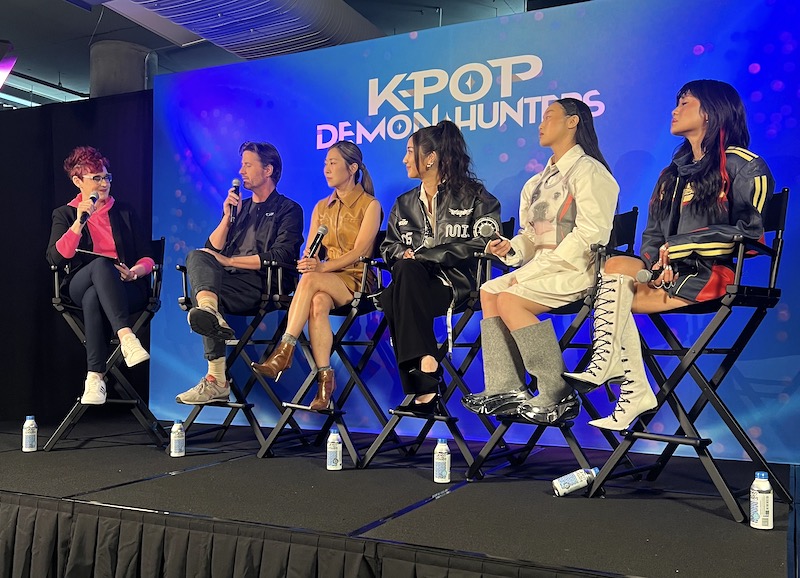
To celebrate its success and share insight into the creative process, Netflix recently welcomed a select group of journalists to its Hollywood offices for a press conference. Directors Maggie Kang and Chris Appelhans were joined by EJAE, Rei Ami, and Audrey Nuna—the singing voices behind Rumi, Zoey, and Mira of Huntrix—to discuss the inspirations, challenges, and cultural significance behind bringing this groundbreaking project to life.
Moderated by Grae Drake, the conversation covered everything from the film’s musical identity to its cultural roots. When it was my turn, I asked the panel: since K-pop is such a deeply visual and sonic experience, how did stepping into animation change your approach to lyric writing and weaving storytelling elements into the songs.
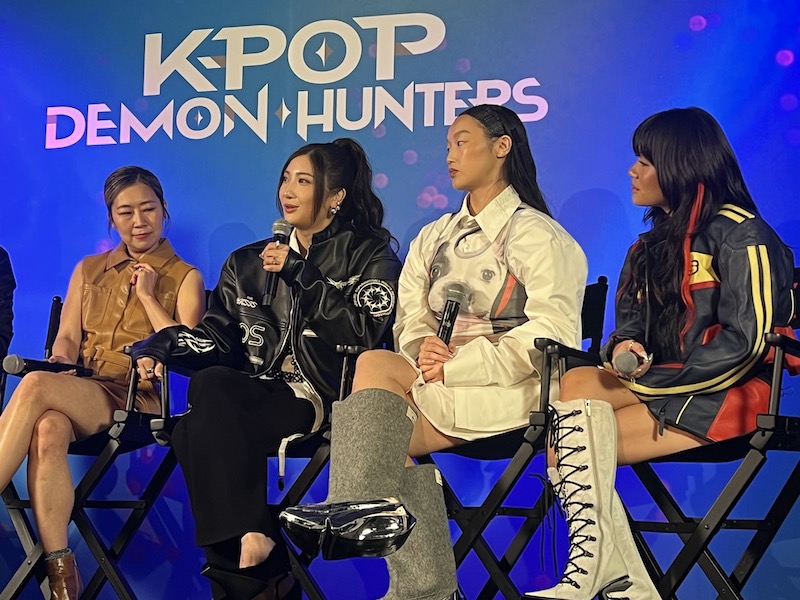
EJAE admitted that stepping into animation required a completely different mindset from her usual K-pop songwriting process. “It’s definitely a different approach, because you really have to follow the story and understand what the characters are going through in each scene,” she explained. She credited the directors for providing a strong framework, as well as her co-writer Mark Sonnenblick, who helped balance her pop instincts with the film’s narrative needs.
“I come from the K-pop world, so I’m always thinking: what’s a great melody, what’s a catchy hook, what’s a good concept? Even with ‘Golden,’ I knew the title had to stick. That’s always my focus, while Mark was more focused on keeping us aligned with the storyline. It was a lot of us going back and forth, kind of policing each other,” she said.
As someone who loves musicals, EJAE noted how writing for animation sometimes felt like straddling two worlds. “In musicals, you can get away with things being a little wordy or emphasizing words differently, but in pop music, we really avoid that. We want everything to rhyme cleanly and sound solid. So sometimes I’d push back, like, ‘This line doesn’t sound right,’ and Mark would remind me, ‘That may sound cool, but it doesn’t serve the story.’”
The creative tension, she admitted, was both challenging and rewarding. “We kept saying, ‘This is so hard.’ But then we’d also laugh and say, ‘If we pull this off, we’re geniuses,” she said.
EJAE’s description of the push-and-pull process highlighted just how much care went into crafting the music. That level of effort made the film’s success feel even more rewarding. When asked how it felt to see K-Pop Demon Hunters soar to the top of Netflix’s charts, both the cast and creators admitted they were overwhelmed. For them, it was like letting go of their child to explore the world.
“It was fun to watch the trajectory. One of the great things about the platform is that word of mouth and the quality of your film can build an audience,” Appelhans said. “Watching that first week turn into the second, then the third, and just seeing it take off was really wild.”
Appelhans added that the real magic came from the fans themselves. “The passion and the specificity of all the fan stuff online. They were the best promotion for the film we could have ever asked for. We’re just really grateful.”
Co-director Maggie Kang echoed Appelhans’ sentiments, recalling how surreal it was to watch the film’s success unfold in real time. “Every day we had a text chain with the producers and Spring Aspers, the president of music at Sony Music, and we were constantly being sent all these records the movie was breaking, the songs were breaking. Every day we were like, ‘Oh my gosh, this is amazing.’ And then after a while, we kind of lost track because it just kept going.”
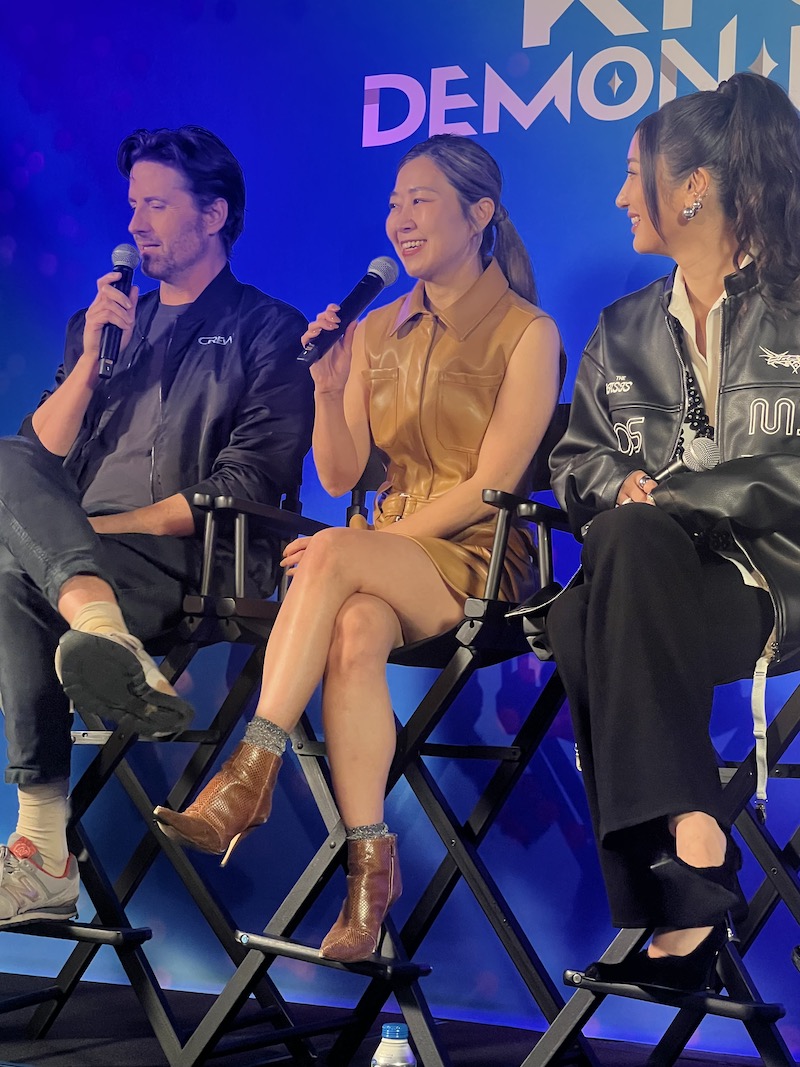
“Chris described it best for me. It’s like we raised this child, and then you release that child into the world. At first you’re like, ‘Okay, I hope people like you, I hope you’re going to be okay, I hope you’re not going to scare anybody,'” Kang described. “And now we’re like, ‘Just go!’ We’re watching from afar and we’re just really proud. It’s like, ‘Oh honey, everybody gets you.’ There’s such a relief, but also joy. Now we feel like, okay, we’ve done our job, and it’s just so good to see you out there killing it.”
The pride of watching K-Pop Demon Hunters break records was matched only by the emotional responses it inspired. Beyond the charts and streaming milestones, what truly moved the directors and cast were the stories from fans themselves. They described how viewers weren’t just entertained by the film. They were finding comfort, connection, and even healing in its music and message.
EJAE shared how profoundly the film has touched fans. “I got a lot of DMs from fans, and they were telling me that the movie saved them. One fan, her parent had passed away, and the next day her man was like, ‘You should watch K-pop.’ She turned it on, and the airplane scene caught her attention because it looked pretty fire. She kept watching, and then she watched the whole thing. She just started crying, and then she watched it again and again.”
She added that it was the fan’s partner who ultimately reached out. “He told me, ‘I haven’t seen her smile in so long, and she finally smiled again. That’s a big deal.’ The music helped her—now she’s been singing the songs every day.”
After reflecting on the film’s emotional impact on audiences, the conversation shifted to the cast’s own upcoming milestone of their first live performance of “Golden” on The Tonight Show Starring Jimmy Fallon.
When talk turned turned to their debut performance on The Tonight Show Starring Jimmy Fallon, the room lit up with both nerves and excitement. For EJAE, rehearsals had already been a transformative experience. “Oh my god, rehearsals are incredible. We had so much fun. We’ve never sung together before, and I’m just learning from these ladies because they’re incredible artists and performers. The synergy with all of us – guys, Golden is a hard song.”
Co-director Maggie Kang chimed in, recalling the song’s demanding creation. “We wrote many, many drafts of ‘Golden’ that were very different from what we have now. And I was constantly asking EJAE, ‘Can you sing higher?’ And she always did it.” EJAE laughed, “I did it, y’all. Lots of energy!”

Audrey Nuna praised her co-star’s powerhouse vocals: “We were blessed to hear her sing the song in real life, maybe for the first time in the world, in rehearsal. To be in the presence of this generational talent—it’s incredible. She says she’s learning from us, but we also learn so much from everything she does.”
Despite the pressure, EJAE emphasized the support she felt within Huntrix. “It’s such a hard song, but I can sing it with these girls by my side. I’m not kidding, we sound good. Don’t expect too much—but also, you should, because we worked really hard.”
Rei Ami teased fans to stay tuned: “Next Tuesday, Huntrix’s first-ever live performance of ‘Golden.’ See you there.”
The trio revealed just how intense preparations had been. According to Nuna, the sessions were intense amounting to “three eight-hour sessions, with six hours straight of vocals, because it is a vocal song,” as Audrey explained. EJAE compared the process to “theater camp,” noting how her voice actually grew stronger the longer they rehearsed.
But it wasn’t just about technical perfection; there were emotional breakthroughs too. Audrey remembered one session vividly: “I put the mic down and told them, ‘Guys, that felt real.’” EJAE added with a smile, “She actually started showing emotion after two days of rehearsal.”
Nuna admitted she even had an “existential crisis” mid-rehearsal: “I’m emotionally constipated, so I usually process things slowly, like four to six business weeks delayed. But there was a moment where I broke down in front of them. It was like, ‘Oh my god, is this real?’” She described that as the turning point: “We had been running the song over and over, and the moment the three of us locked in, we felt like one unit. That was a really big breakthrough.”
The conversation shifted to a larger challenge about how to capture the spirit of K-pop itself. The directors spoke candidly about balancing the authenticity of the fandom with making the story universally relatable. Kang said “We talked about it a lot because we wanted to represent the fandom correctly. What’s so special about K-pop is the relationship between idols and fans. It’s unlike anything else. We wanted to honor that, so we folded it into the mythology of the film. That connection became the magical force that fuels and protects the world.”
She acknowledged the pressure that came with that responsibility. “As directors, you’re always scared about what people will think, especially when it comes to representing something so personal to so many. All we could do was approach it honestly. I’ve been a K-pop fan since Generation 1, so for me, it was a personal journey and a personal relationship with the music. Nobody can tell me I’m not a fan because I’ve been there from the beginning.”
For Kang, that personal connection was the key to bridging audiences. “Even if people don’t know the specifics of K-pop culture, everyone knows what it feels like to be a fan. That’s the gateway. We didn’t want to sit there and explain everything. We wanted people to just dive in, enjoy the story, and learn through the characters as they went along.”
Kang also revealed how early cultural concepts shaped the film’s worldbuilding, pointing to the origins of the Saja Boys. “The idea of the Saja Boys came very early, probably within the first month of developing the concept. We always wanted the Jeoseung Saja, which is the Grim Reaper in Korean demonology. They became the Black Cat demons we see at the end, and the name carries multiple meanings. ‘Saja’ means messenger, like ‘lion messenger,’ but also refers to the Grim Reaper, the chong-saja. Because these characters are two-faced, the wordplay just felt right.”
She added with a laugh, “Also, nobody is ever going to name a group the Saja Boys because of that, so it felt unique. It was a great name, and a lot of people noticed it. Coming up with Huntrix, on the other hand, was a much longer and harder journey.”
While the technical and creative hurdles pushed the animation team to new heights, the heart of the project was always rooted in culture. Beyond the dazzling visuals and tonal shifts, the filmmakers were most proud of how K-Pop Demon Hunters celebrated Korean heritage and brought underrepresented stories to a global audience.
Appelhans described how the film’s tonal range became both its creative ambition and its biggest hurdle. “What Maggie and I really wanted to do, and I think this was part of our bonding as filmmakers, came from both of us being huge fans of Bong Joon-ho. He has this crazy range of tone. You’re watching The Host and it shifts from family comedy to horror to romance, all within the same film. We loved that, and we wanted to bring that kind of range here.”
For Appelhans, that meant blending an array of seemingly contrasting elements. “We had all these ingredients and aspirations. The girls had to feel legitimately glamorous and magnetic, like real-life K-pop idols. But we also wanted them to be goofy, chugging kimbap in pajama pants, or heading off to a K-drama date. The film had to move between music videos, choreography, fight scenes, probably seven or eight critical ingredients, and the animation had to unify it all.”
He emphasized how much this demanded of the team at Sony. “The girls had to be able to make funny faces and then, in the next moment, turn to camera and look beautiful, and the audience had to believe both. That’s a technical challenge, a design challenge, and a reference challenge for the animators. We were lucky to have an amazing team at Sony who could span all of that and hold it together.”
Soon, the conversation turned to how the songs and the film itself had the power to change people’s lives for the better. For Ami, one moment in the recording booth crystallized just how impactful the film could be. “I remember at the end of a recording session, I got to see the actual scene and hear the full song with both our parts. It wasn’t even mixed yet, but it was beautiful. I was crying. Over Zoom, Ian [Eisendrath] was in New York and I was in L.A., and I looked at Ian and Josh and said, ‘Guys, we’re gonna change the world.’ Later I beat myself up for saying something so cringy. And I’m so glad I said it now looking back, because I feel like it did. I feel like it saved a lot of lives, including mine. So music, homeland sealed forever. There’s no Saja Boys in this house.”
Appelhans added that the story’s themes were always meant to reflect real struggles. “We talked so much about inner demons and acceptance. Everyone has inner demons, parts of ourselves that can be destructive, that can affect how we live and how we treat others. They can win, or they don’t. The film is about facing them together. If we do, we have a chance. If we don’t, then they prevail. It might sound like a high fantasy concept, but it’s really about how we survive.”
For Maggie Kang, the emotional resonance was deeply tied to the music. “It’s kind of crazy because this is the first time EJ and I have seen each other since the movie came out. EJ joined very early, even before Chris, and she became the heart and soul of the film because so much of her spirit is in the songs.”
Audrey Nuna reflected on how art, in its many forms, offers connection in a fractured world. “We live in a pretty messed up world, and I really do believe art can, in many ways, save it. It connects us. You can meet a stranger who has watched this film and feel an immediate bond, an understanding of this strange experience of life. That’s a miracle, and art is the only portal that gets us there. For me, being part of this film, working with these amazing women, and serving something bigger than myself has made me more human. I’m grateful for the art that inspired me, and for this film, which has inspired me as both an artist and a person.”
That sense of art as a lifeline wasn’t just about grand themes of survival and healing. It was also reflected in the smaller, everyday ways the film sought to break boundaries, especially in how it portrayed its heroines. Kang, one of the most important goals was to show women as both empowered and unapologetically silly, a choice that pushed against long-held stereotypes in animation.
“For me, the most important thing was showing women who could be really silly,” Kang said. “In animation, there’s often a fear of letting female characters be the silliest ones in the room. I’ve worked on films with five or six main characters where only one was a girl, and we’d spend hours debating how to make her unique. At one point I suggested, ‘Why not make her the funniest character?’ and the answer was, ‘Let’s not do that.’ That was really frustrating.”
When it came time to make K-Pop Demon Hunters, Kang was determined to flip that script. “I said, let’s make all of them silly. I think there’s empowerment and strength in comedy. It takes a lot of courage to be funny, to pitch jokes, to be silly in front of people. And when you find friends who embrace your weirdest side and are just as weird with you, that’s the best kind of friendship. That’s what I wanted to showcase, because that’s what I have with my own friends.”
She hoped that young audiences, especially girls, would see that reflected on screen. “You can already see how silly the three leads are, and there’s truth and honesty in that. I hope young girls watching this film learn that there is strength in embracing your weirdness. To me, that’s true girl power. I want to see more weird, silly girls growing up and sharing that energy with each other and with the world.”
As ambitious as the film was technically and creatively, the heart of K-Pop Demon Hunters lay in its cultural grounding. Since K-pop is as much a sonic and performative experience as it is a cultural one, the filmmakers wanted to ensure that the story honored its roots while still inviting a global audience to connect. That balance of authenticity and universality is what made the film so resonant, and made someone like Audrey wish they had access to such a film when they were younger.
We talk about this all the time, but I think this is the film that the seven-year-old versions of ourselves so desperately wanted and needed, without even knowing it. There are so many incredible layers to this story, which is why it resonates not just with kids but with people of all ages. At our CD signing, there were literally grandmas and grandpas pulling up solo. There’s a reason this film speaks to everyone.”
She emphasized that the film’s impact is rooted in representation. “The characters are so complex and human, and to see a story like that through the lens of your own culture is powerful. It comes from such a real place—Maggie being Korean Canadian, blending her heritage with her life experiences—and as a viewer you feel that. Yes, it’s in the language of Korean culture, but at its core it’s a human story. We’ve all struggled with which parts of ourselves we’re proud of and which we’re not. That’s why people connect to it.”
Nuna shared a childhood memory to illustrate what this representation meant to her. “As someone who hid my stinky Kimbap, you know, in second grade I cried when I saw animated Kimbap in this film within the first 10 minutes of this film, because I was like, wow, that’s something I did as a kid. Remember feeling like Nick Smith and whoever else thought was so gross, and now it’s like this beautiful, animated, juicy, looking cute up on this at this point, world renowned and just honestly, classic, iconic film.
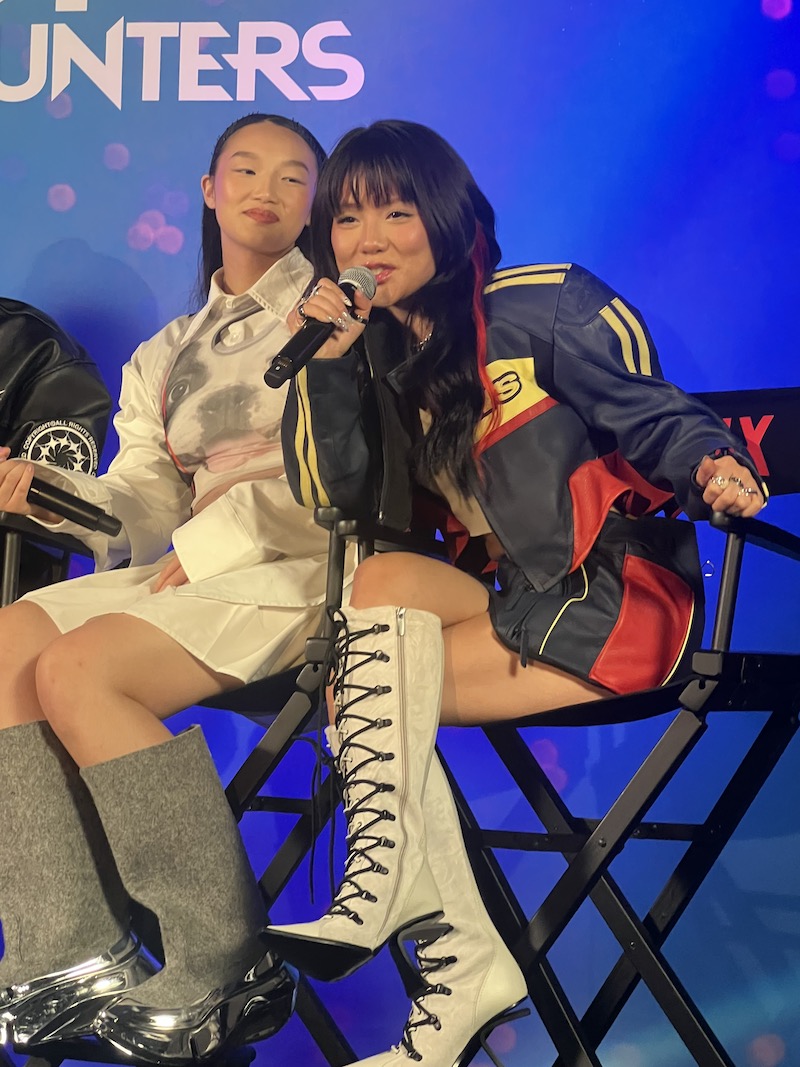
Rei Ami jumped in with a laugh: “Do not let me catch Nick Smith on the street.”
Nuna quickly clarified with a smile, “Nick Smith is a pseudonym. I had to protect the real person’s identity.”