Few films leave you feeling as uncomfortable, anxious, and disoriented as Mary Bronstein’s “If I Had Legs I’d Kick You.” A psychological comedy-drama that turns the chaos of modern motherhood into something jagged and unflinching, it never looks away from the mess. As such, the Rose Byrne–starring vehicle becomes a story of survival for a mother forced to manage her daughter’s illness while juggling an overwhelming avalanche of stressors that includes the medical bureaucracy of tube feeding and weight goals, the guilt and exhaustion of trying to hold her own mind together, the judgment that comes with parenting under scrutiny, the instability of housing in disrepair, an absent husband who parents via phone call, the cold inefficiency of support systems, and the financial and logistical strain of keeping the family afloat.

Rose Byrne’s portrayal of Linda is nothing short of harrowing. She wears exhaustion in every frame, her posture slumped, her eyes heavy, her movements weighed down by the grind of caregiving and the mounting pressures of life collapsing around her. The compounding weight of caring for a sick child, managing a crumbling home with a neglectful landlord who refuses to help, and confronting both societal and self-imposed expectations seeps into every gesture. It is the kind of film that relies on the performative and the visual, where Byrne’s raw physicality and Bronstein’s unflinching camera lock us inside Linda’s unraveling.
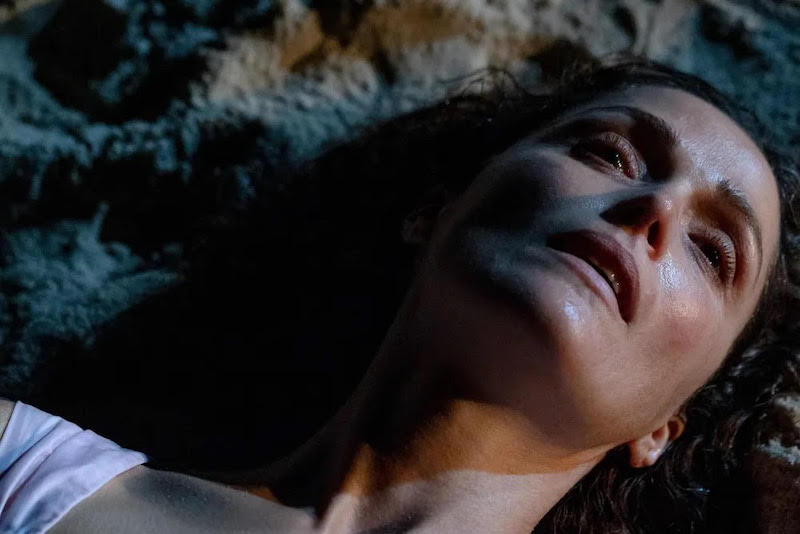
Bronstein underscores that unraveling with her visual choices. The frequent close-ups on Linda’s face are not just stylistic flourishes but a deliberate act of confinement, forcing the audience to remain inside Linda’s reality with no chance to step away. We cannot measure her experience against anyone else’s. Instead, we are compelled to radically accept her perspective, her isolation, and the way caregiving erodes her sense of self. This is not just about Linda as a mother but about the woman she was before motherhood, a person who still exists yet is constantly threatened with disappearance under the demands placed on her. Bronstein has spoken about how the myth of the perfect mother is a cruelty, an unattainable ideal that punishes women for being human. Linda’s exhaustion and collapse make that myth visible, tearing it apart.
Because there are certain, and often outdated, societal expectations that mothers are burdened with, the film makes you confront how relentless and damaging those pressures can be. She is expected to be endlessly nurturing and resilient, yet is harshly judged for any sign of struggle or imperfection. The judgmental stares she receives from doctors while managing her child’s medical needs on her own, all while dealing with a collapsing home and a husband who is never there when she needs him, speak to the double standards mothers face. Even when she is told it is not her fault, the burden never lifts. She is still treated as the one who must know, the one who must fix, the one who must get it right. The contradiction is crushing. On one hand she is told not to blame herself, and on the other she is blamed for not doing enough. Bronstein captures that confusion with painful clarity, making it impossible for us to escape the trap with any tidy reassurance.
There is something paradoxical at the heart of Byrne’s performance as it allows us to see her determination to be a strong advocate for her child’s medical needs while at the same time exposing her vulnerabilities. As Linda in public, she is fierce, often giving the middle finger to parking attendants who harass her about where she is allowed to park, lashing out at the hotel front desk when they refuse to sell her alcohol at 1:58 am, or reentering an increasingly toxic relationship with her therapist. In private, that defiance dissolves into slumped shoulders, sleepless nights, and the rituals of self-medication via drugs and alcohol that barely hold the pieces together. She even reaches the point where she begs her therapist to simply tell her what to do. His response, that she already knows, is devastating because it is not what she needs. What she longs for is not instruction but acknowledgment, someone to simply say that what she is enduring is unbearably hard. That acknowledgment never comes.
Much of Byrne’s performance is enhanced by Bronstein’s visual metaphors. The hole in Linda’s ceiling is more than just damage; it represents a wound that festers the longer it goes untreated. The support systems that are supposed to be there when she needs them the most mirror that same neglect. As the film continues on, the hole becomes an abyss that Linda and the audience cannot stop looking at. When the camera lingers on it, the abyss seems to stare back, its sound design suggesting a presence that swallows everything whole.
The sound work itself builds another cage around Linda. The steady beeping of the feeding machine, the muffled noises of the motel walls, the silence that hangs after confrontations with doctors or after her husband’s phone calls, all pile onto one another until the soundscape feels suffocating. Even in moments when Linda tries to steal time for herself, leaving her child asleep in the hotel room late at night, the beeping bleeds through the baby monitor. She is never free of the reminder.
The relentlessness of it all leaves us with a new level of empathy for the unseen labor and emotional toll that caregivers endure. Bronstein offers no comfort and no easy solutions. She forces us to witness the mounting pressures placed on a mother abandoned by the very systems and people who should be helping her. Linda’s moments of isolation are palpable, especially when she breaks down and admits, “I’m one of those people that’s not supposed to be a mom. I’m not a mom. I’m not. This isn’t supposed to be what it’s like. This isn’t it. This can’t be it.” The words do not mark her as unfit but reveal the impossible weight she carries, the way society tells mothers they must never fail while simultaneously refusing to give them the help they need.
Bronstein uses close-ups of Byrne’s face to track Linda’s emotional state, and in doing so, makes audiences the only witnesses to how hard this really is. Systems are against her, partners abandon her, and professionals keep deflecting responsibility back onto her shoulders. That weight becomes even clearer in the group sessions, where the disconnect between clinical reassurance and lived reality cuts deep. Sometimes, there is no answer, and yet mothers are still left begging for one – as Linda does with her therapist when she pleads, almost desperately, ‘Tell me what to do.’

If I Had Legs I’d Kick You lingers long after it ends because it denies the audience escape just as it denies Linda. The film does not give us the release of resolution or the reassurance that things will improve. Instead it insists that we sit with the exhaustion, the fear, and the isolation of a woman who is stretched to the breaking point by the contradictions of motherhood and the indifference of the systems around her. In doing so, Bronstein transforms Linda’s story into an empathy test. How far can we stretch our understanding for someone who is flawed, angry, self-medicating, and often unlikeable, yet still fighting every day to keep herself and her daughter alive.
9/10