The new “Street Fighter” film is far from a flawless victory. In fact, it spends so much time stumbling through its own combos that it practically hobbles its way to the finish line before the timer runs out. And considering this is a film based on a video game where fighting is the main attraction, it’s almost impressive how badly it fumbles something that should be relatively straightforward.
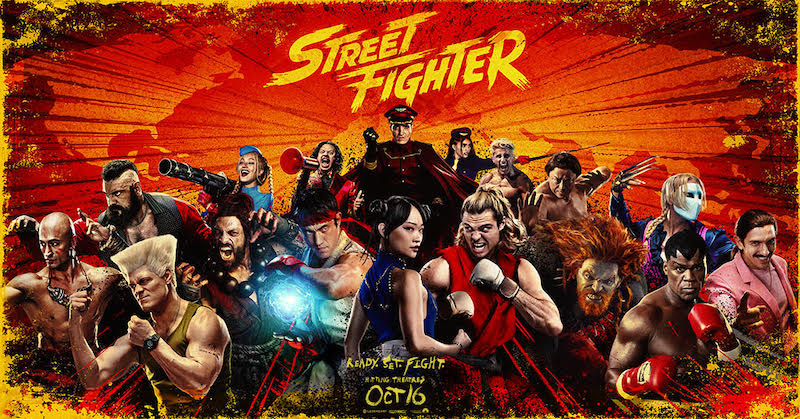
While the film embraces the absurdity of its 1993 World Warrior tournament through colorful characters, ridiculous fighting abilities, signature moves like the Hadoken and Flash Kick, and even limbs that stretch to impossible lengths, its soundtrack also leans into ’90s nostalgia. And there’s nothing inherently wrong with any of that. If anything, that’s exactly the kind of ridiculousness a Street Fighter movie should embrace.
Unfortunately, the film seems to mistake half-baked subplots, clunky dialogue, and chaotic editing for entertainment, making it hard to follow what’s happening. And because it’s 119 minutes long, it can feel like it’s in a hurry to get from one easter egg to the next instead of giving us a reason to care about why the fighters’ character-select screen has anything for us to care about, or why any of their stories matter.
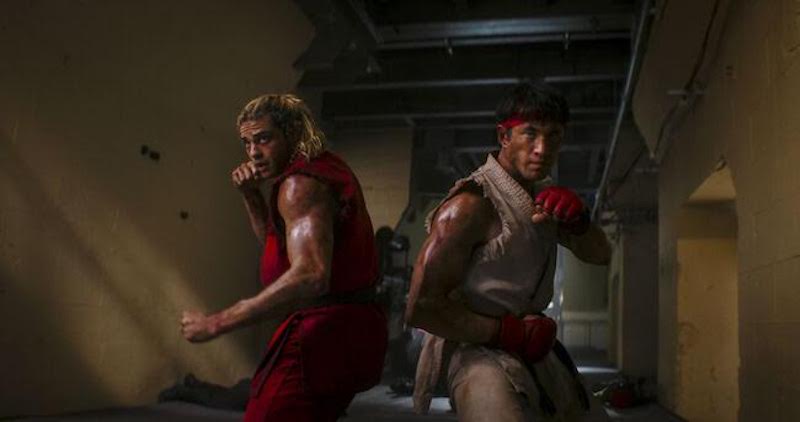
An anime-style prologue establishes that, years before the second World Warrior Tournament, Ryu (Andrew Koji) is on the verge of becoming champion. Still, his final match against the towering Sagat becomes a David-and-Goliath encounter. With his longtime friend Ken Masters (Noah Centineo) watching from the sidelines, Ryu takes a brutal beating from Sagat, only for his desperation to awaken the Dark Hado, a dangerous power fueled by murderous intent. Although Ryu resists fully surrendering to its influence, the sudden emergence of this dark energy is enough to awaken Akuma (Joe “Roman Reigns” Anoa’i). For longtime fans, the opening serves as a nice callback to the original 1987 Street Fighter, where Ryu and Ken were the only playable characters, and Sagat served as the final boss. However, for those unfamiliar with the games, the film does little to explain the Dark Hado beyond establishing that it’s evil. Apparently, that’s all the explanation audiences need.
Years later, the murder of their master Gouken has driven a wedge between the once-close friends. While Ryu has become a recluse, Ken Masters has embraced the celebrity lifestyle, trading serious competition for novelty matches against opponents like the luchador El Fuerte. With his obnoxious manager Dan Hibiki (Andrew Schulz) by his side, Ken continues to expand his celebrity status, but despite all the attention and success, he has no one to share it with. Meanwhile, M. Bison (David Dastmalchian) tries to harness unstable Psycho Power, using another World Warrior Tournament to draw out powerful fighters like Ryu in hopes of controlling it.
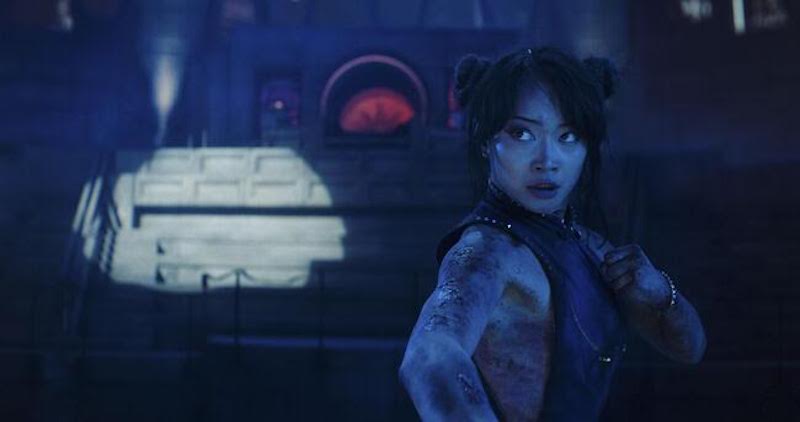
This is where Chun-Li (Callina Liang) enters the picture, using the tournament to bring the estranged friends back into the fighting world. For Ken, the competition is a chance to reclaim his former glory and prove he’s still a legitimate fighter, not just another celebrity. Ryu, on the other hand, wants nothing to do with the tournament, having spent years distancing himself from the fighting world. However, Chun-Li knows exactly how to get his attention, using Ken’s participation to convince Ryu to enter out of concern that his former friend is no longer capable of competing against such dangerous opponents.
As a result, the two enter the same tournament for entirely different reasons. Ken sees it as a chance to prove himself, while Ryu is reluctantly drawn back into a world he’s spent years trying to escape. With the unresolved tension between them after Gouken’s murder, there’s plenty of material to explore their fractured friendship and what it means to be a fighter beyond simply winning matches.
However, Street Fighter isn’t content with exploring Ryu and Ken’s fractured friendship. Chun-Li has her own mission to avenge her father’s murder by infiltrating Shadaloo and getting close to Bison. To prove her allegiance, she even grabs a burning Shadaloo emblem, permanently branding herself in the process. It’s an extreme demonstration of loyalty, especially since she’s only pretending to be on his side. But her mission becomes increasingly complicated as Bison exploits her grief and attempts to manipulate her into joining him. The story also tries to establish a rivalry between Chun-Li and Cammy, one of Bison’s lieutenants. However, that relationship never develops beyond verbal sparring and ugly looks.
Meanwhile, Guile (Cody Rhodes) and Dhalsim (Vidyut Jammwal) have their own partnership, with the latter eventually offering Ken some much-needed enlightenment before his next fight. Their involvement contributes to Ken’s story arc, it also feels like another subplot competing for attention.
Then there’s Bison’s attempt to harness Psycho Power by exploiting Ryu’s Dark Hado, which happens so also serves to draw out the looming threat of Akuma. Although Bison’s ruthlessness and theatrical personality fit perfectly within the film’s exaggerated world, the mechanics behind these powers remain frustratingly vague. We understand that Bison wants more power and that Ryu’s darker abilities are dangerous, but the film seems uninterested in explaining much beyond that.
To be fair, nobody is expecting an elaborate mythology lesson from Street Fighter. Nor does every character need a psychologically complex backstory. But when the film builds so much of its narrative around these competing motivations, something more substantial needs to connect them. Instead, it piles one storyline on top of another, occasionally bringing them together before moving on to the next confrontation. It’s almost as if the filmmakers wanted to make sure every character on the selection screen had something to do, even if that meant leaving their respective stories half-finished.
Still, there’s something to appreciate about the cast embracing the ridiculouness of the world that surrounds them. After all, Street Fighter isn’t exactly a franchise known for subtlety. Characters like Guile who grooms with major golden flat top while pulling off a flash kick (where’s the sonic boom by the way). These are larger-than-life personalities whose appearances, abilities, and fighting styles have become instantly recognizable to generations of gamers. I mean, when was the last time you ever saw a cage match between a masked man with a claw and someone who uses karate?
Koji and Centineo have a natural chemistry that makes Ryu and Ken’s friendship believable, even when the two aren’t seeing eye to eye. Their relationship is further complicated by past that reveals Ryu’s lingering jealousy and Gouken’s final wish for Ken to protect his longtime friend. This responsibility adds another layer to their rivalry, as Ken’s desire to look after Ryu isn’t necessarily something Ryu wants or appreciates. As such, their conflicting personalities and unresolved feelings give the actors something meaningful to work with.
Meanwhile, Dastmalchian fully embraces M. Bison’s theatrical villainy, playing him as a ruthless, power-hungry dictator who has little regard for anyone standing in his way. His obsession with harnessing Psycho Power leads him to subject prisoners to sadistic contraptions designed to drain their life force. When those machines fail to produce the desired results, Bison doesn’t take the news well, turning his frustration on the scientist unfortunate enough to explain why they aren’t working. Yet, for all his cruelty, Bison also fancies himself something of a philosopher. At one point, he delivers an elaborate speech about how the soles of our feet are gateways while washing the feet of an imprisoned Ryu. Apparently, even a power-hungry dictator understands the importance of proper foot care. But beneath his eccentric behavior is a manipulative villain who recognizes Ryu’s internal struggles and attempts to exploit them, offering to quiet the voices in his head in exchange for access to his power. Dastmalchian delivers an appropriately ridiculous performance, seeming to have a great time embracing Bison’s larger-than-life personality while reminding audiences just how dangerous he can be.
While the fight sequences can work in short spurts, they often lack the cinematic spectacle their video game counterparts somehow deliver. For one thing, the action is often choppy and hard to follow, with the editing jumping between close-ups that emphasize the visceral impact of each blow, blood and saliva flying, and wider shots that showcase the fighters’ signature moves. There’s certainly something satisfying about watching Ken successfully execute a Shoryuken, complete with its familiar sound effect. The film also includes nods to piledrivers, Flash Kicks, and the many variations of the Hadoken, whether it’s the traditional fireball, a flaming version, or one imbued with darkness. However, as recognizable as these moves are, the chaotic editing often makes it difficult to appreciate the choreography or the physicality behind the fights.
More frustrating is the film’s unwillingness to give certain fights the time they deserve. Since Street Fighter centers on a worldwide fighting tournament, one would expect audiences to see some of these matchups play out. Take Guile’s confrontation with Vega, for example. Instead of watching the two fighters square off, audiences are told Vega defeated Guile, with a few slashes across the latter’s face as evidence the fight even happened. Apparently, we’re just supposed to take the movie’s word for it. It’s the cinematic equivalent of selecting your favorite fighter only for the game to skip straight to the results screen. Fortunately, the film does redeem itself somewhat by letting Chun-Li show just how formidable she is in her confrontations with Vega and Juli. These moments offer a glimpse of what the film could have accomplished if it had given its fighters more opportunities actually to fight.
And the dialogue is just as clunky as the fights. Characters frequently repeat their motivations, adding to the film’s already overcrowded storytelling without offering much character development. Some of that repetition may be intentional, for comedic or dramatic effect, but a character can only explain what they want so many times before it starts to feel like the screenplay is reminding audiences of something they already know. Instead of revealing something new about these characters or moving the story forward, the dialogue often feels like it goes in circles.
Still, some aspects of the film work in its favor, particularly the anime-style flashbacks that explore the characters’ histories. As beautifully animated as these sequences are, I almost wish there were more, especially since they offer a different way to explore the mythology surrounding these fighters. However, the contrast between the animation and live-action sequences can also make it feel like two different films are competing for attention.
Then there’s the soundtrack, which features some interesting song selections that don’t necessarily align with the film’s 1993 setting. The Offspring’s “Come Out and Play” wasn’t released until 1994, while Peaches’ “Boys Wanna Be Her” wouldn’t arrive until 2006. Granted, there’s no rule saying a period film has to limit itself to music released during that time, but for something so committed to its ’90s nostalgia, the choices are certainly curious.
Ultimately, Street Fighter has all the ingredients for an entertaining video game adaptation, from its colorful cast of characters and over-the-top fighting abilities to the nostalgia of seeing these iconic fighters brought to life. And while the cast certainly understands the assignment, their enthusiasm can only do so much to compensate for a screenplay that struggles to balance its many competing storylines and action sequences that fail to deliver the spectacle audiences came to see. There’s certainly fun in watching these characters pull off their signature moves. Still, those moments are few and far between in a film that seems more interested in reminding audiences what they love about the games than giving them something equally entertaining to watch. In the end, Street Fighter may have all the right moves, but it never quite figures out how to string them together into a winning combo. And unfortunately, there are no continues to save it from defeat.
6/10