Marvel’s “Wonder Man” isn’t as much about being a superhero series about saving the world as it is about starving actors surviving Hollywood. From auditions and callbacks to branding deals and government oversight, the show reframes the MCU as an industry story, where visibility is currency and being seen can be just as dangerous as being ignored.

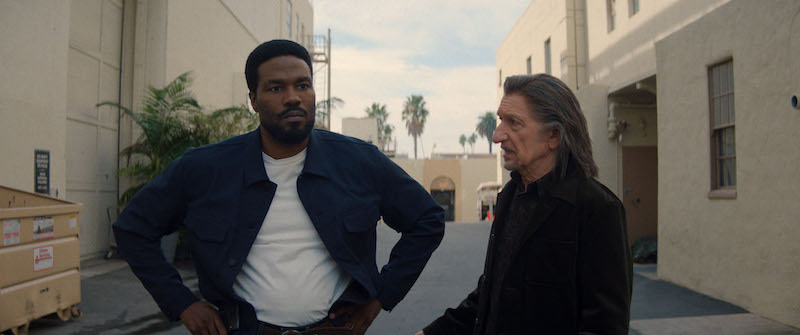
(L-R): Simon Williams/Wonder Man (Yahya Adbul-Mateen II) and Trevor Slattery (Sir Ben Kingsley) in Marvel Television’s WONDER MAN, exclusively on Disney+. Photo by Suzanne Tenner. © 2026 MARVEL.
The series follows struggling actor Simon Williams (Yahya Abdul-Mateen II) as he tries to break into Hollywood, discovering he has superpowers while navigating the entertainment industry alongside washed-up star Trevor Slattery (Ben Kingsley) in a meta-commentary on fame, ambition, and what it means to be a superhero in the MCU.
Created by Destin Daniel Cretton and Marvel Studios producer Jonathan Schwartz, “Wonder Man” aims to be a Hollywood satire and an exploration of behind the scenes Hollywood. The original comic book character was an actor and stuntman, so viewing the episodes through the lens of performance, labor, and image making reveals what the show is really interested in. The stakes are more personal than worldwide, making for a more character driven story than the typical MCU entry, one that treats auditions, public perception, and who controls the narrative as threats every bit as real as any supervillain.
As such, one can jump into the world of “Wonder Man” without having to know much about what came before. At most, it helps to be familiar with Trevor Slattery’s MCU history in Iron Man 3, the Marvel One Shot All Hail the King, and Shang Chi and the Legend of the Ten Rings, which adds extra context to his reputation and the baggage he carries into this story. That accessibility is exactly what makes Marvel’s Spotlight approach feel so refreshing. Instead of treating continuity as homework, “Wonder Man” prioritizes character and theme, letting the show stand on its own while still rewarding longtime viewers who know where these people have been.
By distancing itself from the larger MCU machine, “Wonder Man” is able to stay grounded in character, telling a smaller, more intimate story that feels like a lived in corner of this world rather than another chapter in an endless crossover. And that corner is compelling because it turns the MCU inward, using auditions, callbacks, PR panic, and industry gatekeeping to comment on how Hollywood manufactures hero narratives in the first place. In an era where superhero fatigue is real, “Wonder Man” finds a fresh angle by treating fame as a kind of superpower, one that can lift you up overnight and crush you just as quickly when the story shifts and the system decides you are no longer worth the risk.
At its core, “Wonder Man” uses the Hollywood industry less as a backdrop and more as an antagonist. The villains do not have world dominating ambitions or thoughts of collecting powerful gems, but rather the power to crush hope by turning the dreams of starving artists into cautionary tales and marketable tragedy. There is even an episode that follows a club doorman whose accidental superpowered breakthrough catapults him into viral fame, only for the industry to commodify him into a brand, chew him up through endorsements and spectacle, and then discard him the moment he becomes a liability. And weaponizes an on-set tragedy into a “Doorman Clause” that bans superpowered individuals from acting in films and television within the MCU.
As such, it affects his relationship with his girlfriend and deepens the tension within his family, where his dreams are constantly weighed against stability, responsibility, and the fear that he will never truly land on his feet. It also impacts how he moves through Hollywood itself, because every audition, setback, and public interaction becomes another referendum on whether he is talented, difficult, or simply disposable.
Luckily, there is Trevor Slattery. After a defeated Simon sits down for a midday showing of Midnight Cowboy, he is distracted by Trevor’s rambling phone call, only to realize he is sitting next to an actual celebrity. Simon recognizes him as the man behind the Mandarin persona, but Trevor quickly insists he should be remembered for his other work too, name checking roles like when he played Edgar Allan Poe.
Though the connection may seem serendipitous, it is actually anything but. Trevor’s presence in Simon’s life is carefully orchestrated by the Department of Damage Control, which views Simon as a potential threat because of his ionic powers and uses Trevor as a subtle means of surveillance rather than support. This is also one of the clearest links to the larger MCU. At times, however, it can feel like the series’ biggest distraction, pulling focus away from its sharp Hollywood meta commentary and nudging the story back toward more familiar franchise mechanics in a way that briefly interrupts the show’s otherwise refreshing, character driven momentum.
When “Wonder Man” is at its best, it feels startlingly honest. It captures the humiliations of working actors, the quiet violence of being replaceable, and the way ambition can slowly mutate into anxiety and self sabotage. Yahya Abdul Mateen II gives Simon a restless vulnerability that makes his flaws feel human rather than irritating, while Ben Kingsley turns Trevor into something more complicated than comic relief. The show understands that the most painful battles are not fought with fists, but with perception.
While Trevor’s intentions to improve Simon as an actor aren’t entirely sincere at first, it does give audiences a new way to look at the redeemed character who can’t catch a break. He is pressured into violating Simon’s trust, whether that means hacking into his computer or sneaking his way into his mother’s birthday party in order to gather intel on Simon’s past. And we see now he makes a choice to do the right thing in order to perserve that friendship while also pushing Simon towards his goal of getting the lead role in “Wonder Man.”
As for Simon, he is just as complicated. His ambition is genuine and often sympathetic, but it is tangled with insecurity, ego, and a desperate need for validation. He wants to be seen as a serious artist, yet he constantly sabotages himself by pushing too hard, overthinking every creative choice, and assuming the world owes him recognition. That tension between vulnerability and self importance is what makes him frustrating at times and deeply human at others, and it is also what makes him so easy for both Hollywood and the DODC to manipulate. Mateen II taps into the difficulties of what its like to be a struggling actor with dreams and ambitious. Just like any other actor before or after him, Mateen II’s Simon is a reflection of the way Hollywood can amplify your best instincts and your worst insecurities at the exact same time, rewarding hunger while punishing neediness, demanding authenticity while policing the parts of you that feel too messy to market.

Simon Williams/Wonder Man (Yahya Adbul-Mateen II) in Marvel Television’s WONDER MAN, exclusively on Disney+. Photo courtesy of Marvel Television. © 2025 MARVEL.
As much as “Wonder Man” is a clever idea that reimagines its comic book origins in inventive ways, that same ambition is also its biggest weakness. Sure the superhero content is the thread that ties everything together. Simon’s powers are not something he gets to celebrate, they are something he has to hide. The series repeatedly frames his “origin” less as a heroic awakening and more as a life long fear of being exposed. Flashbacks show him being picked on at school, only for his father to pull him out for a day at the movies, a moment that plants the seed of acting as both escape and salvation. A later childhood fire, where Simon walks away unscathed, quietly signals what he is before he ever understands it.
As he gets older, that power becomes inseparable from his emotional volatility. His anger is not just a character flaw, it is a threat that can spill into the world around him in an instant. One moment he is blowing out windows in his apartment, another he is shattering a newly installed marble kitchen island, and later he is capable of wrecking an entire studio.
It’s those superhero pivots or DODC interferences that makes “Wonder Man” drift toward familiar MCU territory, undercutting the sharper and more distinctive Hollywood satire. Yes the superhero content is necessary. It gives the series stakes, connects it to the franchise, and grounds Simon’s struggles in something larger than personal insecurity. But too often, the show seems torn between wanting to be a biting industry satire and needing to remind audiences that it is still part of the Marvel machine.
Yet “Wonder Man’s” ambition often works against it. Episodes are frequently overloaded with ideas, emotional beats, and narrative turns, leaving little room for moments to breathe. Conversations about craft and industry culture stretch on long enough to flex the Hollywood commentary muscule, while major revelations doesn’t give us enough of a reason to care. Also they arrive either too late or too abruptly to fully resonate.
Tonally, the series swings wildly between absurd comedy, Hollywood satire, and genuine emotional trauma. One moment characters are trading jokes about auditions or snacks on set, and the next they are facing police standoffs, childhood bullying, or government surveillance. While those shifts often work on a scene by scene level and even make sense within individual episodes, they do not always cohere into a smooth season-long rhythm, leaving the series feeling more like a collection of strong ideas than a fully unified whole.
Ultimately, this is a show that matters for the MCU because it is not afraid to engage with the moment Marvel Studios is in right now, a moment when audiences are openly feeling superhero fatigue. Instead of trying to out scale or out cameo that exhaustion, “Wonder Man” turns it into commentary, portraying a world where struggling actors desperate for a break are pushed to rely on franchise IP and tired superhero projects just to stay afloat in an industry that treats them less like people and more like currency.
For all its structural messiness and tonal instability, “Wonder Man” is rarely boring. Even when the series stumbles, it does so in pursuit of something genuinely different from the Marvel formula. Its willingness to interrogate fame, exploitation, and creative insecurity gives it an emotional texture that many MCU projects lack. And while the Department of Damage Control and the occasional franchise touchpoint are present, the show largely treats the wider MCU as background noise, using familiar institutions and locations like high security prisons less to set up crossovers and more to underline how quickly celebrity can slide into surveillance – whether that be from the government or just celebrity popularity.
Ultimately, “Wonder Man” feels less like a traditional Marvel series and more like a reckoning. It is messy, uneven, and occasionally distracted by the very franchise it is trying to critique, but its ambition is impossible to ignore. It is also strikingly honest, willing to take the risk of interrogating the very machine that made it possible in the first place.
All episodes of Marvel Television’s “Wonder Man” debut on Disney+ on January 27.
8.5/10