Disney’s 2016 animated “Moana” became one of the studio’s defining modern classics, introducing audiences around the world to a story rooted in Pasifika culture, wayfinding, identity, and self-discovery. Nearly a decade later, Disney returns to Motunui with a live-action reimagining directed by Thomas Kail, starring Catherine Lagaʻaia as Moana and Dwayne Johnson reprising his role as Maui. However, the question is not whether “Moana” still works. Her story is worth telling no matter the medium. The question is whether this the live-action take offers enough to justify retelling the story so soon. Which it doesn’t.
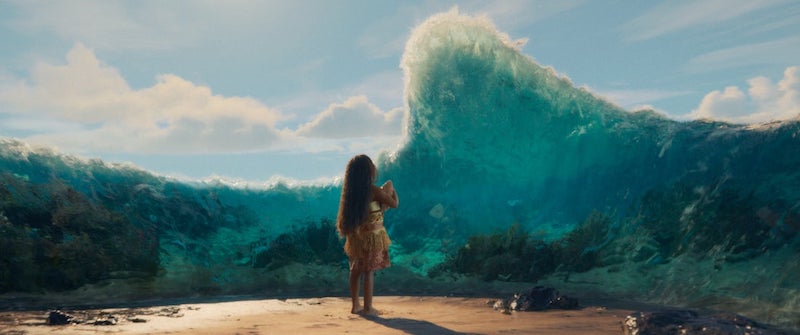
The story remains largely unchanged. Chosen by the ocean, Moana must sail beyond the reef to restore the heart of Te Fiti before darkness consumes her island. Along the way, she teams up with Maui, the shape-shifting demigod whose ego, humor, and heroism make him both a frustrating companion and an essential part of her journey. Familiar faces and animal companions return as well, including Heihei, Pua, Chief Tui (John Tui), Sina (Frankie Adams), and the wise Gramma Tala played splendidly by Rena Owen.
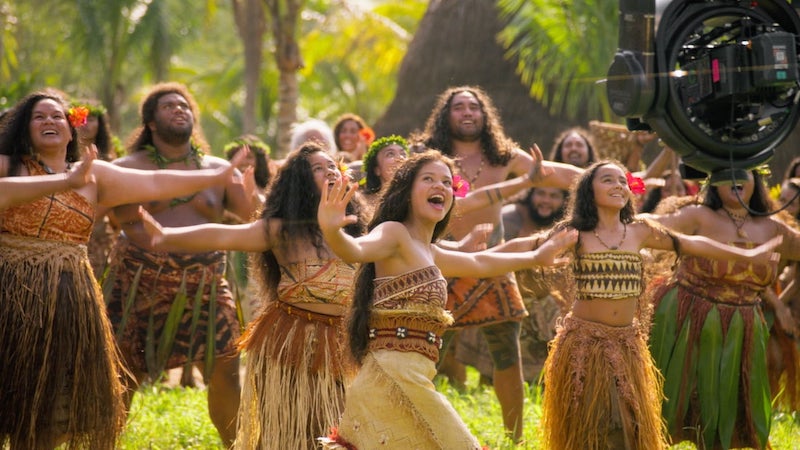
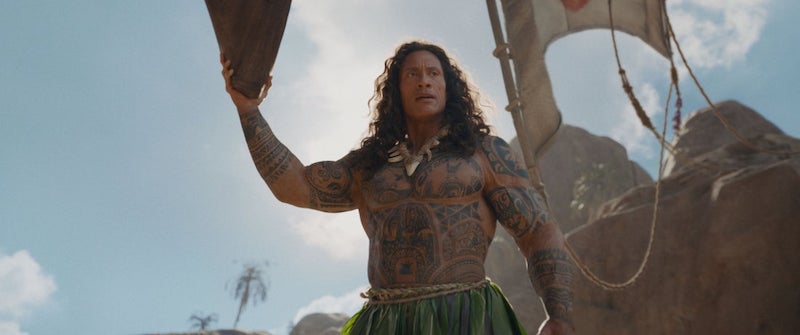
Where the remake distinguishes itself most is through physicality. Seeing real performers inhabit Motunui gives the world a tangible quality that animation could only suggest. The costumes, textiles, movement, and cultural details give the island a more lived-in presence, especially when the film allows its performers and environments to breathe. The dancing, farming and cultivation, even the tattooing seqeunces really allows the Pasfika culture to be seen through a new lens. While animation allows for more dynamic action, there is something to be said about seeing what human physicality is capable of. As such, the live-action “Moana” embraces the fantasy adventure as soon as she sets sail for her adventure, but it is the live-action format helps emphasize the story’s connection to identity, ancestry, community, and the ocean that should be celebrated.
Unfortunately, that does not mean every live-action choice works. The wigs can be distracting, especially in scenes where Moana is constantly moving through the water, the island, and the more physically demanding parts of the journey. The film’s heavy reliance on CGI also works against some of its stronger production elements. The ocean, fantastical creatures, and several large-scale musical sequences lean so heavily on digital imagery that they sometimes lose the tactile quality the remake otherwise works hard to establish. Some of the island sets also feel staged rather than organic, the film’s ocean feels more like tanks, and some of the musical set pieces and sequences are glaringly obvious that the nature of the islands are gone, making certain spaces look more like polished photo ops than places people actually live in.
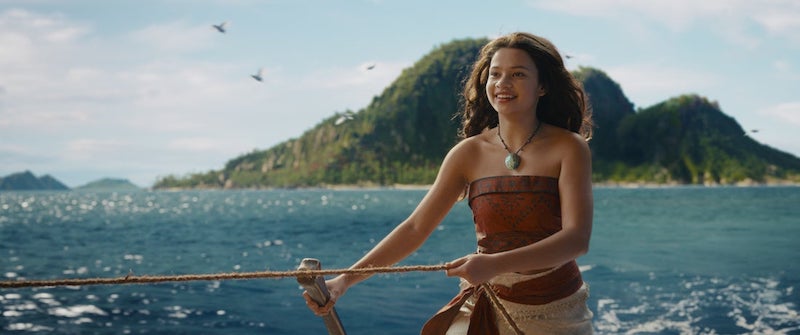
Still, the film’s strongest argument for existing is Lagaʻaia. She brings warmth, confidence, and effortless charm to Moana without trying to imitate Auliʻi Cravalho’s beloved performance. Instead, she captures the character’s curiosity, determination, and uncompromising compassion while making the role feel like her own. There is something genuinely meaningful about watching a performer who grew up with the original step into a role that so many young viewers have carried with them for the past decade.
Lagaʻaia also has great chemistry with Johnson, whose return as Maui has flashes of the natural charisma audiences know and love, even if parts of the performance feel less inspired than they should. Watching Lagaʻaia opposite Johnson is a joy because Moana has to put up with Maui’s mischief while slowly learning to trust the demigod behind all the bravado. Rena Owen also leaves a memorable impression as Gramma Tala, bringing warmth and emotional sincerity to one of the story’s most important relationships.
For all of its strengths, however, the live-action “Moana” struggles to justify why this story needed to be retold so soon. Beyond the shift to live action and a handful of expanded cultural details, the film remains remarkably faithful to the animated original. Nearly every major story beat, emotional turn, and musical number unfolds exactly as longtime fans remember, leaving little room for surprise. While that level of faithfulness may appeal to those who simply want a direct translation, a remake arriving less than a decade after its predecessor naturally invites expectations beyond recreation.
The result is a film that succeeds because of Lagaʻaia and its sincere embrace of Pasifika culture, not because it fundamentally reimagines Disney’s modern classic. “Moana” remains an entertaining and heartfelt adventure, but one that rarely escapes the shadow of the film that inspired it. For newcomers, it offers another gateway into Moana’s journey. For audiences who grew up with the 2016 original, however, this remake ultimately feels less like a bold reinterpretation than a respectful, beautifully performed retelling.
7.5/10