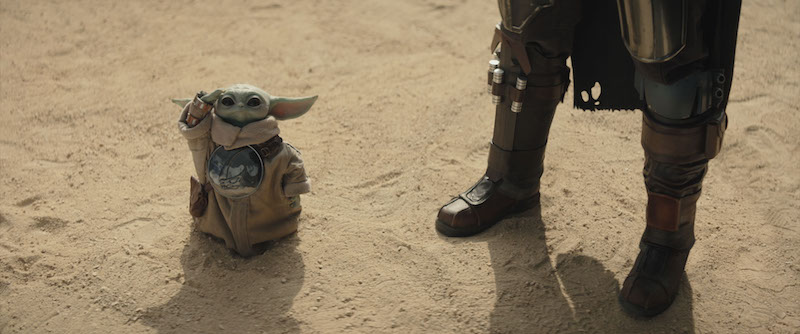
For three seasons, and arguably three and a half if you count Din Djarin and Grogu’s detour through “The Book of Boba Fett,” “The Mandalorian” has swept Star Wars fans off their feet with its gunslinging and bounty-hunting adventures across the galaxy. Now, Din and Grogu are stepping into a kind of adventure they have never fully ventured into before: a cinematic one. While “The Mandalorian and Grogu” has enough action, charm, and spectacle to work as a pure popcorn flick, its biggest challenge is proving that it can stand as a film rather than simply a bigger, more expensive episode of the series.
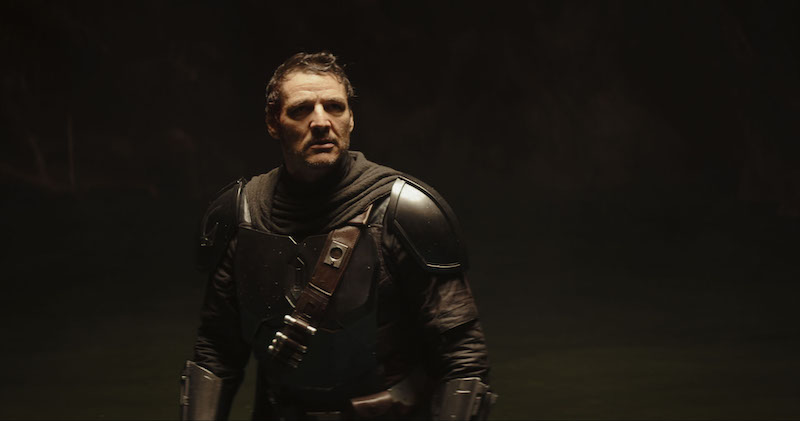
Set shortly after the events of the season three finale of “The Mandalorian,” Din (Pedro Pascal) is now a contract bounty hunter for the New Republic, collecting remnants of the Empire. Though one mission doesn’t go particularly well, Din is supposed to bring these people in alive to gather information on how the Empire intends to rise from the ashes. Din is interested in getting paid and justifies eliminating everyone in Colonel Ward’s (Sigourney Weaver) deck of cards to prevent the Empire from returning. Ward warns that this isn’t about revenge so much as it is about preventing another war and protecting everything the Rebellion has fought for.
One particular person of interest for Ward is Commander Coin, a mysterious “ace of staves” in her deck of cards. The problem is that no one knows what he looks like, and most believe him to be dead. Even the card she gives to Din is blank. Luckily, Ward says the twin Hutts are willing to disclose Coin’s location, though Din has had his fair share of problems working for crime syndicates. In exchange for information on Coin’s whereabouts, the twins want their nephew, Rotta the Hutt (Jeremy Allen White), the son of Jabba, freed from another crime syndicate on the outer rim, where he is being held against his will. So the Rebels need a professional to get him out quickly and quietly. But what begins as a quick extraction mission soon unravels into a chain of detours that test the heart of Din and Grogu’s relationship, as one must accept that he cannot always protect his son, while the other must learn what it means to survive without him.
The father-son theme is not limited to Din and Grogu. Rotta the Hutt offers a darker reflection of that same idea, while also reminding us that the film is part of the larger Skywalker Saga. As Jabba’s son, Rotta recognizes the evil his father committed and wants no part of it. As such, he becomes a gladiator fighter, who is caged and imprisoned by Lord Janu, on Shakari. Though Rotta struggled to step outside the shadow of a name that carries power, fear, and danger, he’s found a place where he can be recognized for more than his family’s legacy. Still, his lineage gives him status that makes him a target, especially to relatives who see the next in line for the throne as a threat to their own control.
Rotta, himself is a swole gladiator fighter, is written as a son straining against the weight of his inheritance. He is equal parts vulnerable and stubbornly proud. He initially rejects rescue with a cool, almost cocky self-possession, insisting that after “one last match,” he will have paid his debt and become his own man. Yet beneath that bravado is a deep resentment toward the family that fears and exploits him, along with a genuine hunger to be seen as something other than “Jabba’s son.”
It’s almost like how Adonis Creed viewed his father, Apollo Creed. However, Rotta is a prized fighter who has earned his reputation for crushing his opponents with his swoll body both figuratively and literally. His calm explanation of his contract, his cage, and his growing popularity as a cage fighter surviving in the pits reveals someone who has learned to rationalize exploitation as freedom, clinging to the cheers of the crowd as proof that he can turn a cursed legacy into a life he actually chose.
That makes Rotta a useful contrast to Grogu. One son is trying to escape the weight of a notorious father’s legacy, while the other is being shaped by a father figure who wants him to survive without losing himself. Together, they give the film a stronger thematic backbone than its episodic structure sometimes allows.
At 2 hours and 12 minutes, the film has the scope and budget of a theatrical Star Wars adventure, but its rhythm still feels beholden to television. What begins as one mission quickly turns into a series of interconnected side quests, making the story feel less like a propulsive feature film and more like an extended adventure-of-the-week. The film does expand Din and Grogu’s world onto a larger cinematic canvas, but it does not always justify that leap with a story that meaningfully reshapes their journey or deepens the mythology around them.
Still, when “The Mandalorian and Grogu” work, it’s pure Star Wars entertainment. Favreau understands the appeal of this corner of the galaxy, especially the emotional anchors needed to make its blaster fights, strange creatures, and bounty-hunting detours resonate beyond spectacle. That is why the film’s father-and-son themes hit harder than the broader mission to “prevent another war.”
The dynamic between Din and Grogu works because it grounds a sprawling galactic conflict in something immediately recognizable and intimate. Din strikes a balance between hardened bounty hunter and concerned parent, checking on Grogu’s well-being during dangerous missions while still trusting him to help when the situation calls for it. Whether Grogu is slipping into spaces Din cannot fit into, using the Force in a crucial moment, or simply reacting with that irresistible wide-eyed curiosity, the film gives him more to do than just be adorable.
That growth pays off in the third act, when an earlier threat against Din and Grogu gives way to a moment of quiet foundling heroism that leans into tactile, practical filmmaking rather than sheer digital spectacle. Later on, Grogu’s survival instincts kick in, and he is the one forced to make life-saving decisions, giving the character a greater sense of agency. The sequence allows him to step beyond being the adorable foundling audiences coo over or the endlessly marketable mascot he could have easily remained. Instead, Grogu becomes an active participant in the story, proving through bravery, resourcefulness, and care that Din’s lessons have taken root.
The film also knows how to weaponize Grogu’s cuteness without making him feel like a gimmick. His interactions with the Anzellans are among the film’s funniest and most crowd-pleasing moments, leaning into the kind of strange, tactile creature comedy that Star Wars has always done best. The Anzellans nearly steal every scene they are in, not only because they are adorable chaos agents, but because they give the film a playful texture that balances out the heavier themes of war, legacy, and survival. Their roles could even be considered familial since Grogu and the Anzellans already have a hilarious rapport from earlier seasons, but have since evolved now that Din has accepted them as family. Now it is Grogu who wants to work with them, not to annoy them, but to see what the crafty critters are working on.
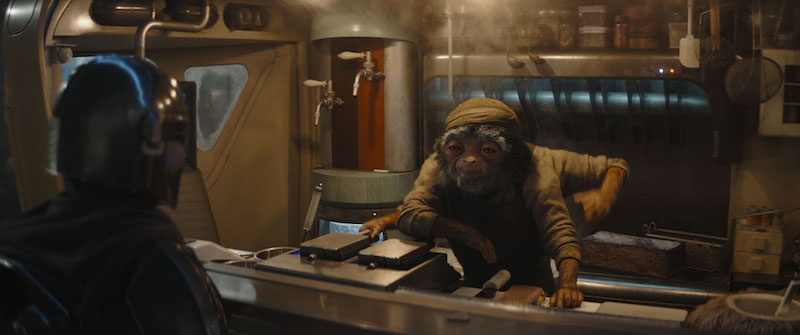
Even when the story feels episodic, those moments of oddball humor help keep the adventure lively. That extends to Hugo, the Ardennian fry cook played by Martin Scorsese, who briefly turns the film into a nervous little underworld comedy. Hugo is the kind of Star Wars side character who makes the galaxy feel lived-in. He is the kind of small-time hustler with just enough information to be useful and just enough fear to know when he has said too much. His rambling panic, sudden backtracking, and frantic attempts to avoid the Hutts’ attention give the film a funny, jittery burst of personality without pulling focus from Din and Grogu’s larger journey.
The action gives the film its clearest argument for the big screen. From the snowy mountain sequence and Rotta’s cage matches to a speeder chase where Grogu zips around in his hover pram while Din flies beside him with his jetpack, “The Mandalorian and Grogu” has no shortage of crowd-pleasing set pieces. What keeps the best of them from feeling like empty spectacle is how they are staged around character. Din’s fights are blunt, direct, and efficient, while Grogu’s involvement adds unpredictability, humor, and emotional texture.
Watching Din and Zeb (Steve Blum) fight their way back to the Razor Crest while under fire brings the danger, but the scene becomes even funnier when Din tries to talk Grogu through a complicated ship procedure as if the foundling were a trained co-pilot. Din’s instructions may make perfect sense to an experienced pilot, but to Grogu they become a chaotic invitation to press the very buttons he was once told never to touch. When the moment ends with Grogu firing missiles instead of prepping the ship, it becomes a perfect example of how the film turns action into character comedy.
But not every sequence lands with the same clarity. The speeder chase on Shikari and the cave battle on Nal Hutta are exciting in concept, yet the editing can feel too clipped, cutting so quickly that it becomes harder to appreciate the geography of the chase or the physicality of the fights. The film clearly wants to scale Din and Grogu’s adventures up for a theatrical canvas, but its action is strongest when the camera and editing give those moments enough room to breathe.
Despite these technical flaws, Ludwig Göransson’s score remains one of the film’s strongest assets, not only because the Mandalorian theme still has an immediate charge, but because the music gives the film a sense of scale and momentum its episodic structure sometimes lacks. Tracks like “Shakari” and “Hugo Durant’s Snack Shack” show how playful the score can be, blending electronics and orchestral flourishes with the strange underworld energy of Din and Grogu’s mission to save Rotta.
Then there are the tender moments that spotlight Grogu’s growth. While the character’s charm remains with how adorable he is, what makes the score especially effective is how it balances that bombast with tenderness. The quieter cues centered on Grogu, especially the more ethereal and atmospheric passages. They remind us that beneath all of the action and adventure, this is still a story about a child learning how to survive and a father learning how to let him. Göransson’s music does a lot of the emotional heavy lifting, helping connect the film’s scattered missions into something that feels more mythic, more intimate, and more recognizably Star Wars.
Ultimately, “The Mandalorian and Grogu” is an enjoyable Star Wars adventure that works best as a crowd-pleasing extension of the series rather than a bold cinematic reinvention of it. It has action, charm, heart, and enough Grogu mischief to satisfy fans who have followed Din and his foundling from the beginning. But as a film, it still struggles to fully escape its television origins. Its emotional ideas are strong, especially in the way it explores fathers, sons, legacy, and survival, but its episodic structure keeps it from feeling as seamless or essential as it could have been. As a popcorn movie, it delivers. As the next great leap for Star Wars on the big screen, it only partly gets there.
7.5/10