“Marvel Zombies” continues the zombie-infested alternate timeline first introduced in the What If…? episode “What If… Zombies?!” While expanding that concept into a full miniseries, one that could have worked better as a feature-length film, could have been fun, the stunning visuals, brutal violence, and choice words aren’t enough to make up for its lack of emotional depth, character development, and any real reason to care who survives.
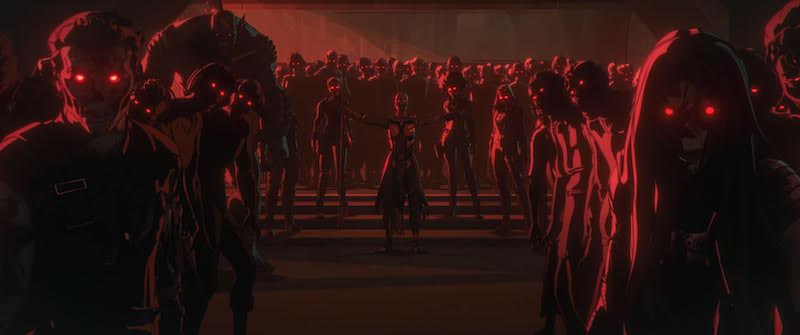
Serving both as an adaptation of the limited comic series of the same name and an extension of the 2021 What If…? episode, Marvel Zombies attempts to merge the grisly energy of the source material with the animated anthology’s alternate-reality conceit.
The main story follows Kamala Khan (Iman Vellani), a teenage mutant who is joined by Riri Williams aka Ironheart (Dominic Thorn), A former MIT student and genius inventor from Chicago who created a suit of armor that rivals the one built by Tony Stark / Iron Man and Kate Bishop (Hailee Steinfeld), a young woman who trained to become a master archer after being saved by Clint Barton as a child. The three continue to survive frequent zombie attacks, often times that come from fellow avengers and mentors like Hawkeye.
When the three come across a transmitter that could disperse a cure for the zombie apocalypse, they face a moral dilemma. Should they risk their lives to find a way to get the transmitter to S.H.I.E.L.D, there by saving humanity, or focus on surviving themselves. Going with the latter, the episodes go into familiar territory with characters debating about whether to stay put or move to a new location for safety, making sacrifices or take on dangerous tasks for the group’s survival, and encountering other survivors, some of whom aren’t as trustworthy as they appear.
The biggest issue is structural. What could have been a tight, pulpy feature film gets stretched into a miniseries that too often meanders from one bloody set piece to the next. The “MacGuffin chase” of delivering the transmitter repeats familiar zombie tropes without adding fresh tension, making the story feel longer than it needs to be.
Part of what makes zombie stories work is our connection to the survivors. Luckily, since we know these characters from years of MCU content, there’s an immediate baseline familiarity. Yet even that recognition can’t compensate for the miniseries’ lack of emotional depth. The characters rarely rise above archetypes and the series rarely explores their personalities or relationships in ways that make the audience care about their survival. Even moments that should feel desperate or heartbreaking land flat.
Visually, the series delivers. The animators clearly went all in on grotesque zombie designs, fluid action sequences, and moments of sheer, over-the-top gore. This is a zombie series set in the MCU, after all, so not only is the action and violence expectedly gory and intense, but there’s also a playful wink to familiar characters being twisted in horrifying ways. Hawkeye, even as a zombie, has killer aim. And Okoye is just as deadly as she is the Zombie Queen’s trusty lieutenant. Most of these characters are interchangeable, with little to distinguish them beyond their function in the plot. While Baron Zemo acts as a gatekeeper who allows survivors admittance to his Raft sanctuary, he is nothing more than a plot device to get one character from one place to the next. Wanda Maximoff herself, a character who is clearly the antagonist but her presence is more as a looming threat than a developed character.
It’s newer characters like Eric Brooks / Blade Knight (Todd Williams), half-vampire “daywalker” who hunts vampires and has become the avatar of Khonshu, Moon Knight that adds a new kind of energy to the series and adaptation. Just wait until you see what he does, it’s almost disappointing that his action sequences are reduced to a small screen. He can even crack a few jokes to lighten the mood. “I want to go to Mexico and drink a margarita,” he says wanting to be anywhere else beside where he is now.
And then there’s Banner, who made the decision to take his Hulk form and absorb the Infinity energy when the Infinity Stones are shatter. With the powers to manipulate reality at will, and the sequences showcasing his powers are colorful, epic, and visually stunning, standing out as some of the series’ most dynamic moments. Yet, as impressive as these sequences are, they can’t fully compensate for the show’s uneven character development and lack of emotional grounding.
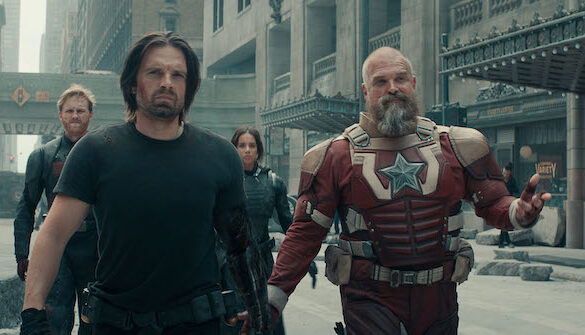
Supporting characters include hardened spies Melina Vostokoff (Kari Wahlgren) and Yelena Belova (Florence Pugh), along with Red Guardian Alexei Shostakov (David Harbour), whose presence adds layers of backstory and interpersonal stakes. Heroes from the wider MCU such as Shang-Chi (Simu Liu) and Katy (Awkwafina), John Walker / U.S. Agent (Wyatt Russell), and Peter Parker / Spider-Man (Hudson Thames), while mythological figures such as Thor (Greg Furman), Valkyrie (Tessa Thompson), and Khonshu (F. Murray Abraham) add epic flair. Even family connections are represented through Muneeba Khan (Zenobia Shroff), grounding Kamala’s story amid the chaos.
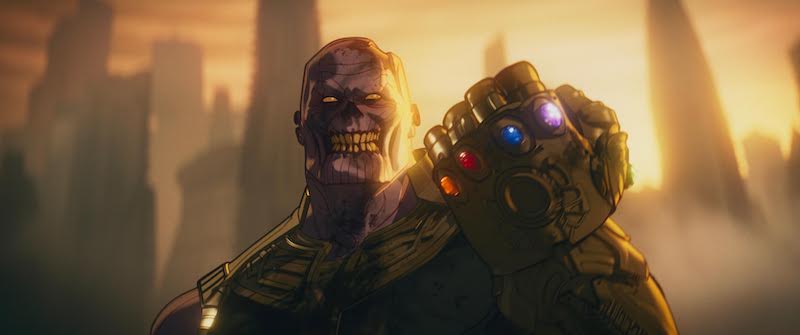
While the series leans into over-the-top violence and dark humor, these elements can’t fully compensate for uneven pacing and shallow emotional stakes. Fan-service and cameos provide momentary thrills, but the show rarely gives these appearances weight, leaving much of the story feeling hollow despite its striking visuals.
The irony is that both the comics and the original What If…? episode had novelty. Seeing heroes zombified was shocking once. Spread across multiple episodes, however, that shock wears thin, and the series’ reliance on familiar survival tropes makes the stakes feel recycled rather than urgent. In a landscape full of MCU spin-offs, Marvel Zombies struggles to justify its own existence.
Ultimately, Marvel Zombies is a visually striking, often gory addition to the MCU that offers occasional moments of fun and inventive action. Yet even its standout sequences from Banner manipulating Infinity energy and Kamala’s infinite optimism to Blade Knight’s offbeat humor and creative zombie kills, it can’t fully counterbalance the series’ lack of emotional depth, repetitive structure, and underdeveloped characters. The show leans heavily on fan-service, cameos, and shocking visuals, but in the end, it feels more like a spectacle than a story with stakes that truly matter. For all its creativity and energy, “Marvel Zombies” is a reminder that Marvel needs more than gore and novelty to keep audiences genuinely invested.
6/10