
The long-awaited “Wicked: For Good” is finally here. One of the things about going into a film adaptation of Wicked completely blind is that expectations are leveled. There is nothing to grade it against, no checklist of beloved moments you’re waiting for the movie to either honor or ruin. So with the first Wicked film, it ended up being one of the best things to come out of 2024, with clear setups and strong emotional payoffs that culminate in an epic “Defying Gravity” performance from Cynthia Erivo. But with Wicked: For Good, the sequel feels a bit overstuffed, stretching itself thin as it tries to honor Glinda (Ariana Grande) and Elphaba’s (Erivo) diverging destinies and the friendship that once made their story soar.

“Wicked: For Good” feels more like a prolonged epilogue, using loose-end subplots as filler in between the moments when Elphaba and Glinda are actually building their relationship, growing into their power, and exploring more of Glinda’s backstory. There’s Oz (Jeff Goldblum) and Madame Morrible (Michelle Yeoh) doubling down on their campaign to vilify Elphaba, Boq (Ethan Slater) and Nessarose’s (Marissa Bode) tragic subplot unfolding alongside it, and “For Good” conveniently folding Dorothy and Toto into the film while also rushing to give the Scarecrow, the Cowardly Lion, and the Tin Man their individual origin stories.
And despite a lot of the filler being more of a distraction instead of a plot device to further the film, Elphaba and Glinda’s friendship continues to serve as the focal point of the two films. Here, it develops into something beyond what you’d expect from a simple “unlikely friends” story, evolving into a bond tested by power, ideology, and the roles they’re forced to play in Oz. Madame Morrible continues to weaponize rumor and fear to turn the people against Elphabia while also building Glinda to be a packaged symbol of what is “good.” It is that kind of state-sponosored creation that Oz and Morrible are creating in order to sooth the public and control the narrative that Elphaba is a threat to all who live in Oz.
Even with all of the attempts to manipulate Glinda into becoming a figurehead by offering her bubbles that form and pop at a simple tap of the foot since she cannot conjure the magic on her own, or vapid comforting words, she remains steadfast in protecting her friend at all costs.
Beyond Glinda and Elphaba, “Wicked: For Good” is juggling a lot. There’s Glinda and Fiyero’s (Jonathan Bailey) engagement, which has to function as both romance between the two and political strategy for Morrible and Oz to draw out Elphaba. There’s also Nessa, now a governor, who feels abandoned by her older sister and unloved by Boq, a dutiful knight who cannot reciprocate because his heart belongs to Glinda. With anti-motility law for animals sitting at her desk, Nessa fears that she could become her sister or at least the sister Oz is trying to portray.
Then the film also deals with Glinda’s own insecurity about being a “Good Witch” who has to fake magical competence and bubbly optimism on the simple tap of a foot. Layered on top of that are animal-liberation efforts, the Wizard’s ongoing spin campaign to rewrite history in real time, and a handful of side characters quietly trying to figure out what “home” and happiness even mean in a broken Oz.
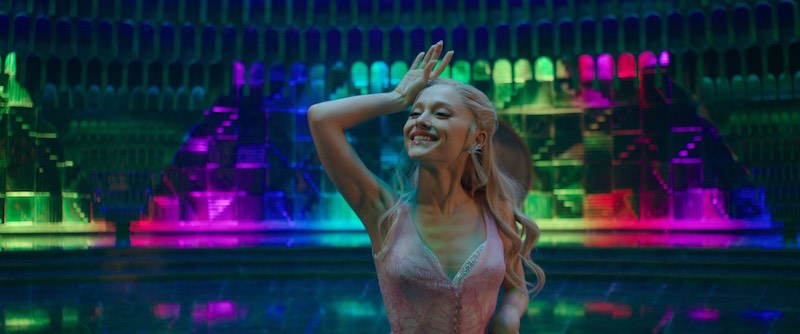
To its credit, “Wicked: For Good” does make Oz feel more lived-in. The film lays out a surprisingly robust political and bureaucratic system with governors, leagues, laws, and official ceremonies, while magical devices like Glinda’s bubble transport sit comfortably alongside pastries, wedding planning, and everyday gossip. Laws restricting animal movement make the prejudice feel systemic rather than abstract, and propaganda almost becomes its own character as the Wizard’s spin machine, Morrible’s rumors, and Glinda’s carefully managed image show how perception is engineered.
The way that Morrible shoves Glinda onto a pile of propaganda creates the image that Glinda is royalty sitting on a literal throne of lies. Visual alone, it establishes how how this Oz is built on branding as much as magic.
Characters aren’t just reacting to spells and set pieces; they’re wrestling with authenticity, public duty, and where they belong in a society that keeps rewriting the rules as things are getting out of control. Magic like flying, spellcasting, and talking animals is treated as normal, but it is often hidden or repurposed for political advantage, which gives this version of Oz a sharper, more contemporary edge. The way that Morrible and Oz have to respond to Elphaba’s actions is like watching politicians do damage control after a gaffe. What’s more, it’s how Elphaba and Glinda respond and reflect that shows how much they have matured.
Erivo keeps all of this from flying apart. As Elphaba, she moves through resistance, self-doubt, fury, and hard-won resolve with a range that makes every choice feel inevitable. Whenever the story threatens to spin off into another subplot, she drags it back to something human, whether she is trying to expose the Wizard’s lies, free caged animals, or race to protect the people she loves before someone else gets there first.
Even with her moral clarity, Elphaba still carries a vein of vulnerability, and Morrible and Oz have no problem exploiting it for their own ends. They twist her doubts and desperation into proof that the Wicked Witch of the West is a dangerous, unstable threat who will bring Oz to ruin if she isn’t stopped. Even when Elphaba tries to seize control of the story with skywriting, Morrible is right there to hijack it, twisting the message with a casual flick of the wrist and turning a plea for truth into another piece of evidence that she’s the villain everyone should fear.
As for Grande’s Glinda, she takes what she did in the first film and dials it up, oscillating between the polished public persona Morrible and Oz have built for her and sharper flashes of insecurity. One of the film’s best touchpoints is a flashback to her birthday party, where she is unable to cast a spell and has to rely on the sudden appearance of a rainbow to fool her guests into believing she created it.
“The Girl in the Bubble” is one of those showstopping moments for Grande that finally lets audiences see the inner turmoil Glinda has been swallowing. As she sings and twirls her way through her room, Chu uses mirrors, shifting hallways, and gravity-defying camera flips to turn the space into a funhouse version of her own mind. A flashback to a childhood birthday reveals the the truth that she has been hiding for so long. And these reflections, literal and figurative, are visually stunning and emotionally disorienting in the best way, and creates a rare musical number where the filmmaking mirrors the character’s unraveling instead of just framing it.
Jonathan Bailey’s Fiyero benefits a little less from the expanded runtime, but he still makes an impression. He brings an easy, restless charm to the prince-turned-rebel, and his chemistry with both Erivo and Grande sells the love triangle even when the script rushes his turn from a dutiful soldier of Oz, willing to marry Glinda to sell the illusion of stability within Oz. The maturity is delivered when we find out how much he is willing to risk to be with the one he loves because he knows the truth and wants to break the spell that Oz is under.
Because of the overabundance of subplots trying to connect everything to the propaganda against Elphaba, the characters caught in them often feel either lost or out of place. It plays like the film doesn’t quite know what to do with them, but because they are such integral parts of the original musical, cutting them would feel like a crime. The ideas are there on paper. Nessa falling apart gives Elphaba a reason to come home, which gives her a reason to conjure a spell that will force Boq to stay, and Nessa’s mispronounced magic forces Elphaba to counteract it. But there is a price to pay. In trying to turn that chain of events into a neat origin story, the film flattens what should be a heartbreaking tangle of unrequited love, sisterly resentment, and bad choices into a plot device, leaving Nessa and Boq feeling more like ingredients in Oz’s mythology than fully realized people caught in a tragedy of their own.
By breaking the story into two films, the adaptation gives Elphaba and Glinda’s relationship the breathing room it deserves, letting their bond grow in ways the stage show only hints at. What’s more, the film handles Nessarose’s arc with far more respect. Instead of having her simply “overcome” her disability by suddenly walking upright, Elphaba enchants her shoes so Nessa can fly, a choice that quietly acknowledges how ableist the original staging could feel and reframes her power without calling distracting attention to the correction.
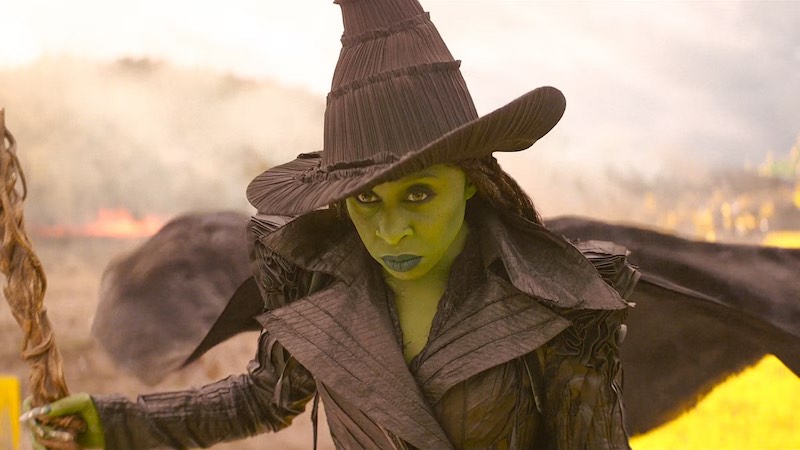
Musically, “Wicked: For Good” hits its highest notes when it leans into that inner turmoil instead of treating the songs like boxes to check. “No Good Deed” gives Erivo the space to pour all of Elphaba’s anger and exhaustion into one blistering release, and it feels like the moment the character finally accepts the version of herself the world has been afraid of. On the other end of the spectrum, “For Good” is as soft and devastating as it needs to be, a goodbye between two women who know they can’t walk the same path anymore but also know they will never be the same because of each other. Some of the other numbers feel more functional than unforgettable, nudging the plot along rather than deepening the emotion.
Director Jon M. Chu revolves around the inner lives of Elphaba and Glinda, grounding the film’s spectacle in their emotional truths even as the world around them balloons with politics, magic, and mythmaking. He leans into scale, movement, and the chemistry between Ervio and Grande. So, even as the story grows messier with its subplots, Chu keeps returning to the bond that reshaped both women’s lives, reminding us that all the noise is secondary to the heartbreak at its core.
7.5/10