The Star Wars universe has long presented Darth Maul less as an outright villain and more as a tragic figure. As such, appearances in spinoffs like “Star Wars Rebels” and “The Clone Wars” have helped reframe him not simply as a threat, but as a character defined by pain, obsession, and the inability to let go. And so “Star Wars: Maul – Shadow Lord” intends to further darken the title character’s journey, pushing deeper into the physical and psychological wounds, grudges, and fractured sense of purpose that continue to define him.
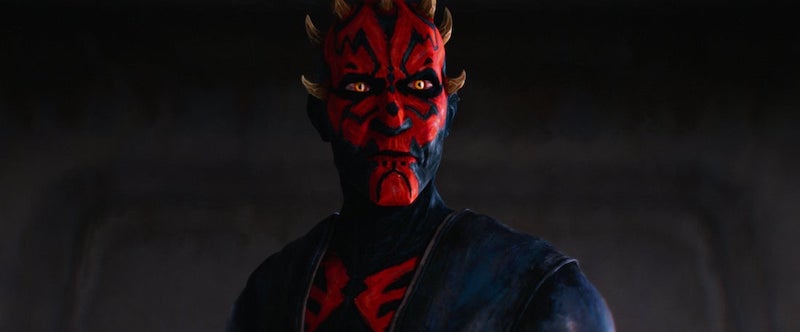
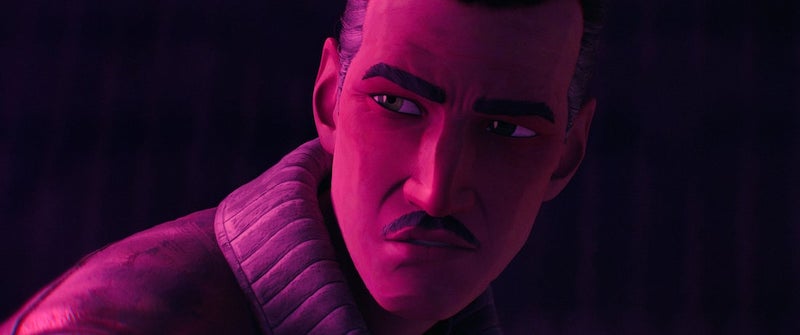
Set after Star Wars: The Clone Wars, Star Wars: Maul – Shadow Lord centers on Maul as he rebuilds his criminal influence on Janix, where local law, underworld instability, and the looming threat of the Empire collide. At the center of that conflict are Maul (Sam Witwer), the disillusioned Padawan Devon Izara (Gideon Adlon), local detective Brander Lawson (Wagner Moura), his droid partner Two-Boots (Richard Ayoade), and Jedi Master Eeko-Dio Daki (Dennis Haysbert). All of whom become entangled in one another’s fates, whether they like it or not, and possibly in ways that serve Maul’s larger ambitions for revenge.
What makes Shadow Lord interesting is that it does not treat Maul as just a familiar legacy villain getting another showcase. Instead, it sharpens the version of Maul that “The Clone Wars” and “Rebels” helped build. Maul is a title character driven by pain, resentment, and a need to turn survival into control. The series frames him not simply as a monster at the center of the chaos, but as a cunning, ruthless manipulator who understands how to exploit institutions, people, and fear. What makes that portrayal even more effective is the way he often leads with shared pain rather than outright menace, using empathy, grievance, and promises of power to make his manipulation feel almost reasonable. By filtering his rise through local law enforcement, gang politics, and a city under mounting pressure, the show turns Maul into something more insidious than a straightforward warlord. It turns the series into one of the most mature animated series that Lucasfilm has produced.
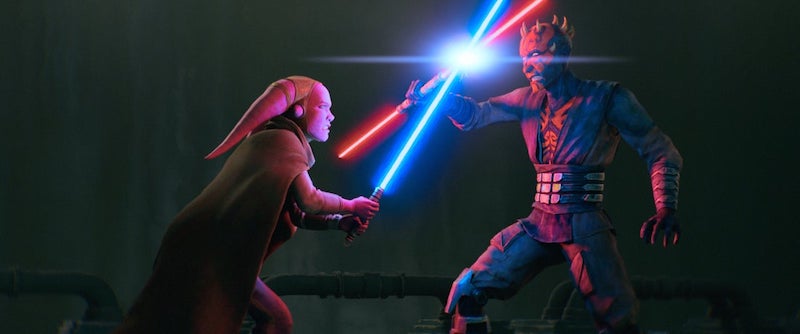
That sense of maturity also carries over into the animation itself. Shadow Lord uses a painterly visual style that feels darker, rougher, and more tactile than past Star Wars animated series. The heavier shadows, textured environments, and harsher lighting do a lot to make Janix feel like a world under pressure, while also reflecting the damage, paranoia, and instability that follow Maul wherever he goes. It is not just visually striking. It actually helps deepen the tone of the series and allows Shadow Lord to be a darker crime story. This dramatic visual turn also helps the animation reflect the moods and tones that the show is projecting.
As such, the action lends itself to being one of the most electric and exciting pieces of animation. The way the lightsaber hums feels more alive than its static live-action counterpart. Even some of the chase scenes is pulse pounding as it takes its inspiration from police pursuits. And those heists are a lot of fun if not emotional considering what is at stake for Maul and his crew. Obviously, since there’s a lot of red hues involved, red lightsabers slashing, blaster fire, and explosions has much more of an emotional impact when taking place in the criminal underworld.
What gives Shadow Lord much of its identity is the way its tone balances Star Wars mythology with the structure of a grounded crime story. That code-switching works because the series moves from mafia crime families, to gang wars, to an angry Force wielder manipulating a young Padawan on the run with her master, to a father trying to stay on the side of justice while the entire galaxy submits to the Empire. This is a series interested in power and what people choose to do with it, whether that means using it to dominate, protect, manipulate, or simply survive. Revenge hangs over nearly every major character in some form, but so does the question of responsibility. The show keeps asking whether people shaped by trauma are doomed to spread that pain to others, or whether they can still choose something better. Devon, in turn, becomes the show’s emotional hinge, a character whose compassion for specific people keeps pushing back against the colder logic of both Maul and the larger war around her.
What also helps Shadow Lord work is that it has a strong handle on the people caught in Maul’s orbit and what each of them brings to the story. Maul is not just treated like an assassin or a warlord, but like an architect, someone always thinking in terms of the bigger plan while using grief, fear, and manipulation to get others where he wants them. That especially comes through in his fixation on Devon, who he sees as more than just a target. She is someone whose pain and uncertainty can be twisted into loyalty. On the other side is Eeko-Dio Daki, who carries the burden of a dead order and feels like a man trying to do the right thing while knowing the galaxy no longer has much use for Jedi ideals. Devon ends up caught between those two worldviews, torn between instinct, emotion, and training, while Lawson grounds everything as both a detective and a father trying to protect his son in a city being squeezed by the Empire, the underworld, and Maul alike. Lawson is just as crucial because he gives the series its most human point of view, turning political collapse, Imperial pressure, and underworld violence into something painfully immediate for one father trying to protect his child.
Of course, Shadow Lord is not without some rough edges. Part of that comes from how the series is following a procedural formula while also being tied to Star Wars mythology, so it has to balance crime story momentum with the lore, themes, and spirit of the franchise. There is some homework required here, especially when it comes to understanding who Maul is beyond “Star Wars: Episode I – The Phantom Menace,” but the series largely stands on its own. Because of that, there are times when the pacing can feel more invested in atmosphere, tension, and character positioning than immediate momentum. That is not always a bad thing, especially since the show clearly wants viewers to sit with the weight of its choices and shifting allegiances. Still, some of its more serialized storytelling may feel like it is saving its biggest payoffs for later, which makes sense given that only eight of the season’s ten episodes were screened for review. Even so, what is here already feels visually and emotionally richer than most Star Wars animated series.
Based on the eight episodes screened for review, “Star Wars: Maul – Shadow Lord” stands as one of Lucasfilm Animation’s strongest and most visually distinct series to date. Its painterly style, grounded crime-thriller structure, and layered handling of power, trauma, and revenge give Darth Maul a story that feels darker, richer, and more emotionally textured than expected. While its slow-burn pacing and serialized structure may not work for everyone, what is here makes a compelling case for Shadow Lord as one of the most ambitious animated entries in the Star Wars canon.
The first two episodes of “Star Wars: Maul – Shadow Lord” are streaming exclusively on Disney+.
8.5/10