

Do you know how to dispose of old and used batteries? And no, it’s not tossing them into a trash can.
While exploring the show floor at CES this past January I came across a booth, with a very familiar mascot, that answered this exact question. That mascot was Woodsy Owl, and to help promote battery recycling the right way, he traded his catch phrase of “Give A Hoot, Don’t Pollute” to “Skip the Bin! Turn Your Batteries In!”.
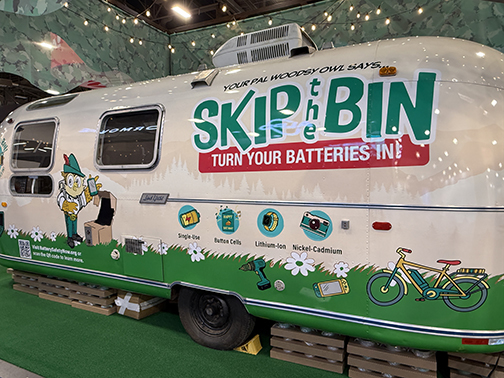
Most of our favorite things run on some type of battery. From phones to laptops and toys to tools, and more. These items can cause a fire if disposed of in the trash or recycling bin. Batteries, such as lithium-ion, can spark nearly unstoppable fires due to the self-heating, chemical chain reaction that generates intense heat and hazardous gases.
When batteries age, overheat, or get crushed, they can spark deadly fires –in your home, or local recycling facility. It only takes one to cause a dangerous explosion.

But battery fires are easily preventable by following these three easy steps.
1 – TAPE THE TERMINALS. Cover the ends of your batteries with clear tape, especially the contact points. This helps prevent sparks and keeps everyone safe.
2 – MAKE A PLAN. Different batteries may need different return options. Scan the QR code or visit BatterySafetyNow.org, enter your zip code and battery type, and it will show you drop-off locations.
3 – TURN THEM IN. Now that you know where to go or how to return them, it’s time to take action! Drop off your taped batteries at a local return site. If your office has a battery recycling program, then take advantage of this program.

Here are a few battery safety tips to keep your family and community safe.
- Use the charger that came with the item. This makes sure that the batteries are charged the right way—and as safely as possible.
- Keep these items and their batteries out of the heat to prevent the risk of them heating up and igniting.
- Store these items and their batteries in cool, dry places to keep their internal temperature down.
- Even a dead battery can still heat up, risking a fire or explosion!
- Remove the batteries from the item they used to power.
- Tape the ends of the battery, carefully covering the contact point where the battery transmits power.
- Find a safe battery drop-off site by using a site locator.
- – Order a safe battery return kit through a safe battery return website.
- Safely turn in your batteries either at an in-person drop-off site or with a certified return box through the mail.
- Do not put batteries under any kind of weight or pressure—that increases the risk of fire or explosion!

Their booth at CES had a fun quiz activity you could do to learn about battery safety. Begin by entering the trailer and within 60 seconds identify all the items with batteries. Exit the trailer and go to the tablet to take the quiz for a prize. Due to having some previous experience with battery recycling, I received a perfect score and a really cool mug.


They even had some Fireside S’mores cookies to snack on and went really well with the theming of the booth.
For more information or an upcoming battery take-back event happening near you, visit the website at https://batterysafetynow.org/.