There’s no doubt that LAIKA’s “Wildwood” is a sight to behold. Directed by Travis Knight from a screenplay by Chris Butler, the stop-motion fantasy is based on the books written by Colin Meloy and illustrated by Carson Ellis. It’s another stunning display of the studio’s commitment to the craftsmanship of stop-motion animation. Yet, despite the fantasy epic transporting audiences into a world of magic, a grieving mother, bandits, and two kids on a one-of-a-kind coming-of-age adventure, its ambitious worldbuilding often overshadows the very characters and emotional journeys that should be driving the story.
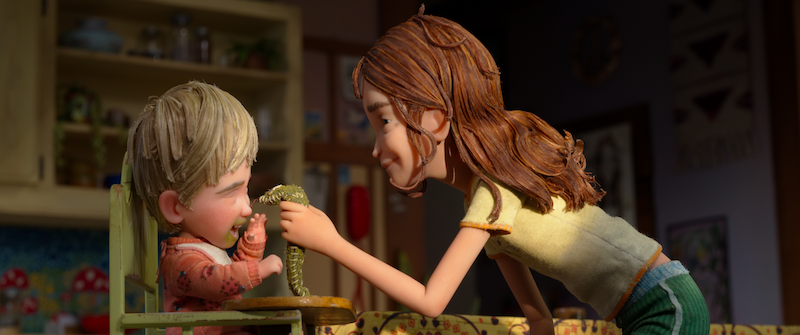
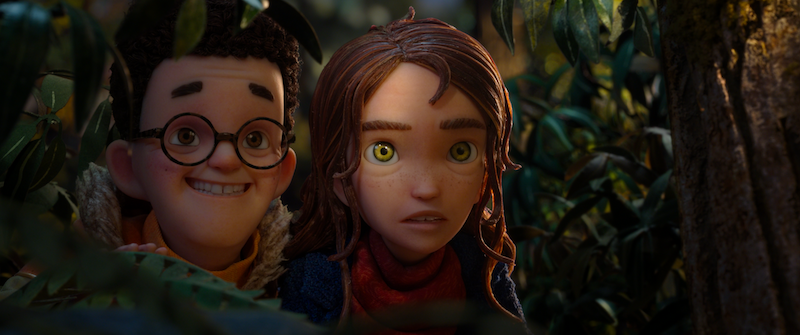
The film follows Prue (Peyton Elizabeth Lee), a brave, sharp-witted girl who often feels burdened with too many responsibilities, and Curtis (Jacob Tremblay), an imaginative, earnest, socially awkward kid who loves fantasy. The two venture into an enchanted forest known as the Impassable Wilderness after a murder of crows abducts Prue’s infant brother.
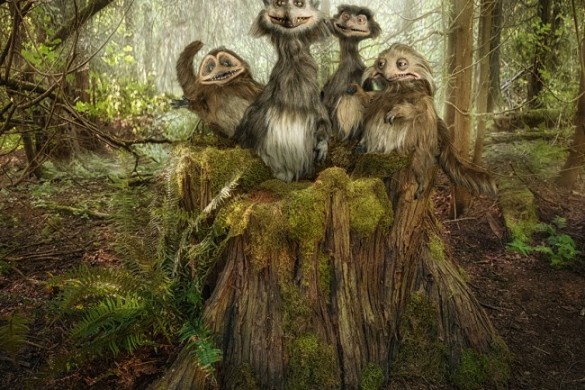
Once inside, they quickly discover why the forest earned its name. What lies beyond its towering trees is an entire world filled with talking animals, rival factions, and dangerous forces, all of which complicate Prue’s desperate mission to bring her brother home.
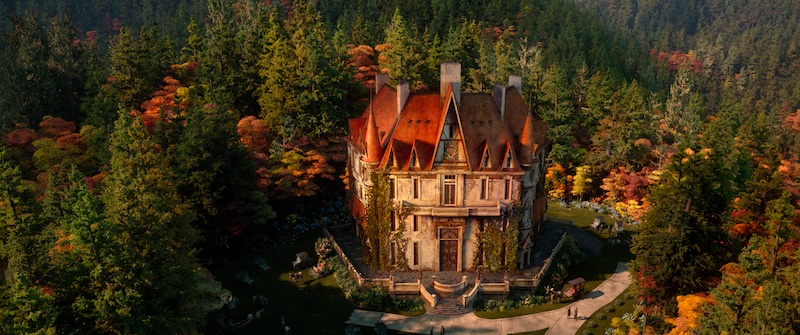
At approximately 131 minutes, “Wildwood” is LAIKA’s longest feature film to date. Based on the first installment of Colin Meloy’s three-novel fantasy series, this sprawling epic has no shortage of characters, conflicts, and magical settings to explore. However, the film’s ambition becomes both its greatest strength and one of its biggest weaknesses, as its numerous storylines compete for attention.
Much of that ambition comes from the various factions that inhabit the Impassable Wilderness. From the Avian Principality and the bandits to the creatures of South Wood and Alexandra’s army of coyotes, each group has its own beliefs, motivations, and conflicts. These societies establish “Wildwood” as a place with its own history, where inhabitants have lived and fought long before Prue and Curtis ever set foot inside. However, with so much time devoted to introducing these factions and their respective conflicts, the film occasionally loses sight of the urgency behind Prue’s mission to rescue her brother.
Prue’s journey is driven by her determination to rescue her younger brother, Mac. As someone who already carries more responsibilities than a child her age should, she also has to contend with her overprotective parents, Mrs. McKeel (Maya Erskine) and Mr. McKeel (Jake Johnson), who insist that she and her brother stay away from the woods because of the dangers that lurk within. In fact, they’re so protective that Prue isn’t even allowed to take Mac outside. And we’re talking about Portland, Oregon, not the Impassable Wilderness. Yet when Alexandra’s murder of crows abducts Mac and carries him across the bridge into the forbidden forest, Prue finds herself navigating a world where she must make difficult decisions while confronting dangers she never imagined.
While Prue’s resourcefulness and willingness to seek help make her an easy character to root for. However, the film spends more time showing Prue moving from one obstacle to another than exploring the emotional weight of those responsibilities. As such, there are moments when her fears and frustrations come through, but they are often brief, as the story quickly moves on to the next conflict.
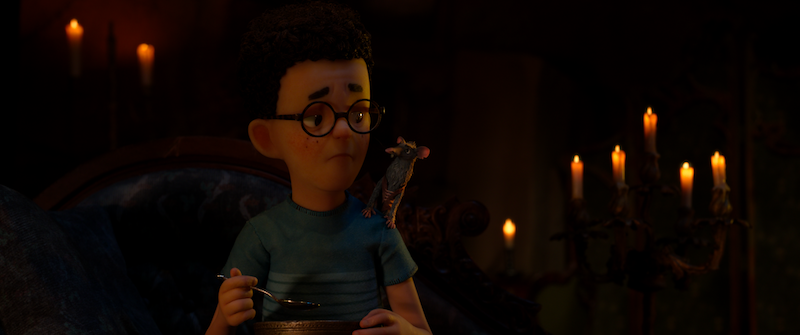
Curtis, on the other hand, sees the Impassable Wilderness through the eyes of someone who has spent much of his life immersed in fantasy games. What begins as a chance to experience the adventure he has only imagined becomes much more dangerous when he realizes the consequences are real. His enthusiasm also contrasts with Prue’s more serious approach, especially when she reminds him that her brother’s kidnapping isn’t just a game. As Curtis becomes more involved in the conflict, he begins to understand that being a hero isn’t necessarily about fighting battles or playing the role of a warrior, but about having the courage to help others. It’s a meaningful lesson, though his development follows a relatively predictable path that doesn’t fully explore how these experiences change him.
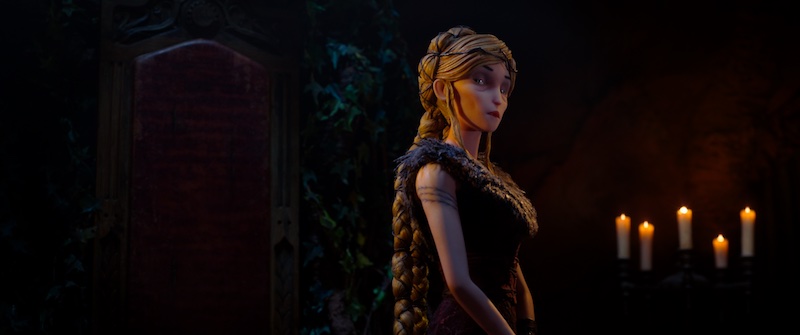
It’s only when Prue and Curtis bike across the fog-covered train tracks of Portland, Oregon, that they begin to realize the dangers that await them in the Impassable Wilderness. Their journey takes an unexpected turn when they encounter Maksim (Tom Waits), a gravelly-voiced coyote lieutenant and leader of an army controlled by Alexandria (Carey Mulligan), a grieving mother and a dowager governess, who wants nothing more than to be with her child. With the two facing an immediate threat, Curtis suggests they split up so Prue can continue searching for her brother. This decision tests their friendship and sends them down separate paths, each discovering different sides of the wilderness and the conflicts unfolding within it.
With Prue and Curtis separated, “Wildwood” expands its narrative by following two very different journeys. Prue’s search for Mac takes her deeper into the political conflicts dividing the wilderness, where even those who appear willing to help have their own interests and motivations. Meanwhile, Curtis finds himself caught up in Alexandra’s growing conflict with the other inhabitants of the forest. Although their separate adventures deepen our understanding of the different societies that make up “Wildwood,” the constant shifts between their storylines can make it hard for either character’s emotional journey to build momentum.
That’s not to say “Wildwood” doesn’t have its share of memorable moments. One sequence involves a prison escape in which Curtis, Brendan (Mahershala Ali), the Bandit King and leader of “Wildwood’s” bandits, and Niamh (Amandla Stenberg) find themselves trapped in cages suspended high above the ground. To escape, Brendan and Niamh toss Curtis, still trapped in his cage, between them. This imaginative sequence showcases LAIKA’s ability to blend humor, action, and the technical artistry of stop-motion animation.
Unfortunately, moments like these also highlight one of the film’s larger shortcomings. For all its creative set pieces, intricate worldbuilding, and colorful characters, “Wildwood” ultimately feels like a film that’s less than the sum of its parts. Individual moments are impressive, but they don’t always come together to form a cohesive, emotionally satisfying story.
Then there’s the film’s epic climactic battle, which brings together the various factions of the Impassable Wilderness in an all-out war. On one hand, the spectacle feels somewhat overdone, especially when films like The Lord of the Rings: The Return of the King and Avengers: Endgame have already set such a high standard for these massive confrontations, from the first wave where the coyotes fire their rifles and launch their catepults at the Bandits to how the Bandits fight back similarly when they fire their arrows, it almost feels like a fight we’ve seen before beat for beat, especially when Alexandria’s crows peck and lift their enemies to the sky and drop them, to how sparrows and smaller birds flock together to help defend the bandits.
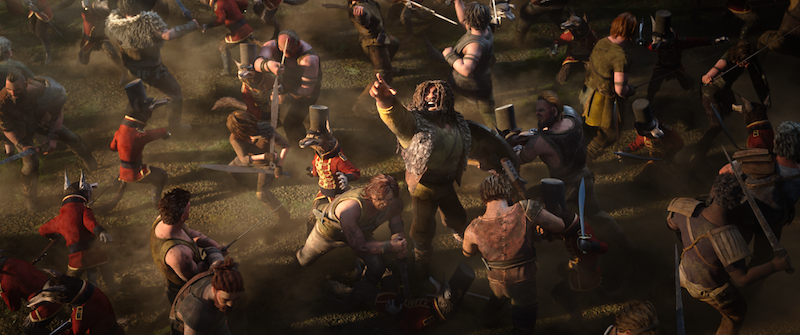
Yet, given in the painstaking work of stop-motion animation, where even the smallest movements require animators to manipulate puppets frame by frame, there’s something remarkable about seeing LAIKA attempt a battle on this scale. From the sheer number of characters involved to the choreography of the action and destruction unfolding around them, it’s an impressive technical achievement that deserves recognition.
Beyond its coming-of-age adventure, “Wildwood” also explores themes of grief, loss, and the lengths people will go to protect the ones they love. And the film takes two different approaches to those explorations. For Alexandra, she a grieving mother whose sorrow has shaped her motivations and the conflict unfolding throughout the Impassable Wilderness. In some ways, her desperation contrasts with Prue’s determination to rescue Mac, as both characters are driven by their devotion to family.
However, while Prue’s journey is about finding the courage to overcome seemingly impossible circumstances, Alexandra’s grief has consumed her to the point that she is willing to make others suffer for what she’s lost. It’s an interesting thematic contrast that gives the story a greater emotional dimension beyond its fantasy adventure.
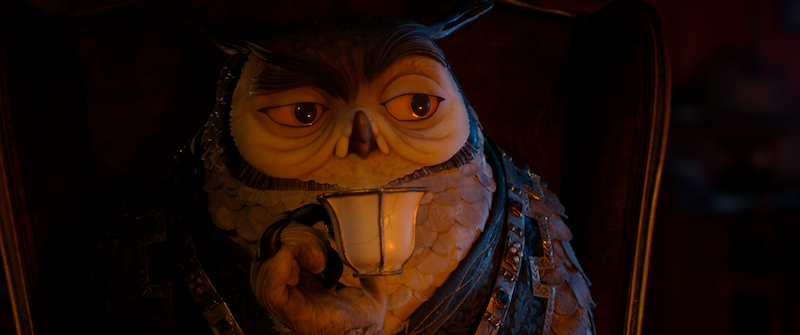
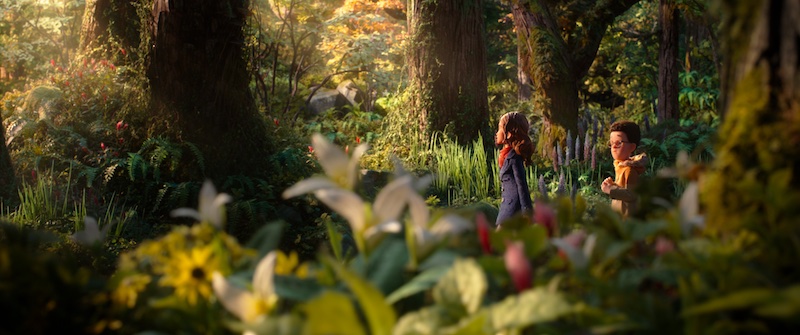
Equally impressive is the cinematography. Caleb Deschanel captures these elaborate environments and action sequences with such precision and understanding that The film frames its sprawling landscapes, towering trees, and intricate environments to turn a storybook to life. As such, it gives the Impassable Wilderness a sense of wonder and danger. Even some of the more emotionally charged moments demonstrate the extraordinary craftsmanship that goes into bringing this world to life.
One particularly beautiful sequence shows Prue seeking guidance from a mystical tree after Iphigenia, a mystic from the North Wood, and her council can’t answer how to save her brother. As desperate Prue speaks to the tree, to which it responds to her by gradually changing its leaves from green to red, with the lighting shifting alongside them. It’s a powerful scene that helps convey the emotional weight while also acknowledging the painstaking attention to detail that defines LAIKA’s animation.
“Wildwood” also does something refreshing with the way it incorporates moments of inclusivity without drawing unnecessary attention to them. Early in the film, when Prue reminds her parents that Mac will eventually grow up, leave home, and perhaps get married, her father jokingly suggests that “she or he or they” can live with them. Later, as the inhabitants of South Wood prepare for battle, we see a same-sex couple sharing a tender embrace before heading into the conflict. Neither moment is treated as a major revelation. Instead, they’re woven naturally into the story, reflecting a world where different kinds of love and relationships are simply part of everyday life.
The musical score brings a sense of magic to the quieter moments of discovery while emphasizing the intensity of the larger conflicts that unfold throughout the adventure. Together, the cinematography and music create a fantasy world that’s as beautiful to listen to as it is to look at.
The film also explores a recurring theme of growing up and losing one’s sense of wonder. Early in the film, Prue’s father reminds her that in her rush to grow up, there are still things she doesn’t understand, telling her, “There’s magic in this world. There’s magic in you.”
Likewise, Iphigenia (Tantoo Cardinal), a mystic from the North Wood, echoes Prue’s father’s sentiment, telling Prue, “You think you outgrew magic, but magic didn’t outgrow you.” Both moments speak to Prue’s struggle between the responsibilities she’s taken on and the childhood wonder she’s seemingly left behind. In a way, her journey is more about discovering that growing up doesn’t necessarily mean having everything figured out.
That idea comes full circle near the end of the film, when Prue admits she thought growing up would give her answers, only to discover it leaves her with even more questions. Her father reminds her that there’s happiness in the present, even if that happiness isn’t shared by everyone. Prue recognizes this through Alexandra, whose grief and desperation have driven her to extraordinary lengths in her attempt to reunite with her child.
That bold decision to explore such themes in a fantasy adventure of this size and scale is surprisingly bittersweet, suggesting there aren’t always easy answers or happily-ever-afters for everyone. Sometimes, growing up means accepting that uncertainty while still finding reasons to hold on to hope.
Ultimately, “Wildwood” is another reminder of just how far LAIKA continues to push the boundaries of stop-motion animation. While their imaginative environments, elaborate action sequences, and quieter moments of visual storytelling are extraordinary achievements, the film doesn’t always give its characters and emotional themes enough room to develop. Ultimately, Laika’s latest is an astonishing stop-motion and sound-design accomplishment, but it lacks an engaging story.