
After years of anticipation, the Lucas Museum of Narrative Art is finally opening its doors and I had the chance to get a first look during their press preview.
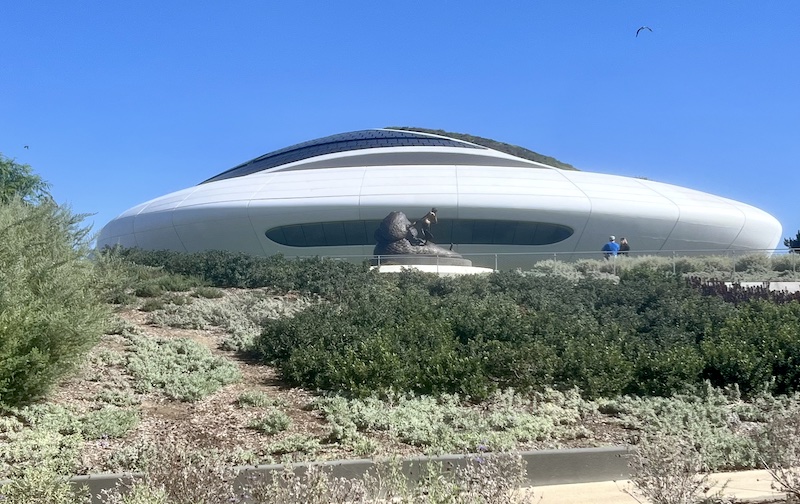
And my first thought? There is a lot here!
I mean that in the best possible way. With 300,000 sq ft of space, including 100,000 sq ft of gallery space, more than 30 galleries, film theaters, gardens, a research library, shops, a cafe and even the Skywalker Grill, this museum feels so much more than place you simply walk through. You could easily spend an entire day here exploring everything it has to offer.
During the preview, Tracey Bates, the museum’s CEO, talked about what it has been like to bring the museum to life over the past six years, including the last nine months in Exposition Park. After helping open museums around the world, she said she had never seen someone realize a vision on this scale.
What struck me most was what she said about why George Lucas and Mellody Hobson built this museum. They believe everyone deserves that spark of inspiration. And that idea really does seem to run through the entire museum.
Tracey described stories as the way humans have always made sense of who we are from cave paintings and the Sistine Chapel to comic strips and book covers. Narrative art, she explained, has often not received the same respect as painting or sculpture, even though images have shaped so much of how we understand the world.
As Tracey put it, George Lucas calls it “the people’s art.” And that is exactly what makes the Lucas Museum different.
What Exactly Is Narrative Art?
That was the question senior curator and head of film programs Ryan Linkof said he has been asked a lot. His answer: It is the art that surrounds us. Newspapers. Photographs. Advertisements. Book covers. Comic books. Posters. Street art. Movies.
At its simplest, Linkof explained, narrative art is art that illustrates stories.
And the museum is intentionally giving a platform to artists whose work has often been left out of traditional art history including illustrators and artists who created images on commission for books, magazines and other forms of media.
Linkof also pointed out that many of the works on display have never been shown in museums before, and some have rarely been the subject of scholarly research.
So let’s take a look at what’s waiting inside.
The First Floor: The History of Narrative Art
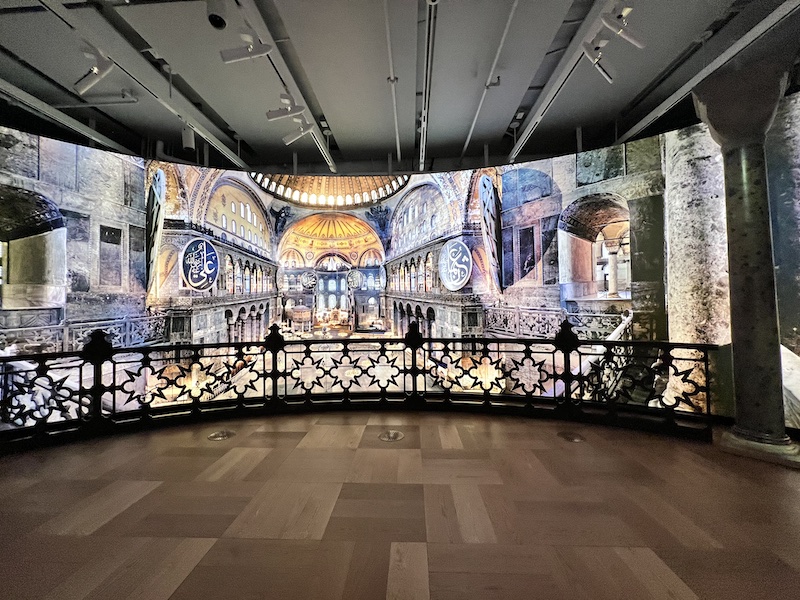
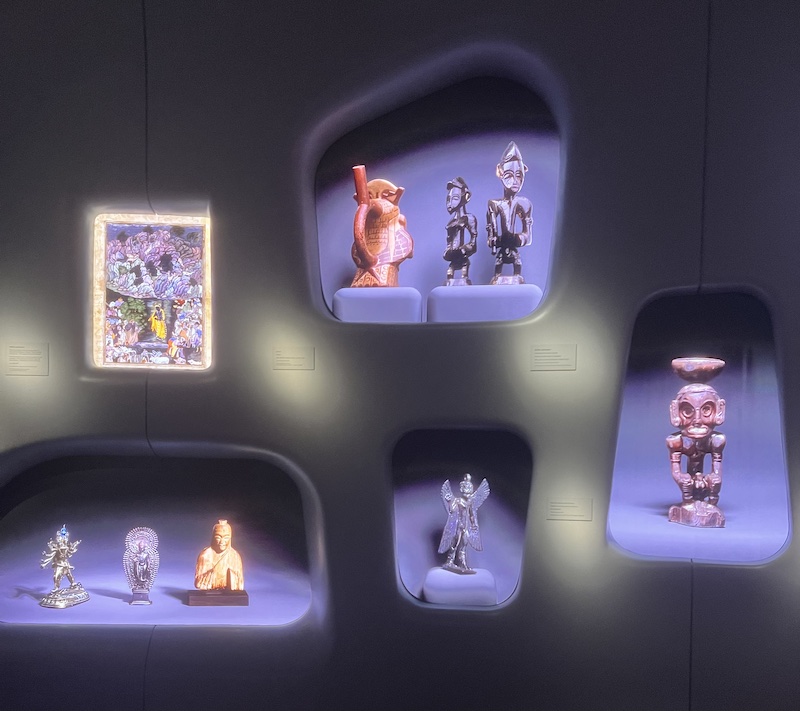
The first floor takes you to the The History of Narrative Art: Heroes + Myths + The Sacred exhibition. The exhibition takes visitors through the history of storytelling through art, starting thousands of years ago. You’ll see original works from the Lucas Museum’s collection alongside detailed reproductions of famous works that can’t travel, including the cave paintings of Altamira, the Sistine Chapel ceiling, the Aztec Sun Stone and the interior of Hagia Sophia.
It’s an incredible way to see how people across different cultures and time periods have used images to tell stories, share beliefs and make sense of the world.
The Fourth Floor: The Stories We Know
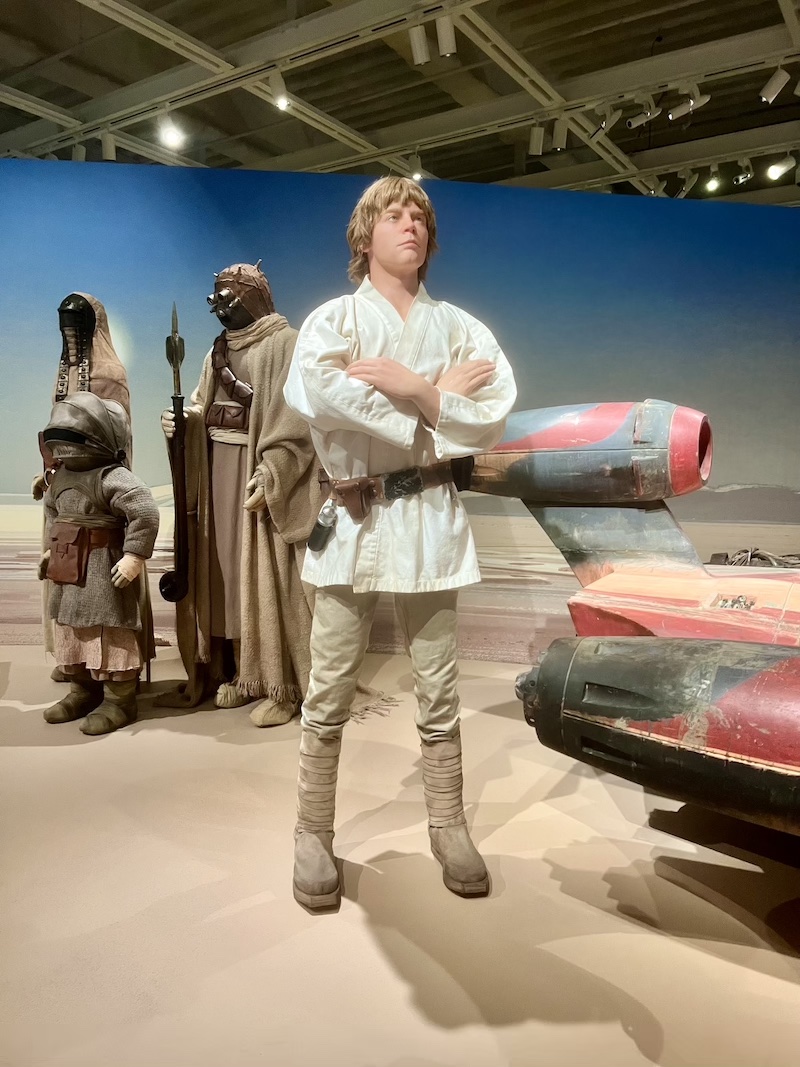
The fourth floor is filled with familiar forms of storytelling, illustration, comics, photography, children’s books, science fiction, fantasy and adventure. You’ll find works by some of the best-known American illustrators, including Norman Rockwell, Maxfield Parrish, Jessie Willcox Smith and N.C. Wyeth.
Don’t miss the children’s section! I was excited to see the original Cowardly Lion costume from The Wizard of Oz.
There’s also a strong collection of comic art, with work by Jack Kirby, Winsor McCay, Robert Crumb and Robert Colescott.
And, of course, there’s Star Wars. Star Wars in Motion features artwork and materials from the Lucas Archives, giving visitors a look at how the characters, vehicles and worlds from the first six films came to life.
 The Fifth Floor: Murals & Public Art
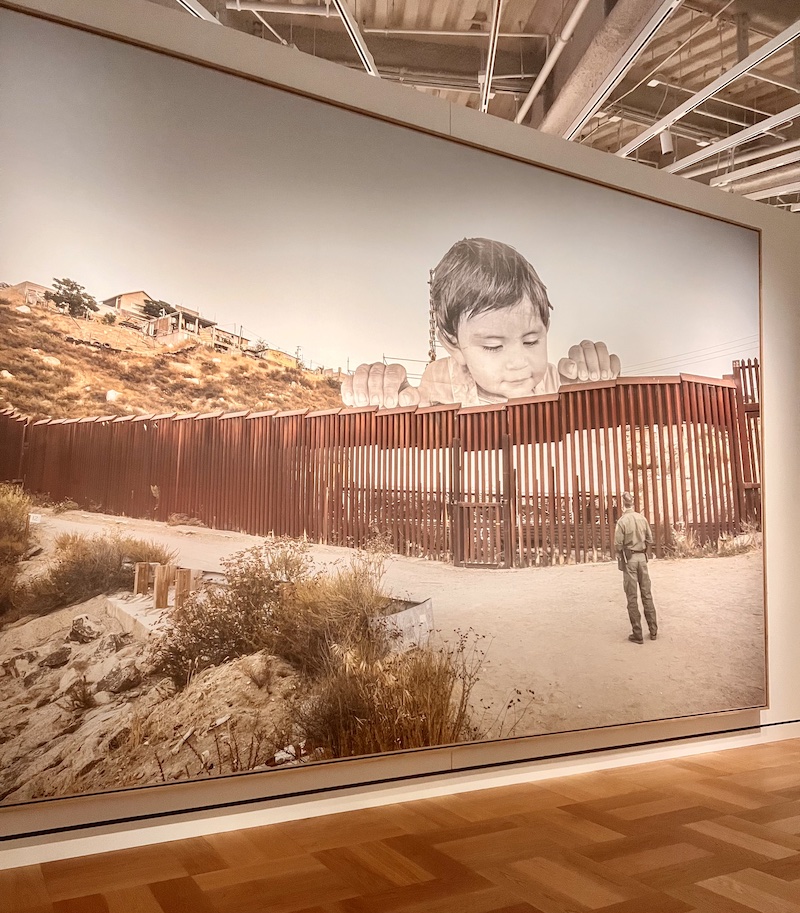
The fifth floor focuses on murals and public art, including work by Diego Rivera, Banksy and JR. The gallery explores how public art can tell stories and often address social and political issues.
One piece that especially stood out to me was JR’s GIANTS, Kikito. Originally created along the U.S.-Mexico border in Tecate in 2017, the enormous photograph of a young boy appeared to peek over the border wall.
I actually visited Kikito when it was installed in 2017, and seeing the photo of the piece in the museum immediately brought me back to that moment. I remember how moving and amazing it was to experience it in person.
And yes, Banksy is here too, with work that fits right into the museum’s exploration of social and political storytelling.
The Film Theaters: Yes, You Can Just Drop In
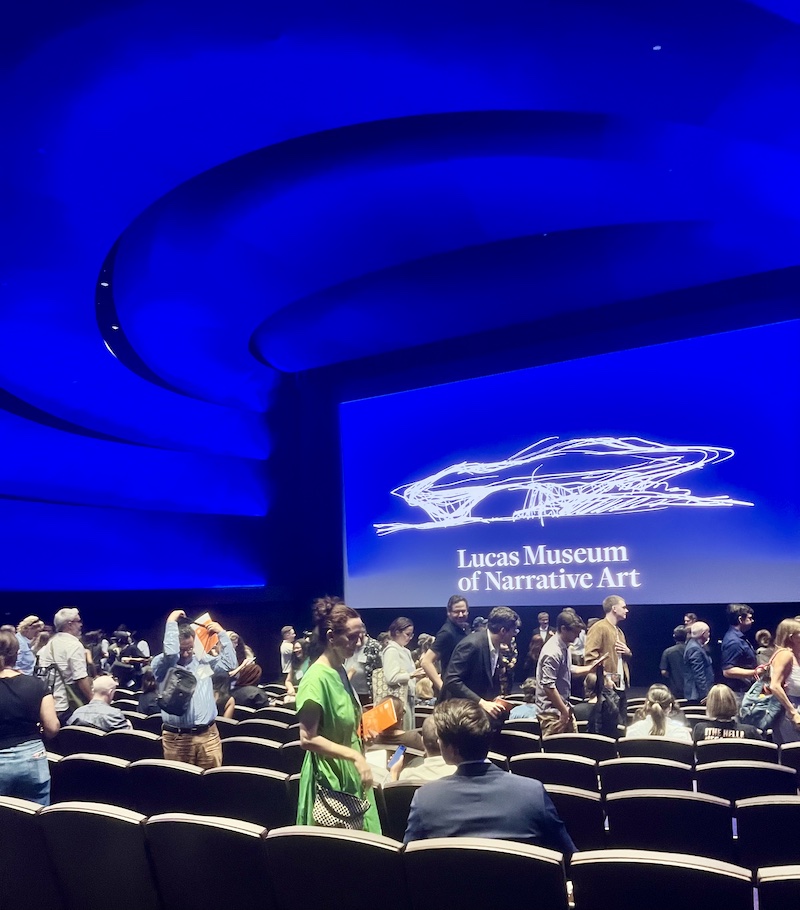
The museum isn’t only about static images. There are two cinematic theaters, and they operate as an extension of the galleries. The Robert Flaherty Theater focuses on documentaries about narrative art and artists. Next door, the Slavko Vorkapich Theater explores cinematic experimentation, with programming that can include early cinema experiments, avant-garde film and animation.
And you don’t have to plan your entire day around a screening. The programs run continuously throughout the day. You can walk in, stay for five minutes or stay for an entire film!
A Free Research Library—Open to Everyone
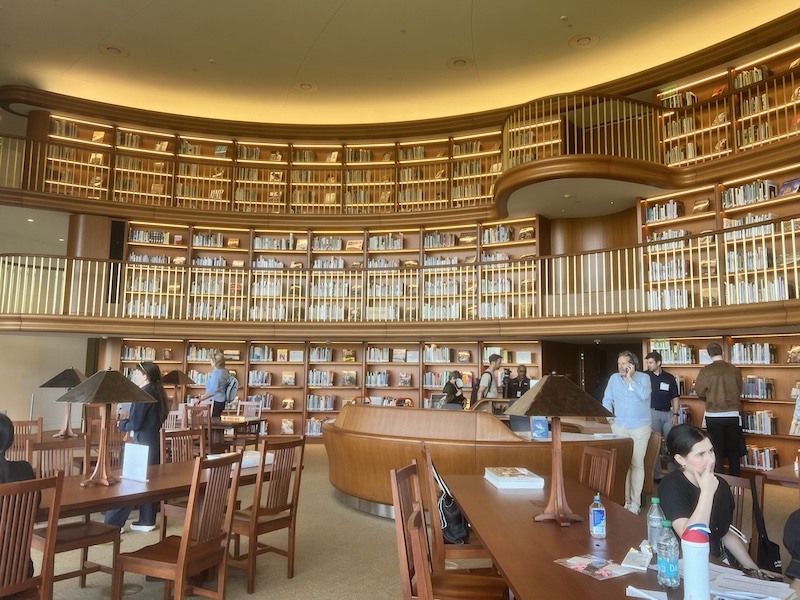
One of the things I was especially happy to hear about is the research library, which is free and open to everyone. So even if you’re not there specifically to study the collection, the library adds another layer to the museum’s mission of making art, research and storytelling accessible.
And There’s More Than the Galleries
You could easily spend the entire visit talking about the art, but the Lucas Museum was designed to be much more than galleries.
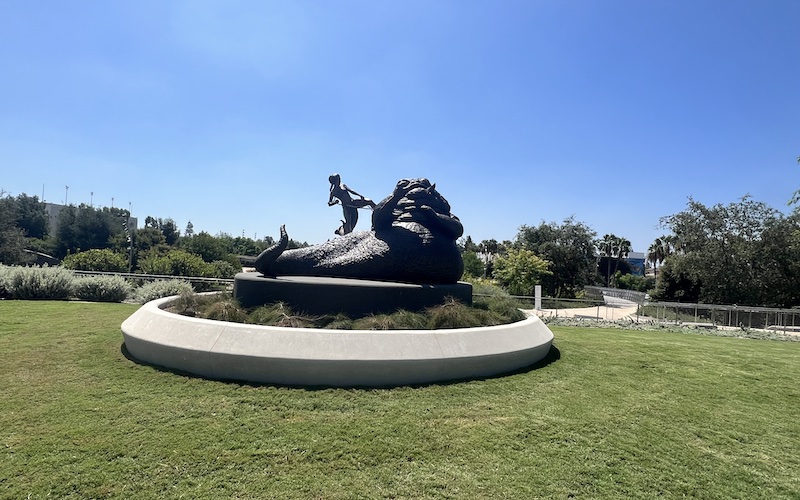
There are gift shops, a café, two theaters, the research library and the Skywalker Grill.
Outside, acres of new public parks and gardens surround the building, transforming what was once an asphalt parking lot into a public space designed for both museum visitors and the surrounding neighborhood.
When Can You Go?
Lucas Museum of Narrative Art opens to the public on September 22.
Members get an early look during a special preview week beginning September 5, giving them the first opportunity to experience the galleries before the museum officially opens.
And for the surrounding community, the museum is emphasizing that this isn’t just a destination for tourists, it is meant to belong to South Los Angeles, too.
TIP: Residents of the 90037 ZIP code can visit for free with the LA 37 Pass. Children 0-12 and students 13-17 (make sure to bring your ID!) also get in free.
Come Ready to Explore!
Click here to learn about the building’s architecture and landscaping!








1 comment
The scale of this project is hard to picture until you see all the different pieces that had to come together. I especially liked the idea of the museum being more than just gallery space, with the gardens, public areas, theaters, and library all becoming part of the experience.