
“Superman” has always been a symbol of hope, truth, and compassion, a reminder that even small acts of kindness can make a profound difference. In times of uncertainty, it makes sense that we are encouraged to look up, both literally and metaphorically. In his new Superman film, director James Gunn explores this timeless idea with a fresh perspective. Gunn’s take honors what came before while bringing a new vision that balances reinvention with heartfelt respect.
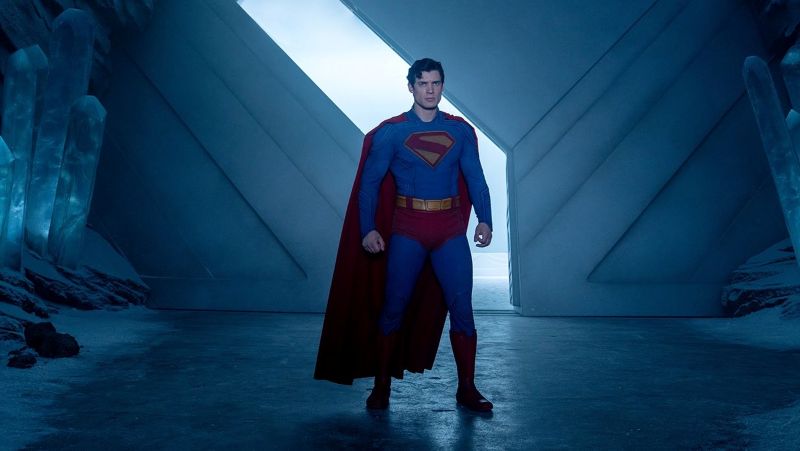
Instead of retelling the origin story of the last Kryptonian, Gunn presents Superman (David Corenswet) as an already established hero with a strong reputation as Earth’s protector. But this version is more personal and grounded. We meet a vulnerable Superman, one who bleeds and feels pain after crashing into a frozen tundra. Seeking refuge, he retreats to the Fortress of Solitude, a hidden sanctuary deep in Antarctica that responds only to his DNA. With the help of his playful dog Krypto, he heals and recharges under the sun’s rays, surrounded by Krypton’s legacy of holographic crystals that contain messages from his late parents.

His time there is short. Superman is soon called back to Metropolis to face the Hammer of Boravia, a mechanized terrorist sent by the fictional nation of Boravia in retaliation for Superman’s intervention in their conflict with Jarhanpur. But this battle is just a distraction for a larger plan by Lex Luthor (Nicholas Hoult). Meanwhile, the Engineer (Maria Gabriela de Faria) – a nanotechnological soldier working for Luthor – searches for the Fortress’s hidden location. Lex also manipulates public opinion, sparking debate about whether Superman has the right to intervene in global affairs.
Luthor, who has spent a few years studying the Kryptonian from afar, launches a full-scale smear campaign aimed at turning public sentiment against Superman and gaining trust from world governments. His plan goes beyond propaganda. He invades the Fortress, destroys its robotic guardians, and kidnaps Krypto, delivering a devastating emotional blow that pushes Superman to the brink of despair. With public trust shaken, Lex introduces Planetwatch, a task force including the Engineer, Ultraman, and advanced Raptor soldiers. He positions it as a more stable and accountable alternative to Superman and the Justice Gang’s Green Lantern, Mr. Terrific, and Hawkgirl. By framing Planetwatch as a regulated, human-led peacekeeping force, Lex argues the world no longer needs a being as unpredictable and emotionally unstable as Superman.
At the center of Superman’s humanity is Lois Lane (Rachel Brosnahan). She is a tenacious journalist at the Daily Planet and one of the few who sees both the man and the myth. Far from a simple love interest or damsel in distress, Gunn’s Lois is sharp, resourceful, and unafraid to challenge Superman when the world needs clarity more than comfort. She serves as his moral compass and emotional anchor, helping Clark navigate the fine line between protecting the planet and imposing his will.
Their dynamic reflects a classic tension between Superman’s idealism and Lois’s journalistic realism, which sometimes borders on cynicism. While Clark believes in the inherent good in people and the power of hope, Lois approaches the world with a sharper edge, and often has to question motives and narratives, a trait which has been shaped by years of reporting on corruption, war, and political spin alongside a deep commitment to journalistic ethics.
This contrast makes their relationship all the more compelling. Lois challenges Superman to think critically about the consequences of his actions. At the same time, he reminds her that belief in something better is not naive but necessary. Together, they balance hope and truth in a world that often struggles to hold on to either. At times its a relationship that shouldn’t work, and yet some how it does.
Beyond heroics and spectacle, Superman works as a powerful allegory for the immigrant experience. Clark Kent is an alien sent from a dying world but raised on Earth with values rooted in kindness, humility, and responsibility. His journey echoes that of many immigrants who are displaced by catastrophe and forced to adapt to unfamiliar cultures and expectations. He carries the weight of two worlds, preserving Krypton’s legacy while honoring the values of his adoptive parents in Kansas.
That dual identity makes him a target. Lex Luthor exploits this by spreading anti-Superman sentiment across social media and news platforms, painting him as a threat rather than a protector. Using stolen recordings of Kal-El’s parents (Bradley Cooper and Angela Sarafyan) taken from the Fortress, Lex portrays Superman as an invader. Through calculated misinformation and fearmongering, he stokes public suspicion. He pushes the narrative that Superman’s power is unchecked, unearned, and ultimately dangerous. This taps into a familiar cultural anxiety about the outsider who does not belong.
Superman faces deep emotional challenges that add layers to his character. After hearing a troubling message from his biological parents, he questions whether he was sent to help or harm humanity. He struggles to live up to Kryptonian and worldly expectations, balancing his own choices with the weight of ideals. Lex Luthor’s envy and attacks shake his sense of belonging, forcing him to confront whether his existence truly threatens humanity. As he handles crises like dimensional rifts and invasions, the burden grows heavier, and his stress intensifies. Despite his powers, Superman seeks comfort and connection from his adoptive father and friends. We see a hero wrestling with identity, purpose, and the emotional weight of his role.
Gunn’s film digs deep into character and theme but does not shy away from scale or spectacle. The action is kinetic, emotionally charged, and always serves the story rather than feeling gratuitous. Scenes like Lois and Mr. Terrific storming a Lex Luthor compound draw clear inspiration from the corridor one-shot in “Guardians of the Galaxy Vol. 3,” delivering choreography and pacing that keep viewers hooked. The Justice Gang’s battle with a massive imp includes a quiet moment where Lois connects emotionally with a vulnerable Superman, reminding us these are characters with heart.
Even quieter moments show Superman’s compassion. He rescues an alien baby from drowning in a pocket universe, shields a young girl from an explosion, and uses his breath to blow Krypto out of harm’s way from a rampaging kaiju. These small moments remind us that Superman’s heroism is rooted in kindness and care as much as strength and spectacle. Set against these more intimate beats are large-scale sequences like the brutal showdown with Ultraman, a living weapon remotely operated by LexCorp. Guided through surveillance feeds and controlled by Lex’s team barking out real-time commands, Ultraman becomes an extension of Lex’s will, a chilling contrast to Superman’s autonomy and moral compass.
Superman’s acts of kindness, combined with Jonathan Kent’s (Pruitt Taylor Vince) wisdom, and the reality of his alien origins, beautifully illustrate themes of agency, identity, and the immigrant experience. The film tells us that our story is shaped not by where we come from but by the choices we make.
Corenswet’s subtle and grounded performance anchors the emotional core of the film. He strikes a delicate balance between vulnerability and mythic responsibility, making Clark Kent feel real, flawed, determined, and quietly intense without copying past portrayals. Brosnahan matches him as a fearless, sharp Lois Lane. Their chemistry sparkles through humor, romance, and thoughtful debates, making their relationship one of the film’s most authentic and compelling elements. Hoult brings chilling intelligence and cunning to Lex Luthor, creating a villain who is not just destructive but truly believes his vision for humanity’s future is justified. And he will go about making sure his plan is successful at any cost.
Composer John Murphy and collaborator David Fleming find respectful ways to honor John Williams’s iconic score without leaning on nostalgia as a crutch. Instead of feeling like a generic needle drop, the music becomes an emotional throughline that gently charts Clark’s evolving sense of identity, purpose, and the crushing burden of heroism in an age of bias, misinformation, and social media noise.
That said, the film does feel overstuffed at times. It has a lot to say and must frequently shift tone to juggle its emotional core alongside blockbuster spectacle, comic relief, and extensive world-building. While many pieces work individually, the movie sometimes struggles to maintain a consistent rhythm, with some transitions feeling rushed or jarring. At times, the subplots do not gel, and it comes off like there are two different films going on at once.
Still, through all this, the film never loses its heart. It holds onto hope and optimism and delivers emotional sincerity even when things look bleak for the Man of Steel. This is a James Gunn film through and through, blending action and comedy in a way only he can. It goes about telling the start of a new Superman story without having to tell another origin story. What’s more, despite the number of other superhero characters and Easter eggs, it does not feel like it is setting audiences up for something bigger. The cameos made are merely the next steps into the future. This is a story about Superman after all, using the the easter eggs and cameos as any other device would take away from what makes the film special.
And even though this is written and directed by Gunn, surprisingly, “Superman” is less playlist-driven than his past movies, allowing the story and characters to take center stage.
“Superman” isn’t trying to be the darkest or the most bombastic superhero movie out there. It isn’t trying to redefine the genre or chase trends. Instead, it reminds us why Superman matters in the first place. James Gunn has crafted a film that speaks to the times we live in. Sure, it’s world that is cynical, divide, and overwhelms with news bites meant to elicit a radical emotional reaction, but dares to believe that kindness matters. While it may not fly as smoothly as it should, when it soars, it soars high. And does so in a way that celebrates and honors the title hero, with heart and punk rock.
9/10